Openers · Sherwood
Emergency Release Repair in Sherwood
A previous owner knotted the release cord around the rail and stacked storage shelves right beneath it.
In plain words
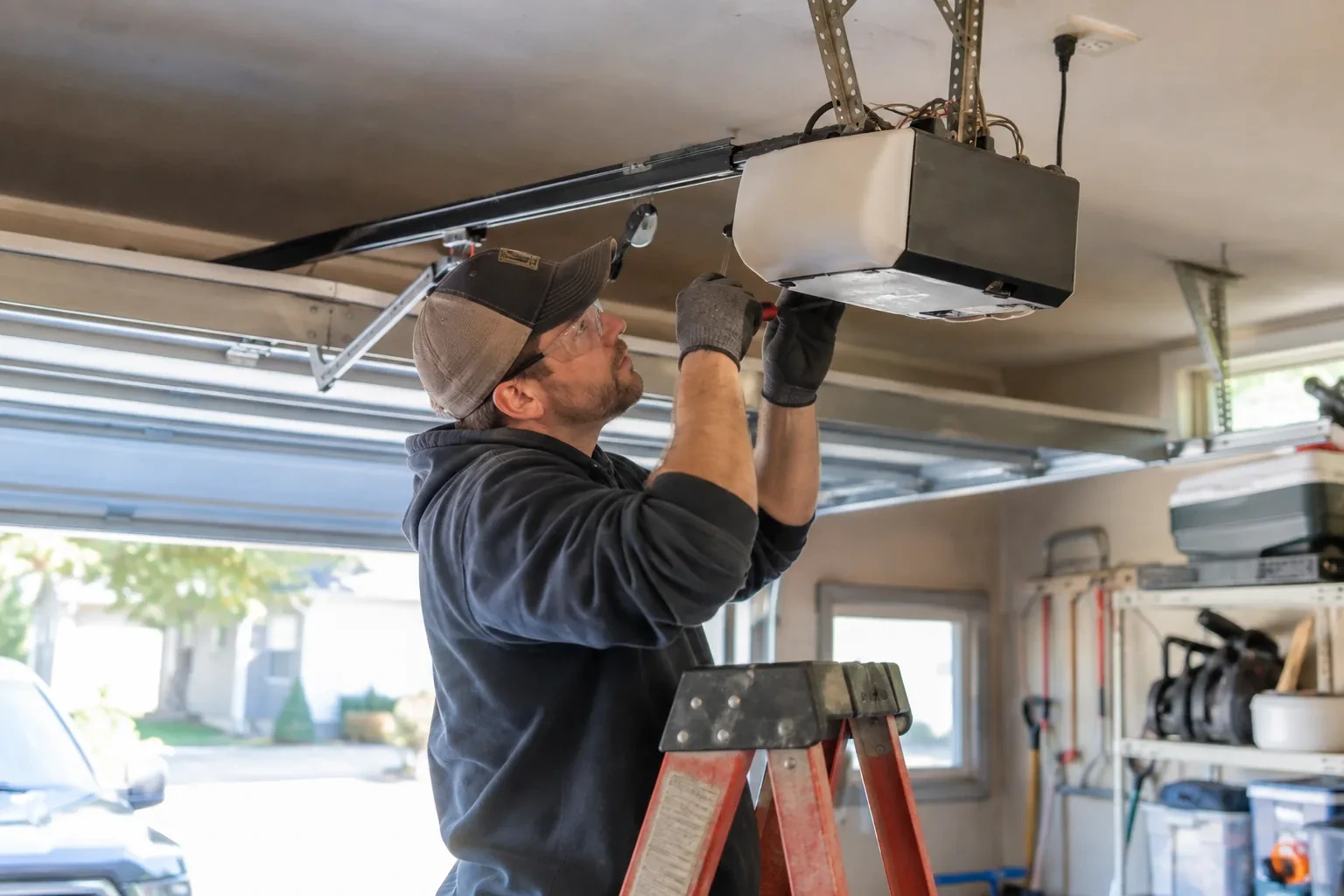
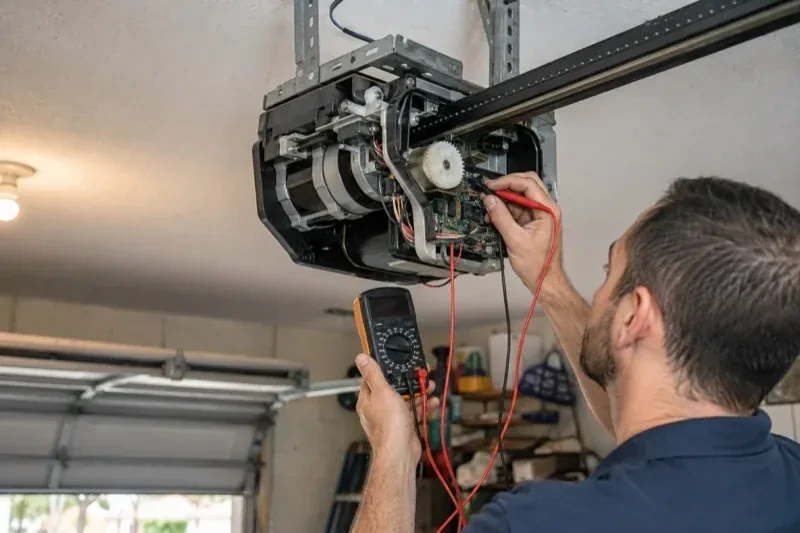
The visit runs in a fixed order. On the phone you describe what the release did, where the door was, and what kind of opener hangs from the ceiling. On site the door is closed or safely supported before anything else. The release assembly is inspected from handle to trolley, the door is disconnected and lifted by hand to check its balance, and the failed part is replaced with one that fits the model. The handle is set to the right height, the trolley is reconnected with the door closed, and the opener runs full cycles and both reversal tests. It ends with a demonstration on your own door.
How the visit goesSomeone pulled the cord last spring to get a car out during an outage, and the door has never properly rejoined the opener. Press the button and the trolley glides along the rail by itself while the door stays exactly where it is.
Emergency Release Repair
How the visit goes
Who needs to use it, and how they get in
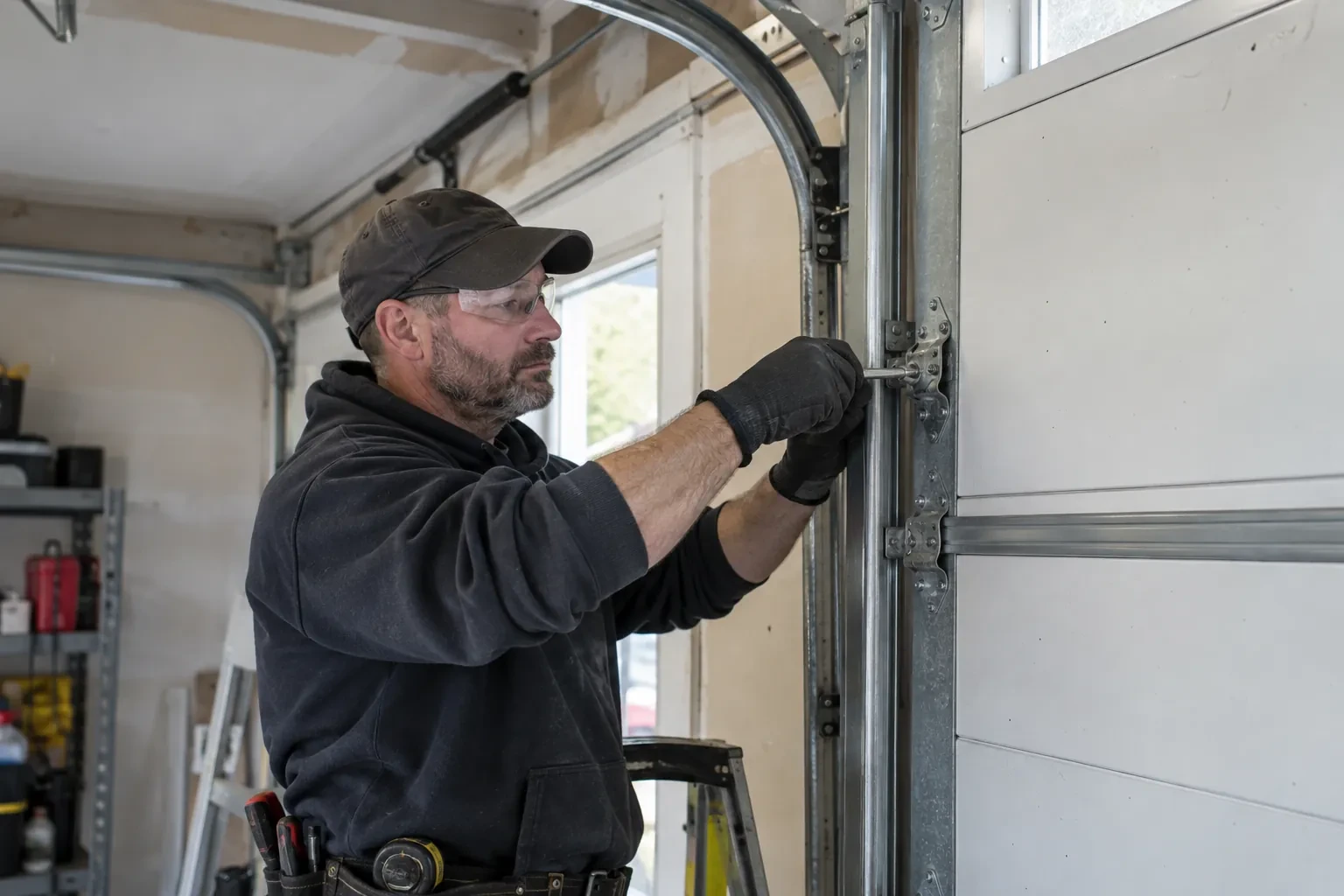
Finally the technician asks about the household and the building. Is there a side door or a door into the house, or is the overhead door the only way in? Who is likely to be pulling the handle in an outage: a tall adult, a teenager, an older relative? Does the family use the release often, or has it never been touched? Has a car roof been catching the cord? These answers shape the cord length, whether an outside key release is worth fitting, and how much of the visit goes to demonstration. The point is a release that works for the people who actually live there.
Lever and spring on the trolley
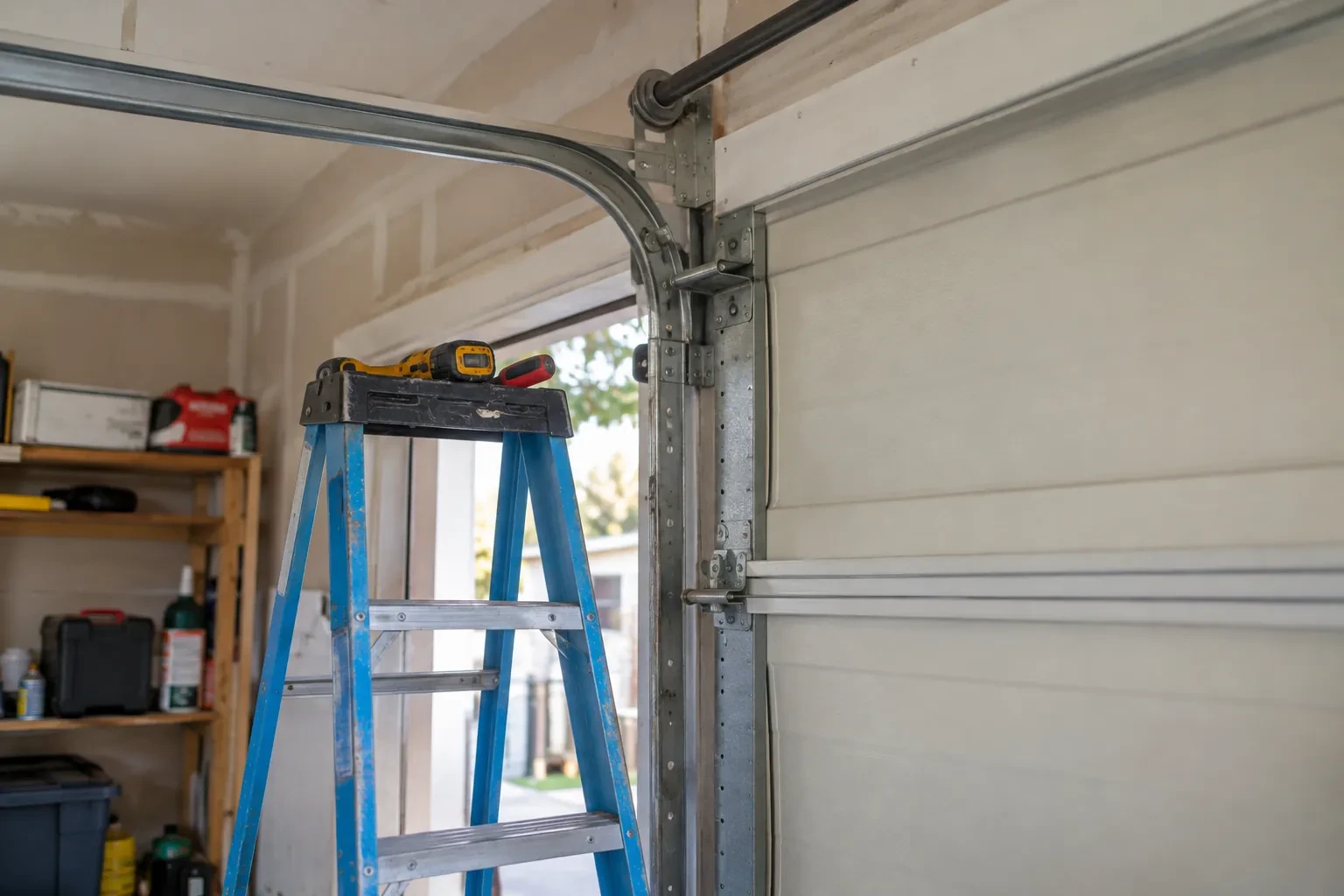
When the lever throws but will not return, or returns without latching, the fault is in the lever, its pivot pin or its spring. The technician removes the trolley cover, replaces the spring or the lever assembly with the part for that model, and checks that the lever swings cleanly from horizontal to vertical and back with a firm click. A bent lever is replaced rather than straightened, since the metal has already been stressed once. With the door closed the release is pulled and reset several times to confirm the trolley lets go and re-engages each time before the opener is run.
A handle you can find in the dark
You are left with a red handle hanging at a height an adult can reach from the floor, clear of the car and visible from the door into the house. Nothing is tied around the rail, nothing is stacked beneath it. If the garage is dark in an outage, the handle is where your hand expects it. Keep it that way: when shelving, bikes or a storage platform go in, leave the space under the trolley open. Once a season, glance at the cord for fraying where it meets the lever, since sun through a window and winter cold both age rope.
Emergency Release Repair
In the van
Rope and red handle kit
Track clamps to hold the door
Dry lock lubricant and de-icer
Trolley and carriage assembly
2x4 offcut for the reversal test
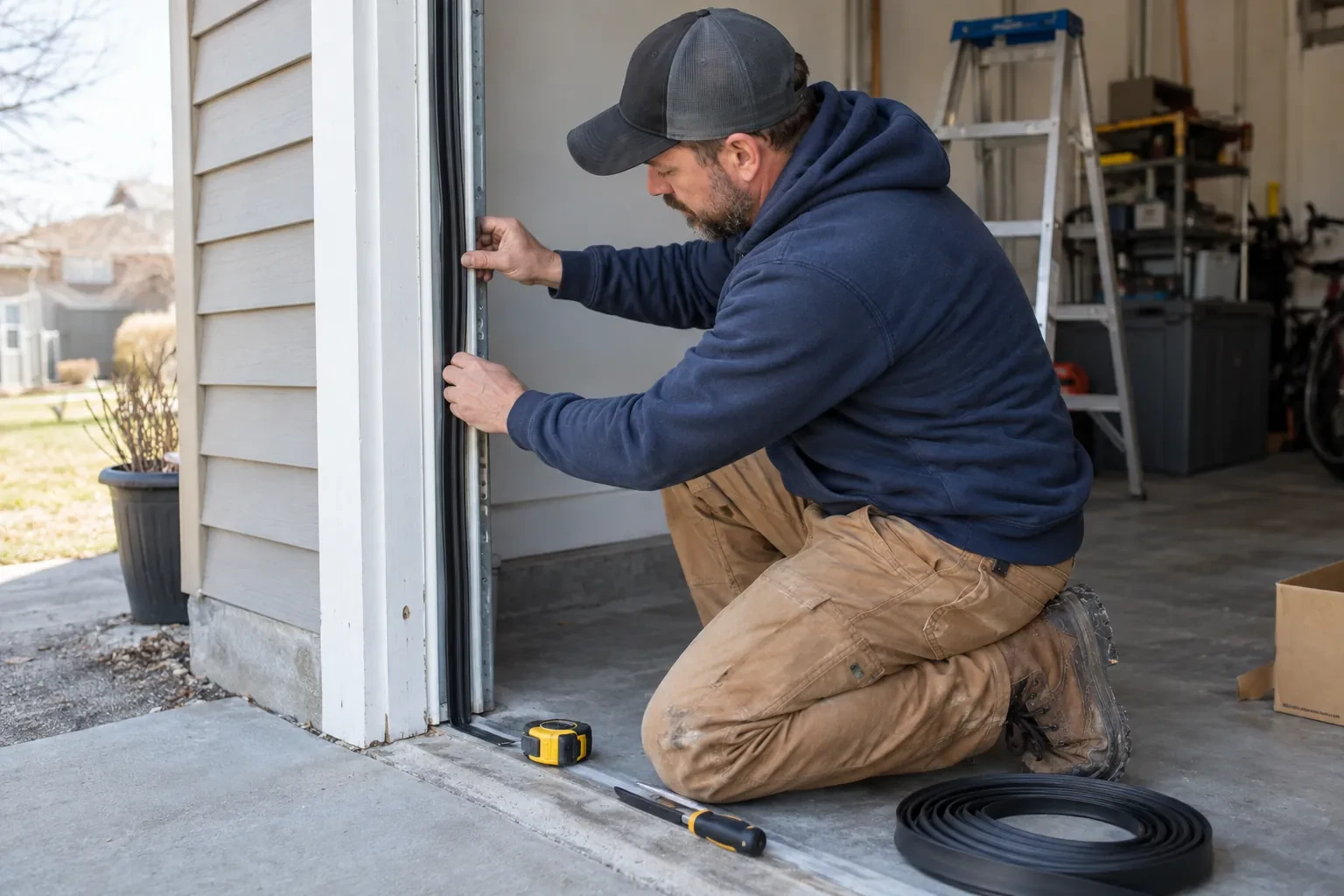
Emergency Release Repair
What affects the quote
Demonstration and labelling
Walking the household through the release, fitting a fresh warning and instruction label near the wall control, and adding handles or gripping points to the door are small tasks that are itemized when they are part of the visit.
Outside key release: repair or new
Renewing a cylinder, cable or keys on an existing outside release is one line; cutting the door and fitting a complete kit where none exists is another, and both are named separately.
Distance to your door
Every visit includes the drive. A property on the edge of the service area or down a long rural road takes more of the technician's day than one a few streets away, and the quote allows for it.
What to have ready
- Does the garage have a side door or a door into the house?
- Has the trolley ever been left disconnected for a stretch of manual use?
- Roughly how old is the opener, and can you read the model label?
Emergency Release Repair: questions
QuestionsWhat happens if someone pulled the release while the door was open?
Sometimes nothing, if the door is well balanced and stayed where it was. If the door came down on its own, the technician checks what took the impact: the door arm, the carriage, the bottom brackets, the rollers and the panel around the arm bracket. A bent arm or carriage is replaced, and the balance test shows whether the springs contributed. Then the release is reconnected with the door closed and the household is shown the right sequence.
Can I replace the cord and handle myself?
A rope and handle kit is a simple part, and many homeowners fit one. The details matter, though: the knot at the lever has to hold under a hard pull, the handle has to end up at the right height, and the lever should be checked for wear while you are up there. If the cord failed because the lever or trolley is worn, a new rope alone leaves the real fault in place. Have it done as part of a release check and both get looked at.
My car is trapped inside and I have an appointment. Can I just push the door open?
Better not. A door forced against a jammed trolley or a locked door can bend the arm, the top section or the track, and a vehicle driven at a door releases the stored tension in the springs. The release is the tool for this moment: with the door closed, pull the handle and lift the door by its handle. If the handle is missing or the trolley will not let go, a technician can reach the lever and have the door moving by hand.
Related services
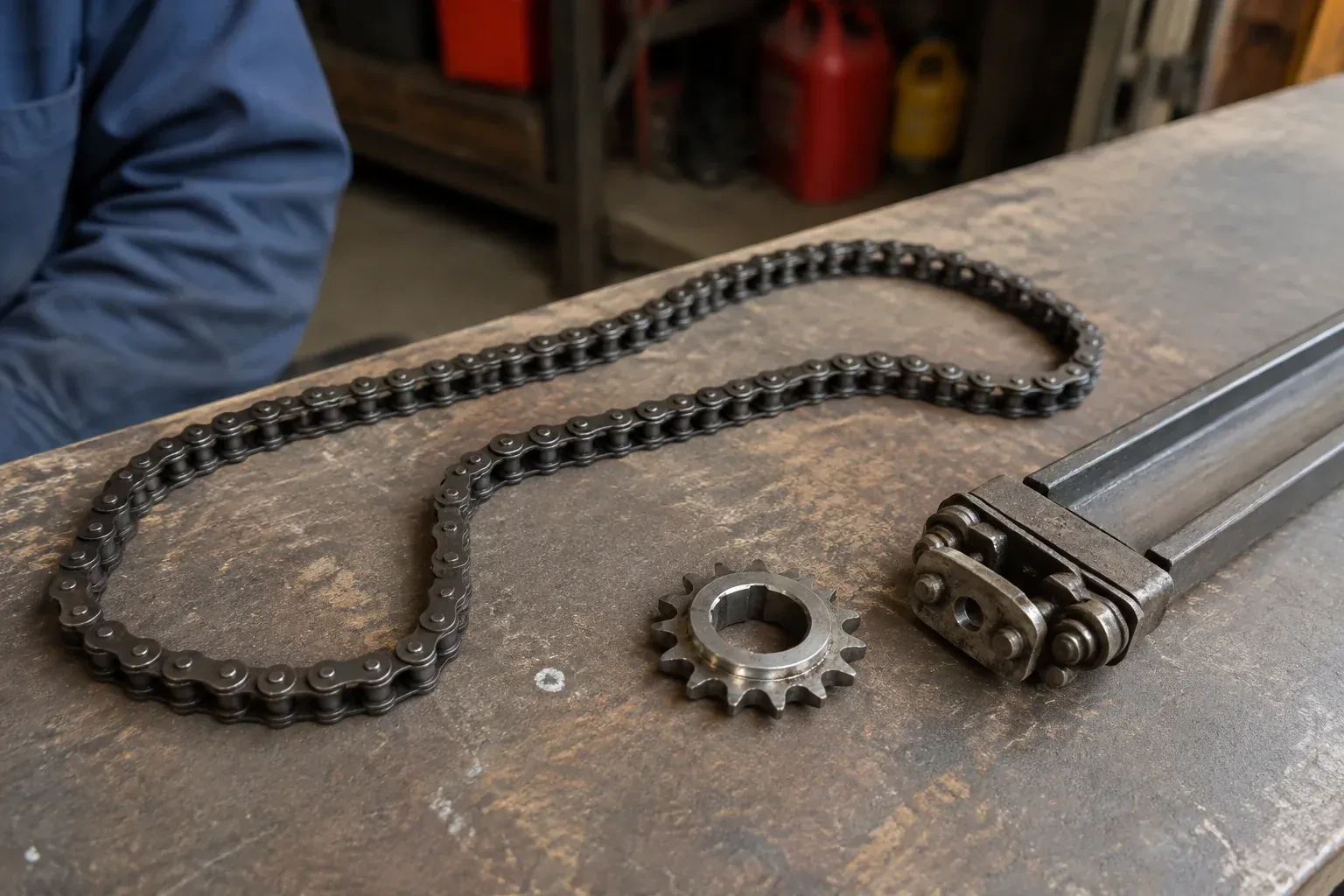
- Chain-Drive Opener RepairThe door opens about a third of the way and stops.
- Belt-Drive Opener RepairThe belt looks fine from a distance, but up close the rubber has cracked across the back in dozens of places and, in one spot, you can see the steel cords showing through.
- Garage Door Opener ReplacementDuring the ice storm the power was off for two days.