Openers · Sherwood
Belt-Drive Opener Repair in Sherwood
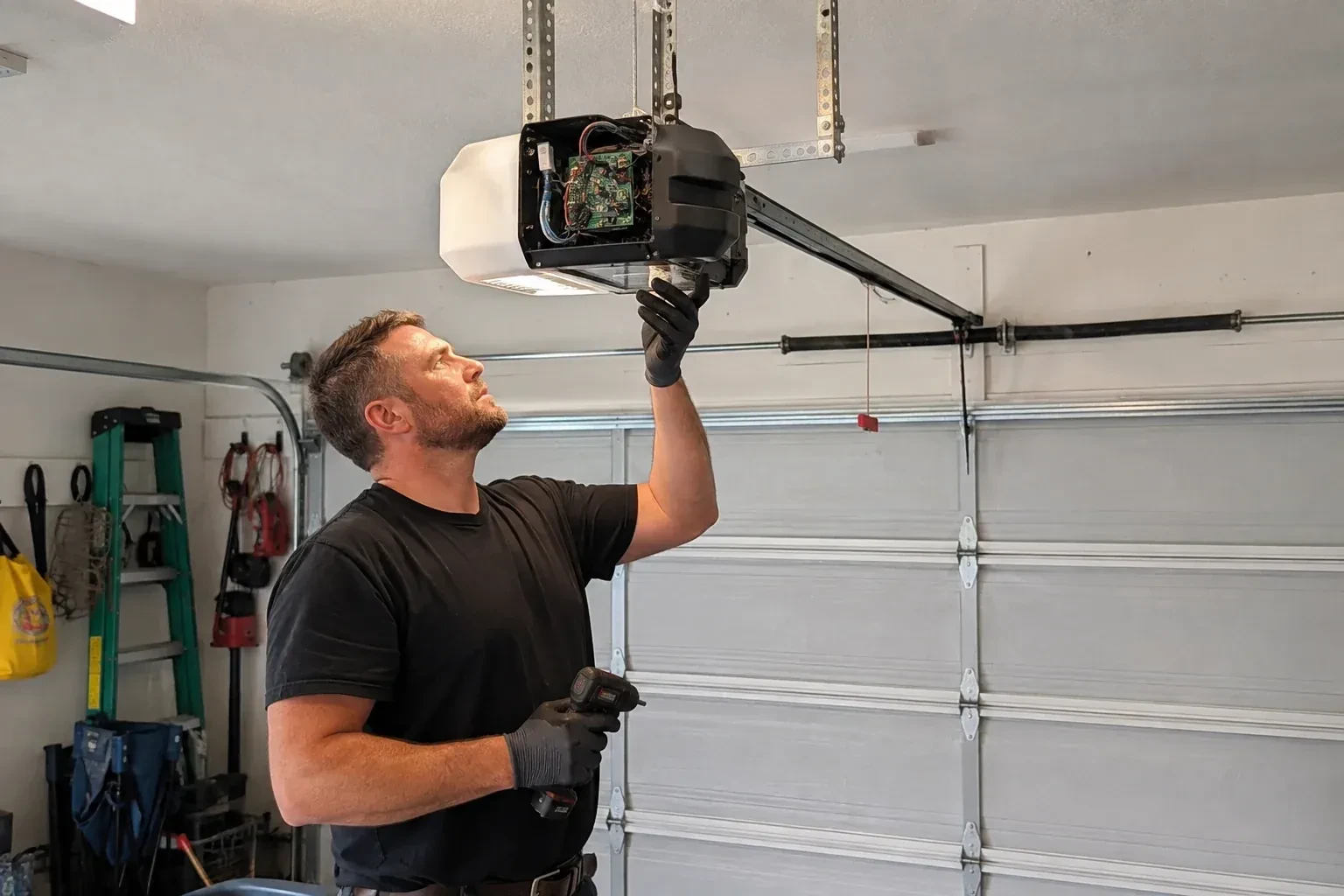
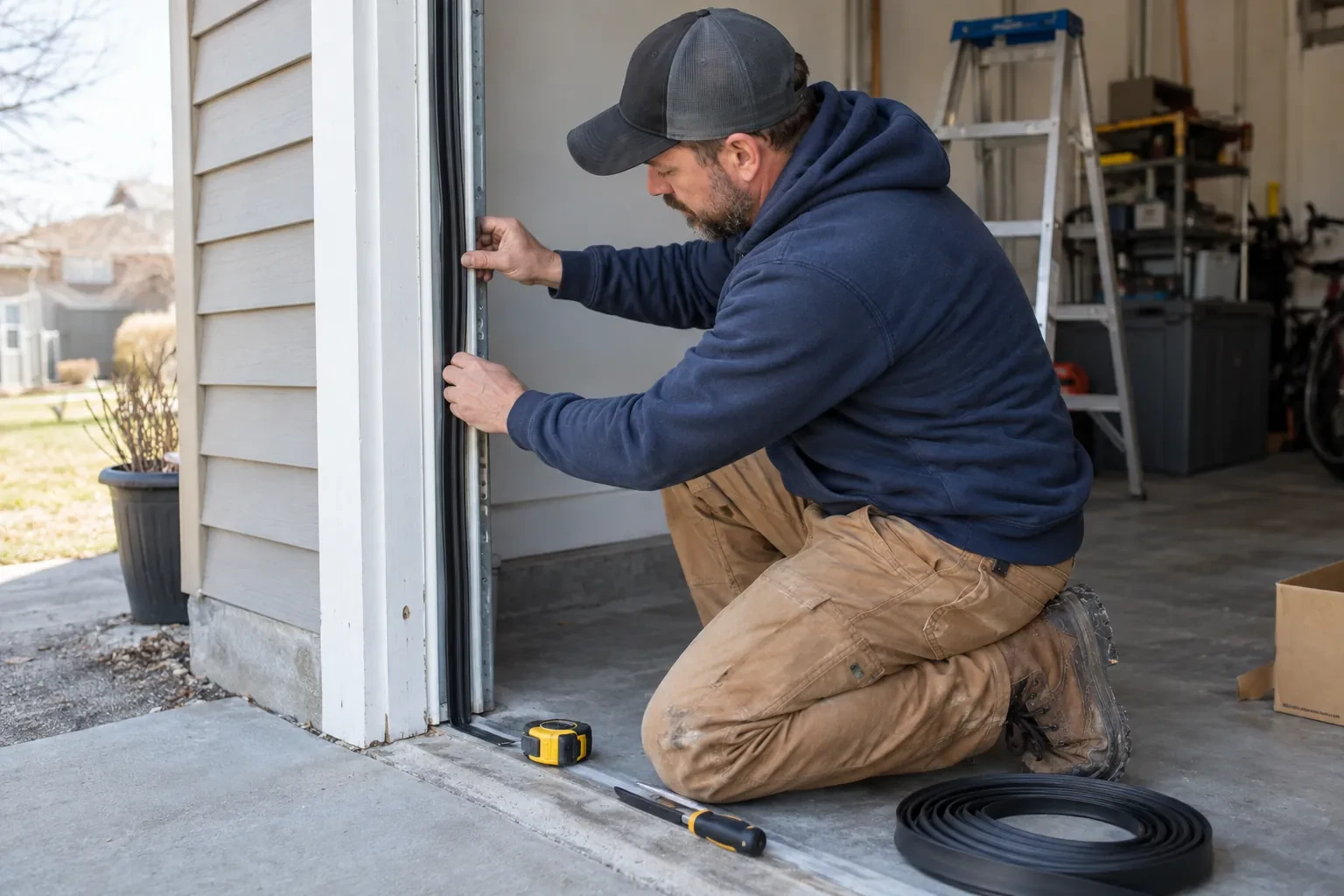
The belt looks fine from a distance, but up close the rubber has cracked across the back in dozens of places and, in one spot, you can see the steel cords showing through.
In plain words
After a belt has been off the sprocket, the operator can end up out of phase: the motor thinks the door is somewhere the trolley is not. The symptom is a door that stops short at the top or the bottom no matter how the limits are adjusted, or a trolley that bangs into its stop bolt. The correction is part of every belt repair. With the belt lifted off the sprocket, the operator is run until the sprocket settles at its closed position; the belt is refitted with the trolley at the closed end; then travel and force are relearned so motor and trolley agree again.
How the visit goesIt is minus twenty in the detached garage and the door climbs in jerks, the belt stiff as a board. By the afternoon, when the sun has been on the door, it runs almost normally again.
Belt-Drive Opener Repair
How the visit goes
How tight is tight enough
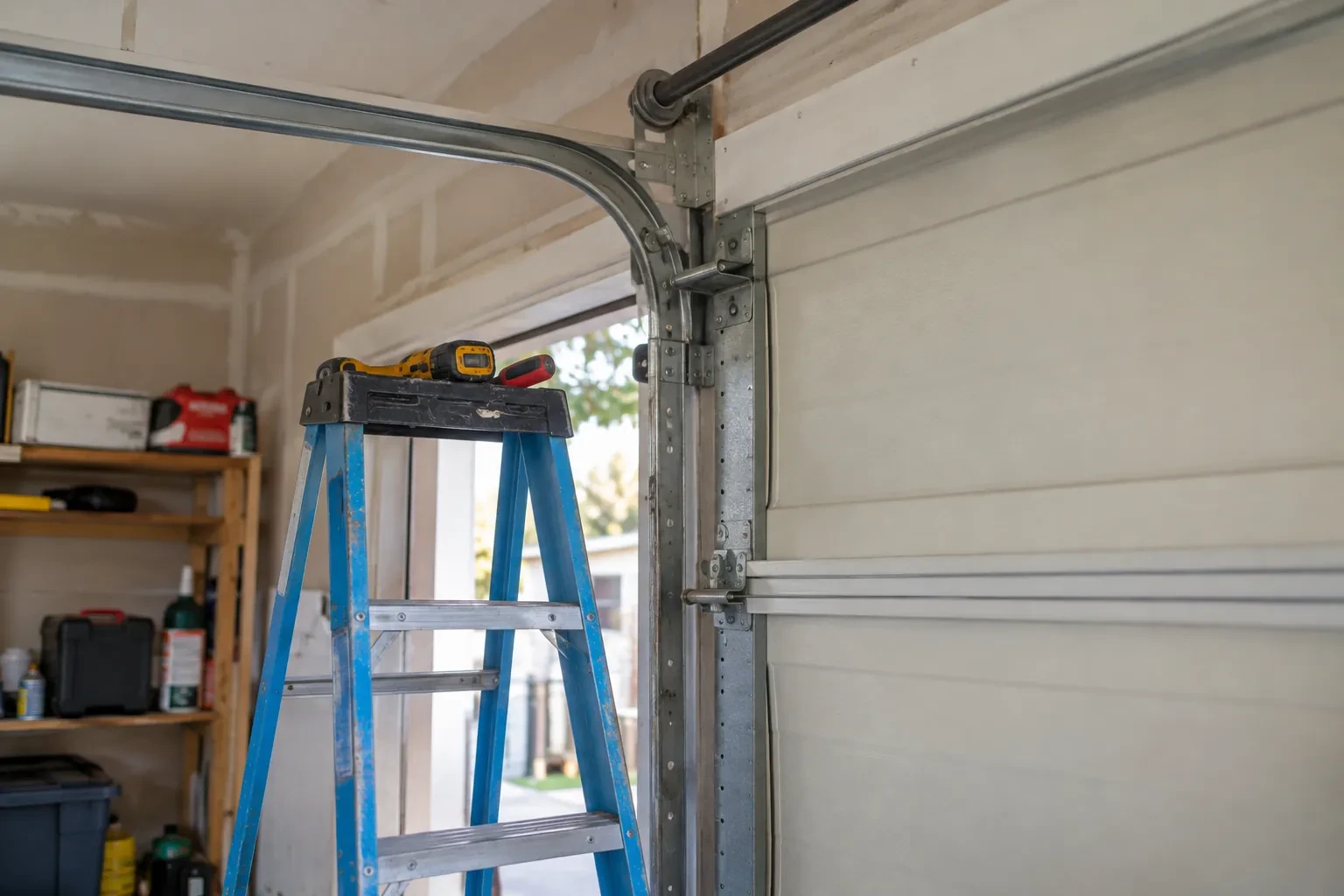
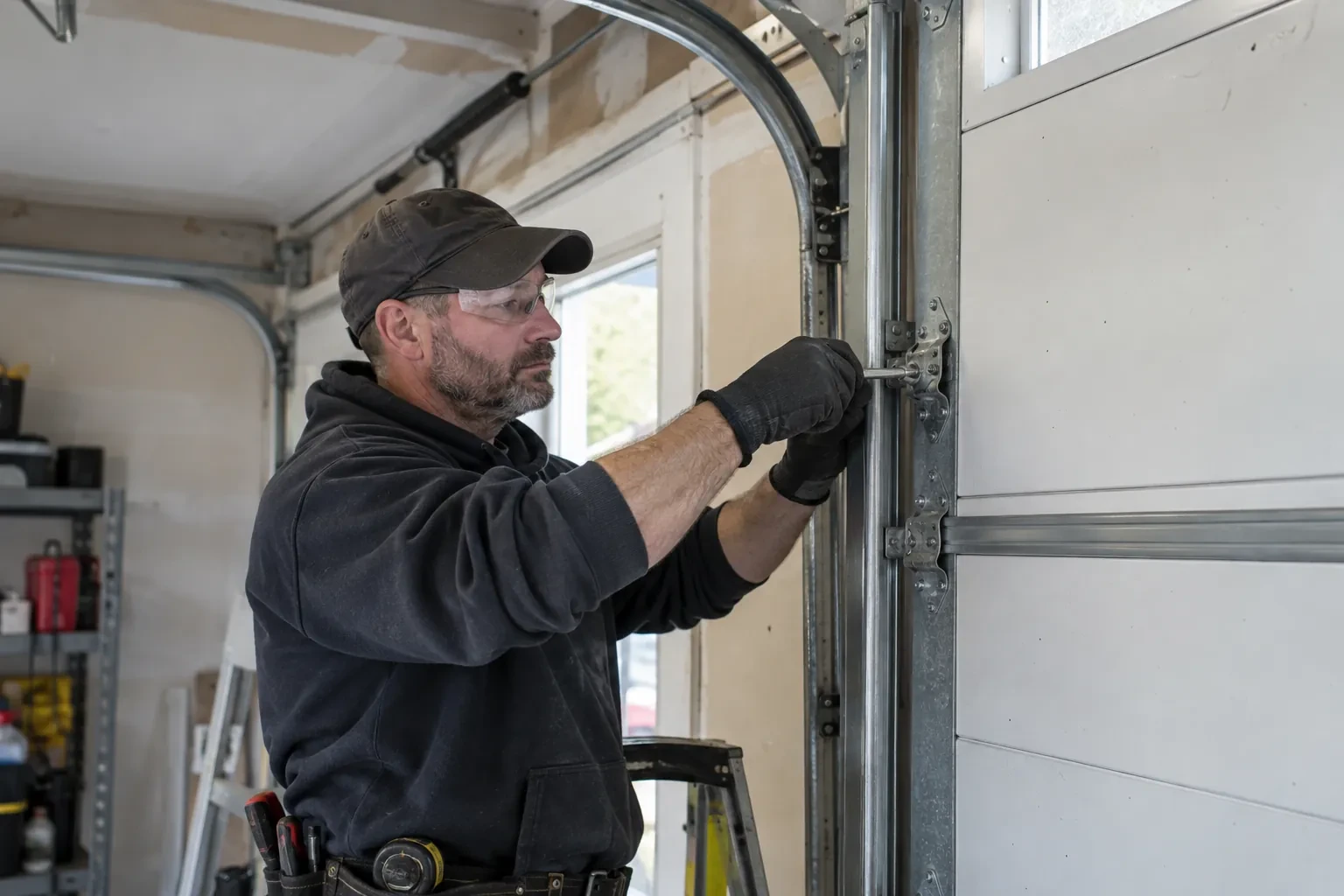
Belt tension is measured, not guessed. At the inner trolley a threaded shaft carries a coil spring and a square nut; turning the nut draws the belt tighter and compresses the spring, and the maker states the spring length that means the belt is right, roughly the width of a thumb. The technician checks that length, presses the belt at mid-span for a little give, and watches it run. A belt hanging below the rail is loose and will skip teeth. A belt pulled drum-tight makes sprocket noise, loads the motor bearings and wears the idler pulley. Both are corrected on the spot, and an adjuster wound to its end tells the technician the belt has stretched past saving.
Putting motor and trolley back in step
Any time the belt has been off the sprocket, the operator's sense of where the door is can drift from where the trolley actually sits, so this step is done before the door is reconnected. The technician lifts the belt clear of the sprocket, runs the operator until the sprocket turns to its closed position and stops on its own, then slides the trolley to the closed end of the rail and refits the belt. Motor and trolley now agree. On operators with a mechanical limit assembly, the middle contact is adjusted instead. Without this step, the door stops short at one end no matter how the travel limits are turned.
The hush is back
What you notice first is the sound, or the lack of it. A belt drive in good order starts softly, hums along the rail and eases to a stop, and after the repair it should sound the way it did the week it was installed. The clack of a loose belt, the squeal of a dry pulley and the growl of a stripped gear are gone because their causes are gone, not masked. Listen for that baseline over the next few weeks; a new noise arriving is the earliest warning you will get, and a belt drive tends to announce trouble months before it stops. A short call at that stage is a small adjustment.
Belt-Drive Opener Repair
In the van
Belt tension spring and square nut
Drive gear and sprocket kit
Rail hanger straps and fasteners
Photo-eye sensor pair
Reinforced drive belt with clip
Belt-Drive Opener Repair
What affects the quote
Belt length and type
A belt for an 8 ft door rail is longer than one for a 7 ft rail, and belts differ by maker and tooth pitch, so the part named on the quote follows the operator's model.
Height of the ceiling
Where the operator hangs under a tall or vaulted ceiling, the sprocket and idler are reached from taller ladders and the work at the head takes longer.
Trolley condition
A trolley that releases and re-engages cleanly stays. One that is cracked, stuck or loose on the rail is replaced during the same visit and listed as its own part.
What to have ready
- Are there plastic shavings or grease on top of the motor housing?
- Does the motor run while the door stays still, or does the door stop partway?
- Has anyone tightened or adjusted the belt recently?
Belt-Drive Opener Repair: questions
QuestionsThe motor runs but the door stays still. What has happened?
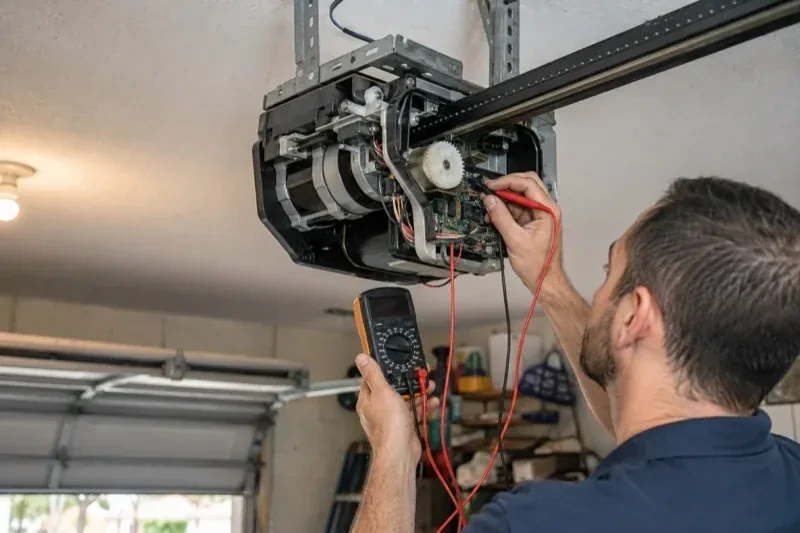
Something between the motor and the door has let go. On a belt drive the usual suspects are a broken clip where the belt joins the trolley, a belt that has jumped off the sprocket or idler pulley, a trolley that failed to re-engage after the red cord was pulled, or a stripped drive gear inside the motor head, which leaves plastic shavings on the housing. Each is a specific repair.
Will my remotes and keypad still work afterwards?
Yes. Belt, trolley and pulley work happens on the rail and leaves the operator's memory untouched. Replacing the gear at the motor head means opening the head unit, and on some models that is a good moment to confirm every remote, the keypad and any in-car buttons afterwards. The technician tests each before leaving and re-teaches any that need it.
How often should belt tension be checked?
A look every few months is enough: with the door closed and again with it open, the belt should run level with no sag below the rail. A yearly service that checks tension against the spring length, looks at the sprocket and pulley and runs the balance and reversal tests keeps a belt drive quiet for its whole life. Check again after the first hard cold of the winter.
Related services
- Chain-Drive Opener RepairThe door opens about a third of the way and stops.
- Garage Door Opener ReplacementDuring the ice storm the power was off for two days.
- Photo-Eye Sensor Alignment or ReplacementSince shelving went up along the garage wall, the door will not close and both sensor lights are dead.