Springs · Vaughan
Garage Door Roller Replacement
Halfway up, the door hesitates and the opener strains before it carries on.
In plain words
A garage door opener is designed to guide a balanced door, not to haul a rough one. Rollers that bind, wobble or grind add resistance across the whole travel, and the opener answers by working harder, running hotter and tripping its force limit or reversing partway. Replacing worn rollers with a smooth-running set takes that load away, which is why the opener often sounds calmer after the same visit. The technician confirms the door holds its own weight with the opener released, then checks the opener's force and reversal settings once the new rollers are in.
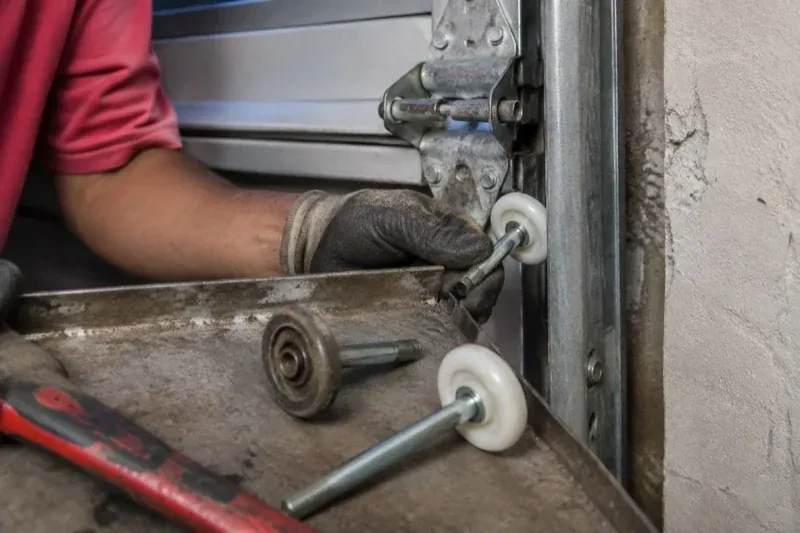
How the visit goesSince the cold snap the door has been stiff and noisy first thing, and after the last thaw the bottom corner began to judder. There is slush in the foot of the track and a bloom of rust on the lowest wheel.
Garage Door Roller Replacement
How the visit goes
Does the door hold its own weight?
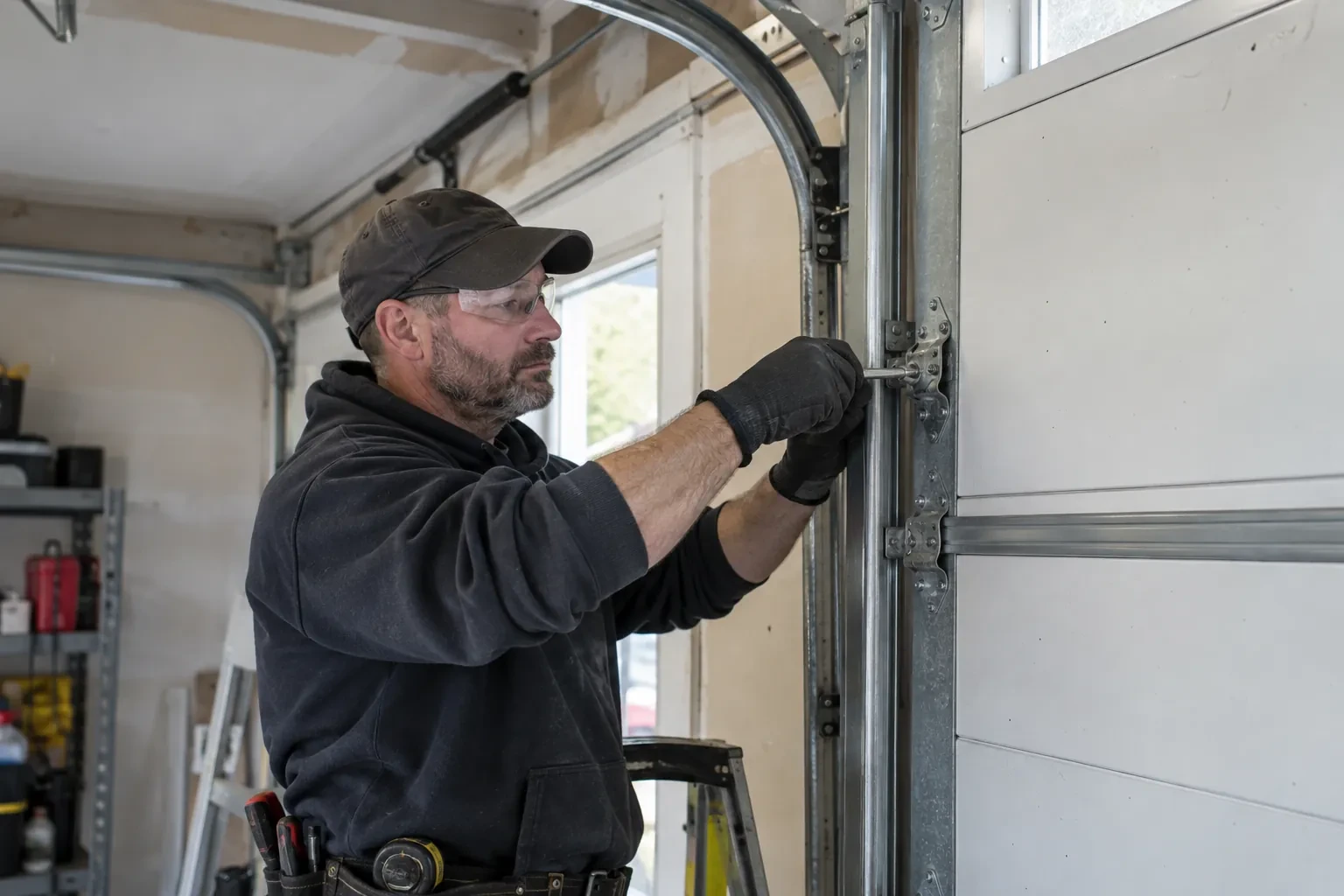
With the opener released, the technician lifts the door to knee height and then to halfway and lets go. A balanced door stays where it is put; one that drifts down or climbs is telling you the springs are out of adjustment. This check comes before roller work for a practical reason: an unbalanced door leans on its rollers and hinges with weight the springs should be carrying, and new rollers fitted to such a door wear early. If the balance is off, the technician explains what the spring system needs so you can decide whether to have it corrected in the same visit.
Lubricating the right parts, and not the wrong ones
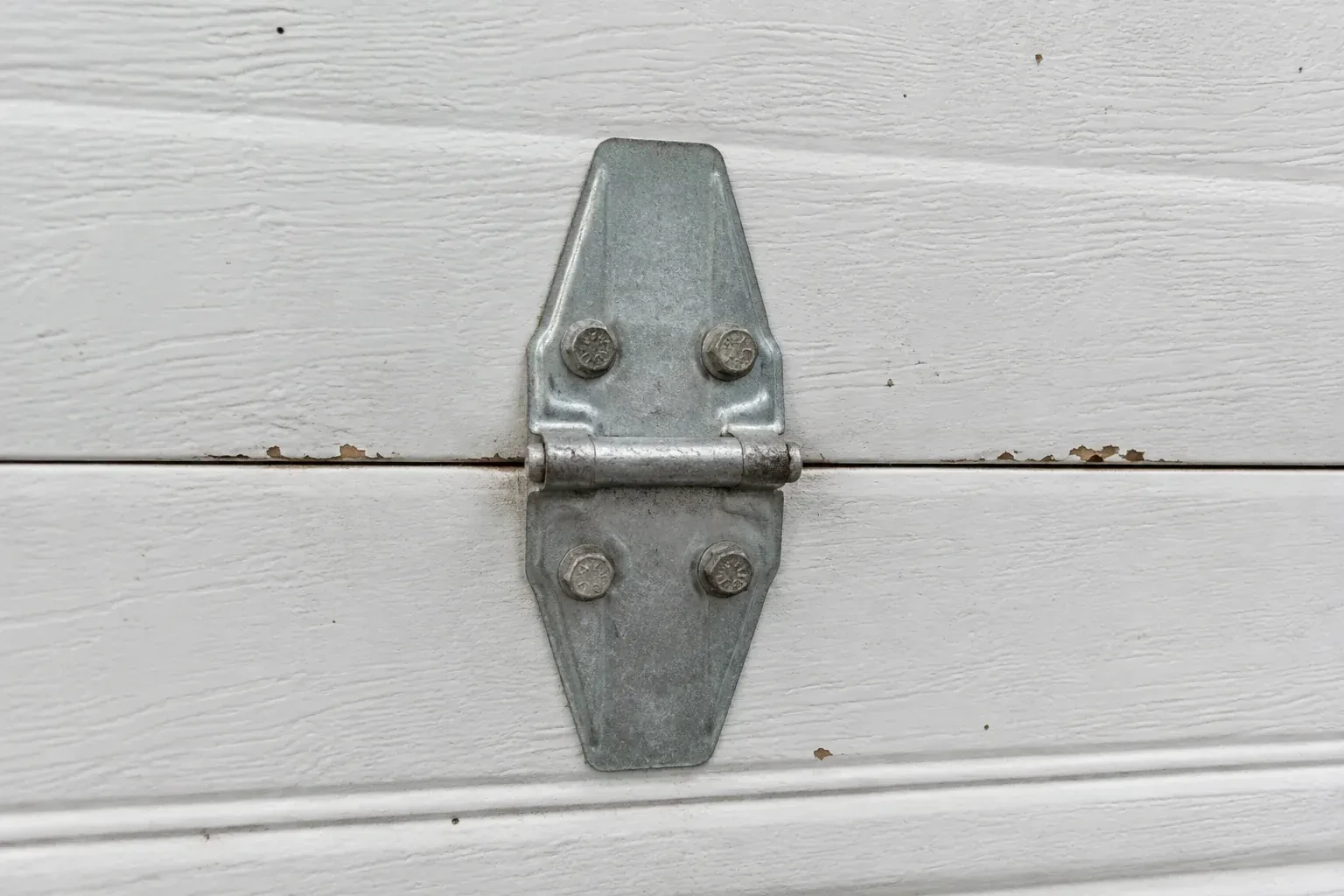
Fresh rollers deserve the right lubricant in the right places. Roller stems and hinge knuckles get a light coat of the door manufacturer's specified lubricant, worked in by running the door a few times. The nylon tire itself is left dry, as is the inside of the track, because grease on those surfaces collects dust and grit that grind the wheel and let it slide instead of turn. Ball bearings are lubricated only where the roller's own maker calls for it, since some nylon rollers should not be greased at all. The technician wipes away any excess so nothing drips onto the car or the floor.
Keeping salt and slush out of the track
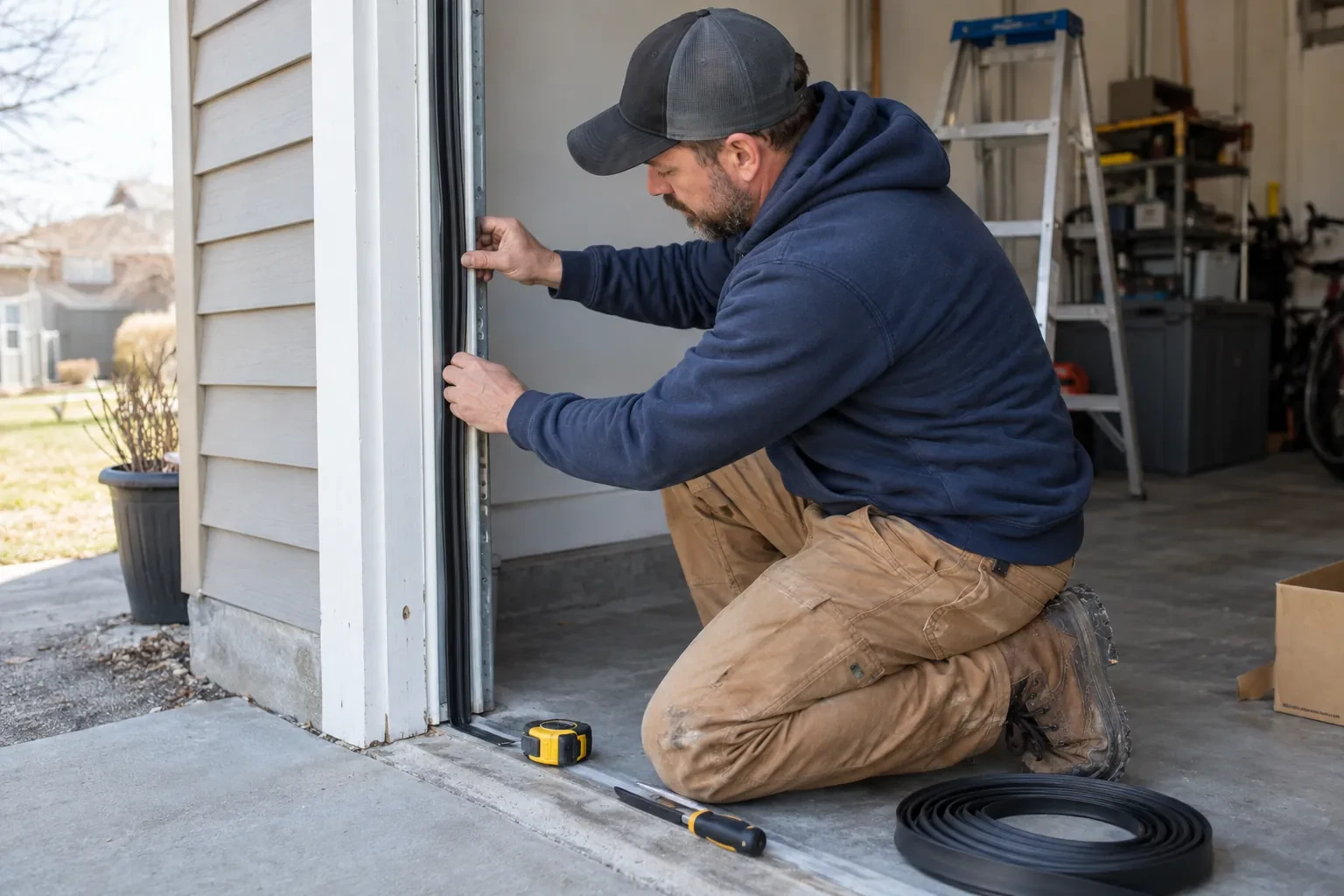
Winter is where roller care pays off. Knock snow and slush off the car before pulling in when you can, and sweep or wipe the foot of the tracks after a heavy salt spell so brine and grit do not sit against the bottom rollers and brackets. If ice forms in the lower track, clear it by hand with warm water and a cloth rather than running the door through it, since wheels that skid across ice ridges wear flat spots. The bottom weather seal should sit fully on the floor; a gap lets meltwater run under the door and into the track.
Garage Door Roller Replacement
In the van
Two-inch nylon ball-bearing rollers
Garage door lubricant
Steel ball-bearing rollers
1-1/2 inch reversal test block
Sealed-bearing nylon rollers
Garage Door Roller Replacement
What affects the quote
Door height and high-lift track
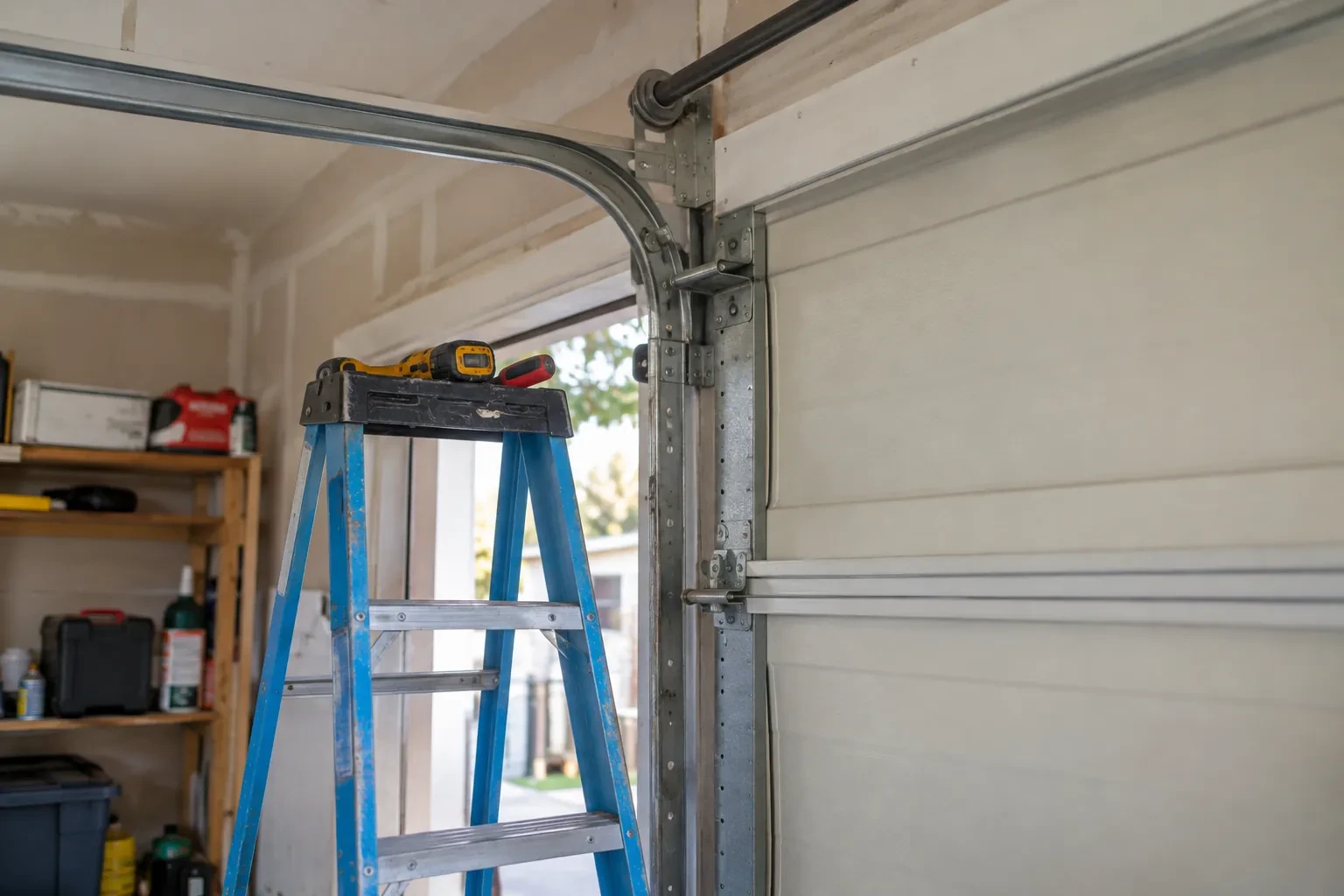
Tall doors, and high-lift or follow-the-roof track, put the horizontal run high overhead, so ladder work and the extra sections lengthen the visit.
Top fixtures and bottom brackets
A top fixture that no longer adjusts, or a bottom bracket that has corroded or bent, is changed while the door is secured, and the quote names each piece.
Opener adjustments afterwards
Resetting force limits and re-testing the reversal once the door moves freely is normally part of the job; reprogramming or repairs to the opener itself are quoted separately.
What to have ready
- Is the opener straining, reversing partway, or working harder than it used to?
- When were the springs last replaced, if you know?
- Has the door ever come off its track or been hit by a vehicle?
Garage Door Roller Replacement: questions
QuestionsCan I replace just the one roller that looks bad?
One roller can be changed on its own, and sometimes that is the sensible stopgap after a wheel breaks. The better result comes from a full set, because the other wheels have done the same number of cycles and are close behind, and mixing new with old, or nylon with steel, leaves the door running unevenly and sounding different on each side. A matched set also lets the technician set every top fixture and check every hinge in one pass.
How long do garage door rollers last?
It depends on what they are made of and how often the door moves. Builder-grade plastic wheels with no bearings often show wear after only a few years. Steel and nylon rollers with seven to thirteen ball bearings are typically rated for ten to fifteen thousand cycles, roughly the life of a torsion spring, which for many households means seven to ten years. Sealed-bearing nylon rollers are rated far higher. A door used many times a day, or one living with salt and slush, shortens all of those.
Are the bottom rollers different from the rest?
The wheels themselves are usually the same, but their home is not. The bottom rollers sit in the bottom brackets, which also anchor the lifting cables and therefore carry the counterbalance load whenever the door is closed. That is why manufacturers put warning labels there and why this position is handled by a trained technician who either exchanges the roller without disturbing the bracket or relieves the spring tension first. It is also the position most exposed to salt and slush, so it is inspected with extra care.
Related services
- Garage Door Track Repair or ReplacementYou bought the house with a door that sticks near the top of its travel.
- Garage Door Cable ReplacementThe car bumper kissed the door on the way in.
- Torsion Spring ReplacementOn a cold morning the remote does nothing useful: the light comes on, the motor turns briefly, the door stays shut.