Repairs · Vaughan
Garage Door Manual Lock Repair
The T-shaped handle on the outside turns a full quarter, exactly as it has for twenty years, but nothing moves behind it.
In plain words
A manual lock earns its keep on the nights the power goes out. With the opener dead, the door comes down by hand on the release cord, and the slide bolt or T-handle is what holds it shut until morning. Winter tests these locks: meltwater freezes in the outside cylinder, salt spray stiffens the bars in their guides, and packed snow under the door lifts it just enough that the bolt misses its slot. Lock repair puts the mechanism right, treats the cylinder and bars so they shed moisture, and leaves you with a simple routine for outage nights.
How the visit goesOn the old wooden door out back, one lock bar hangs loose from a rusted guide and the other is bent at an angle, so the handle turns but the door can still be lifted a hand's width from outside.
Garage Door Manual Lock Repair
How the visit goes
Closing the door by hand first
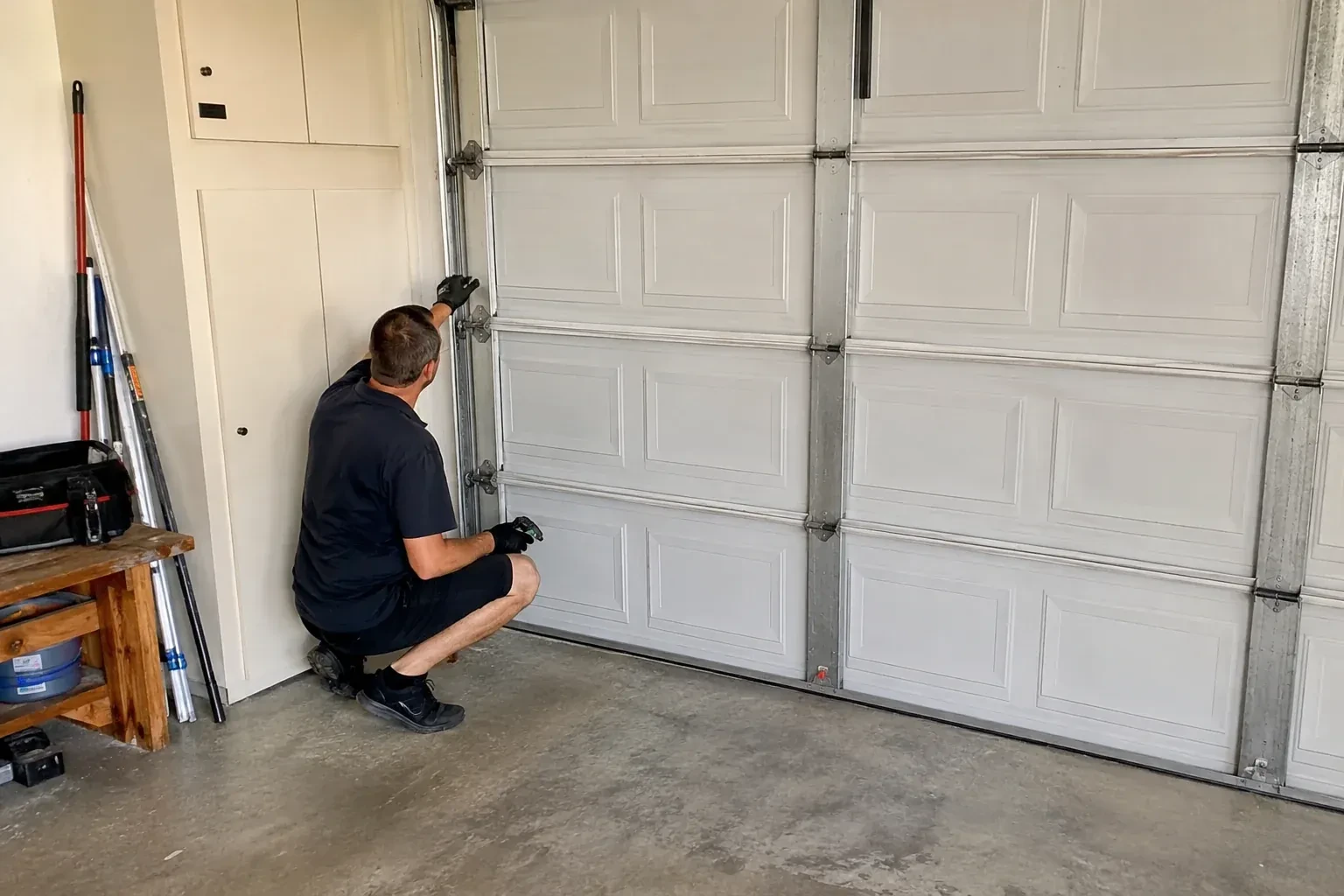
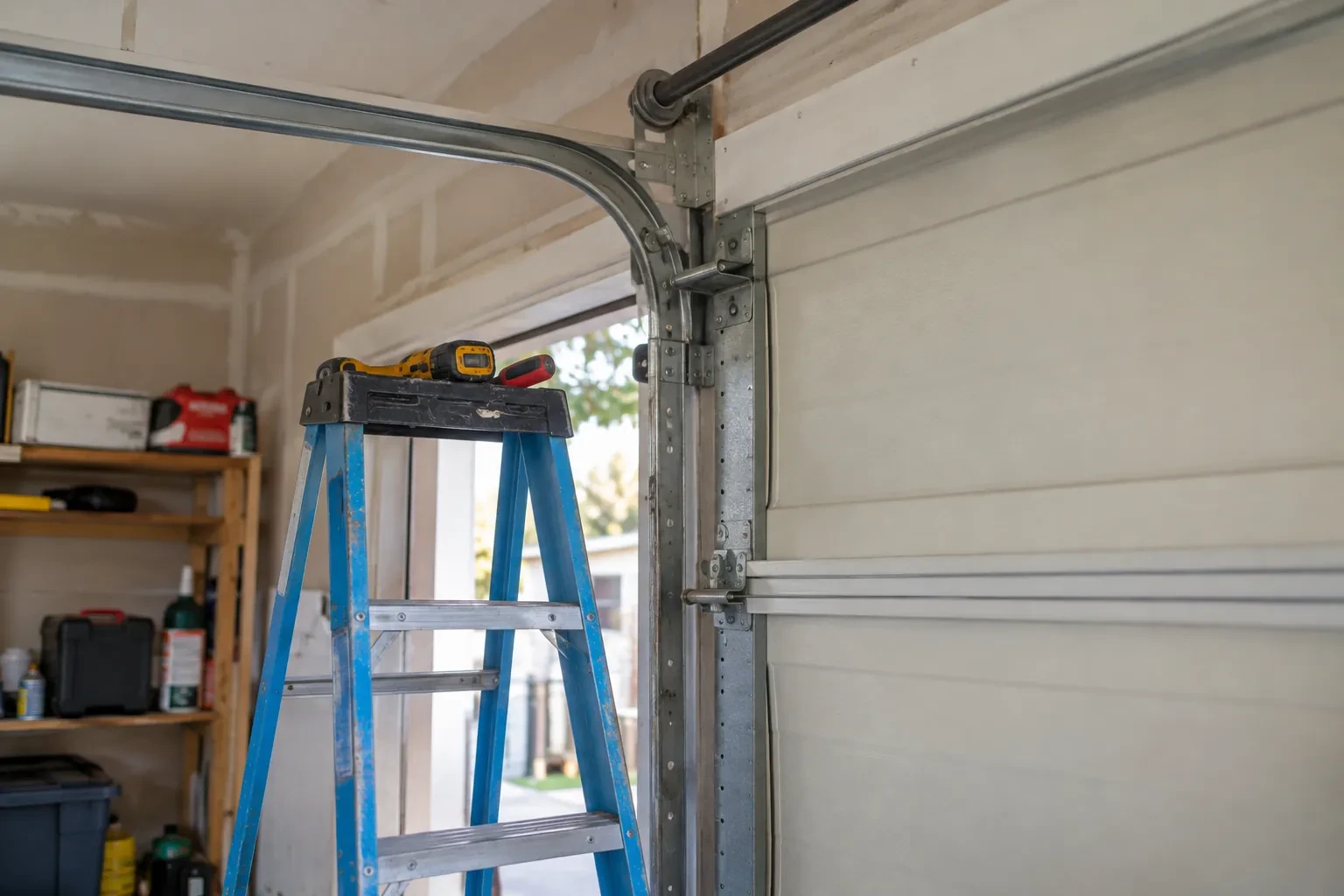
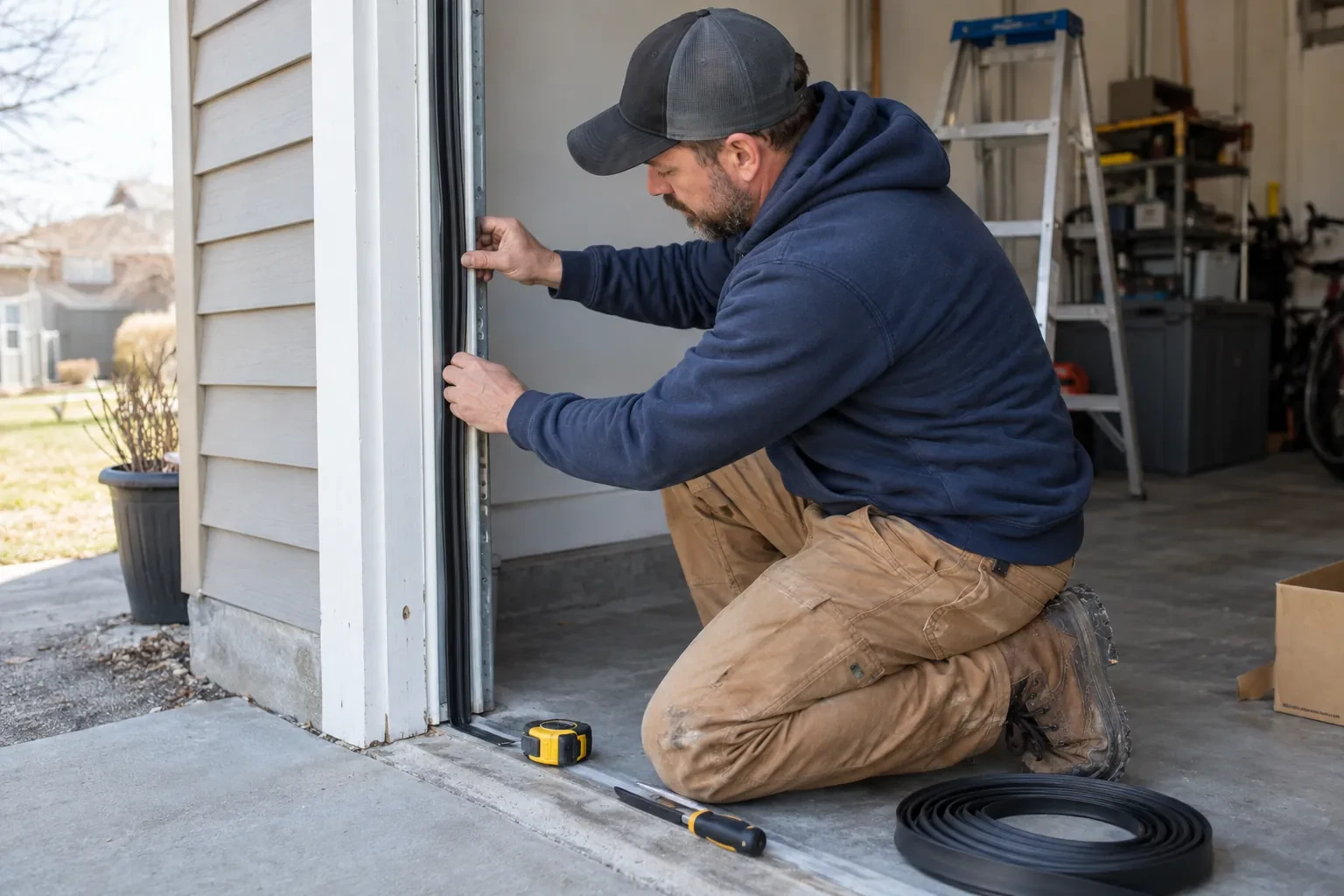
Before the lock is touched, the opener is disconnected and the door is lowered by hand until it rests on the floor. The technician checks that both bottom corners meet the concrete, that the top section sits flat against the header, and that the door is level across its width. Then the bar is sighted against its slot. If the two are out of step, the reason is looked for in the door: a settled slab, a loosened track bracket, a compressed bottom seal, snow or ice at the threshold, or an opener limit set to stop the door short. Sorting the door out first keeps a good lock from being replaced for a fault that lives elsewhere.
Anchoring the lock in tired material
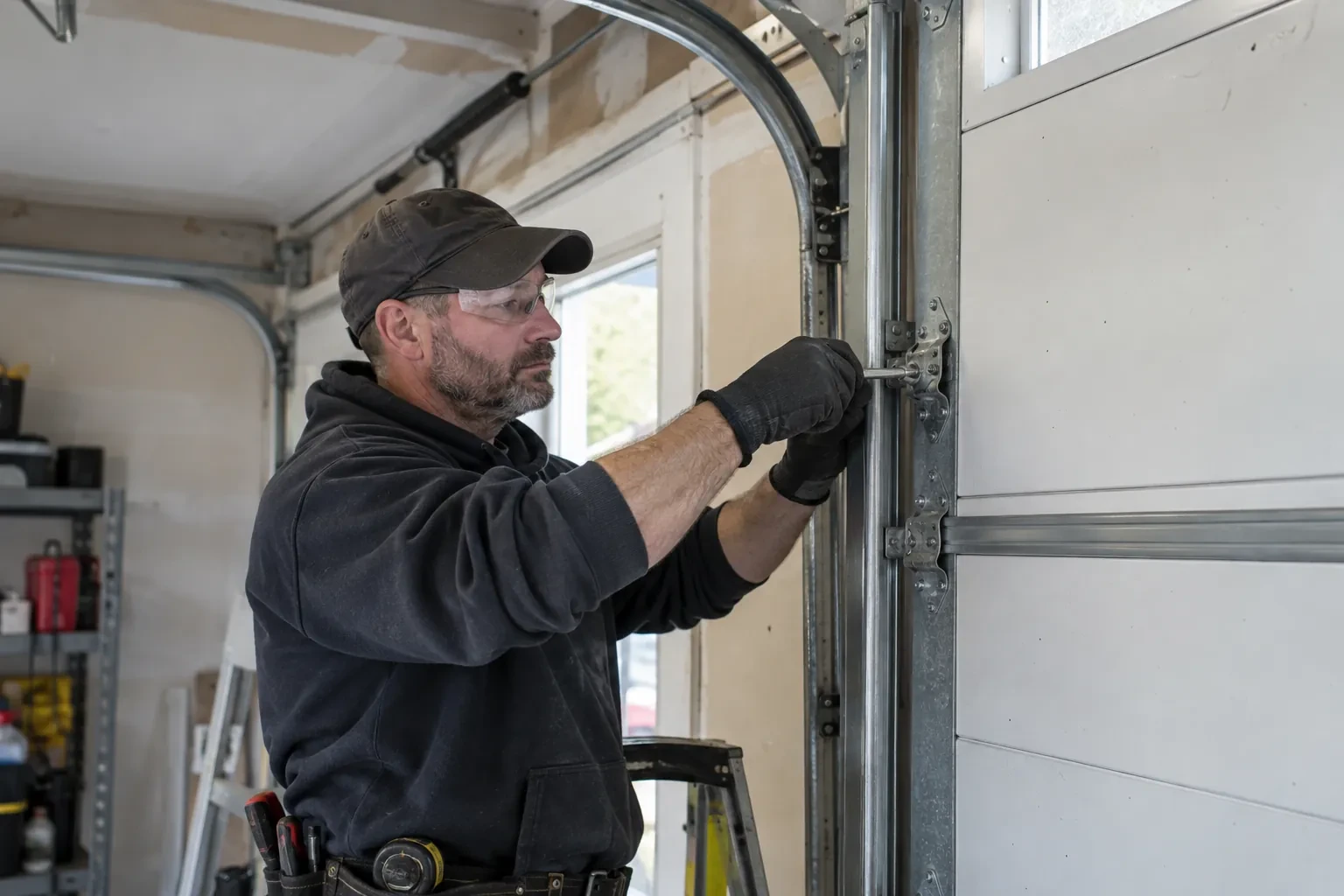
A lock is only as sound as what it is screwed to. Where screws have pulled through a thin steel skin and left oval holes, the technician fits carriage bolts through the section with a backing plate on the inside, spreading the load across a wide patch of metal. On a wooden door with softness around the handle or along the stile, the decayed wood is cut back and a hardwood filler block or backing plate is let in, and the lock and guides are fixed to that. Holes that have grown are plugged and redrilled. The result is a handle that turns without rocking and guides that hold the bar where it was set.
Locking the door when the power is out
The manual lock is now your plan for a dark evening. The sequence is simple: with the door closed, pull the opener's release cord so the trolley disconnects, then throw the slide bolt or turn the T-handle to lock. In the morning, or when the power returns, reverse it exactly: unlock first, confirm both bars are clear of the track, then re-engage the opener as its manual describes, usually by running it once so the trolley picks up the arm. The technician walks through this with you at the door, and it is worth practising once so the order is second nature before the storm that makes it matter.
Garage Door Manual Lock Repair
In the van
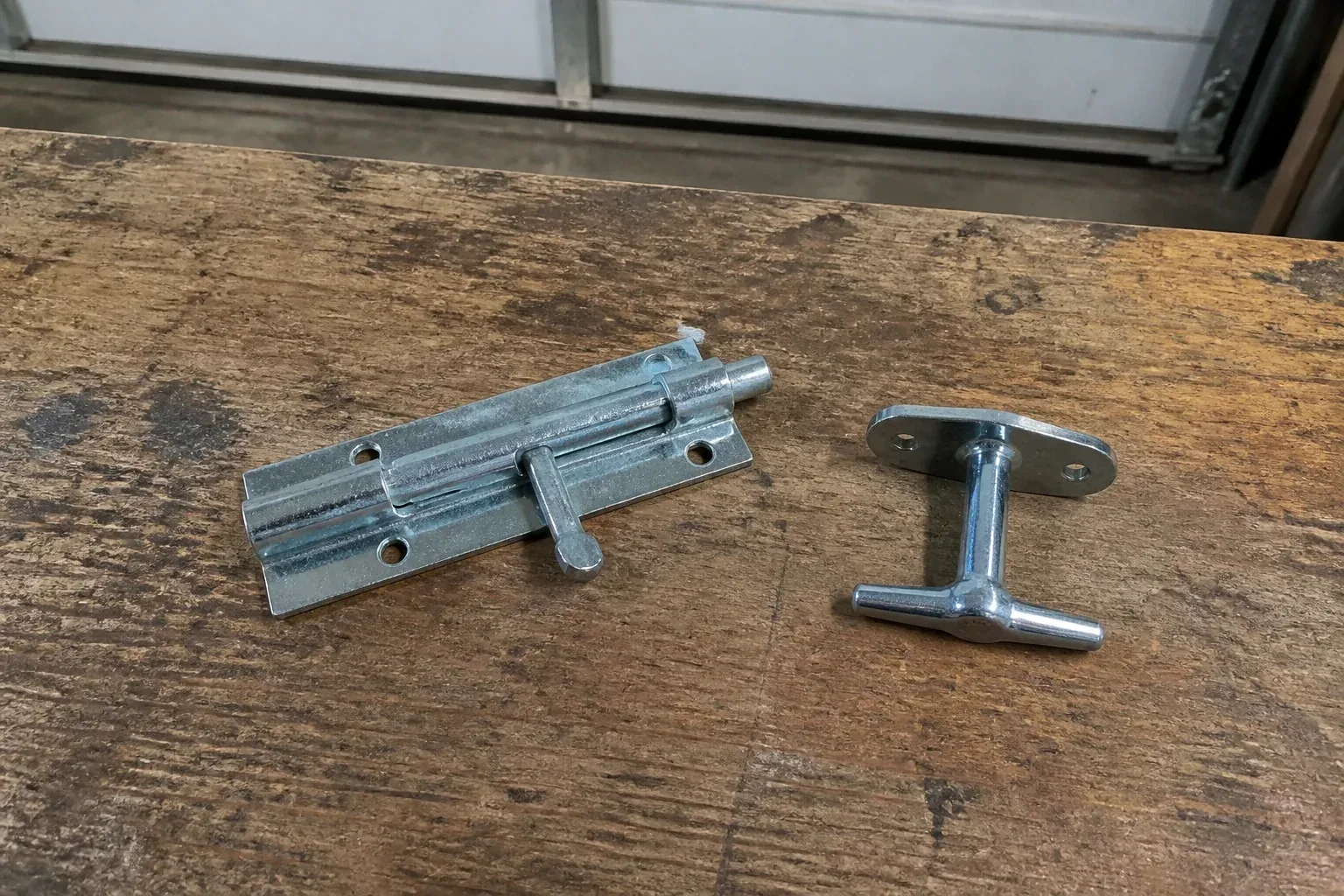
Centre lock body and return spring
Lock cylinder with tailpiece
Keyed T-handle lock set
Carriage bolts and backing plates
Inside turn handle and spindle
Garage Door Manual Lock Repair
What affects the quote
Steel skin or wood
Thin steel that has let the screws pull, or wood gone soft around the handle, calls for carriage bolts, backing plates or a filler block. That reinforcement is its own line in the quote.
Door thickness and insulation
Insulated and thicker doors take longer spindles, longer through-bolts and sometimes a sleeve through the foam. Matching those parts to the door affects the parts list.
Corrosion and seized hardware
Screws rusted solid, a cylinder seized in its handle or bars welded into their guides take time to free or cut out, and corroded parts are replaced rather than reused.
What to have ready
- Is there an automatic opener on this door?
- Does the handle turn, and does anything move inside the door when it does?
- Does the key go in and turn, or is it stiff or spinning freely?
Garage Door Manual Lock Repair: questions
QuestionsI have no key for the outside handle. Can it be made to work?
Yes. The cylinder is removed and either rekeyed to a fresh combination, so any key held by a previous owner is retired, or replaced with a new cylinder carrying the correct tailpiece. New keys are cut and tested in the handle before the technician leaves. If a locked door has to be opened first, the technician confirms your connection to the property as a matter of course.
What is an automatic garage door lock, and does it replace the manual one?
It is a motorised deadbolt, offered as an accessory by some opener makers, that slides a bar into the track each time the door closes and withdraws it before the door opens, all controlled by the opener. It gives the physical security of a manual lock without the need to remember it. It can sit alongside a manual lock kept for outages, or take its place entirely.
How long does a manual lock repair usually take?
An adjustment to a slide bolt or a guide is a short job, while a full T-handle replacement with new bars, a rekey and a door alignment fills a longer visit. Most calls sit somewhere between, and the technician gives you a realistic sense of the time once the door has been looked at, rather than guessing from the phone.
Related services
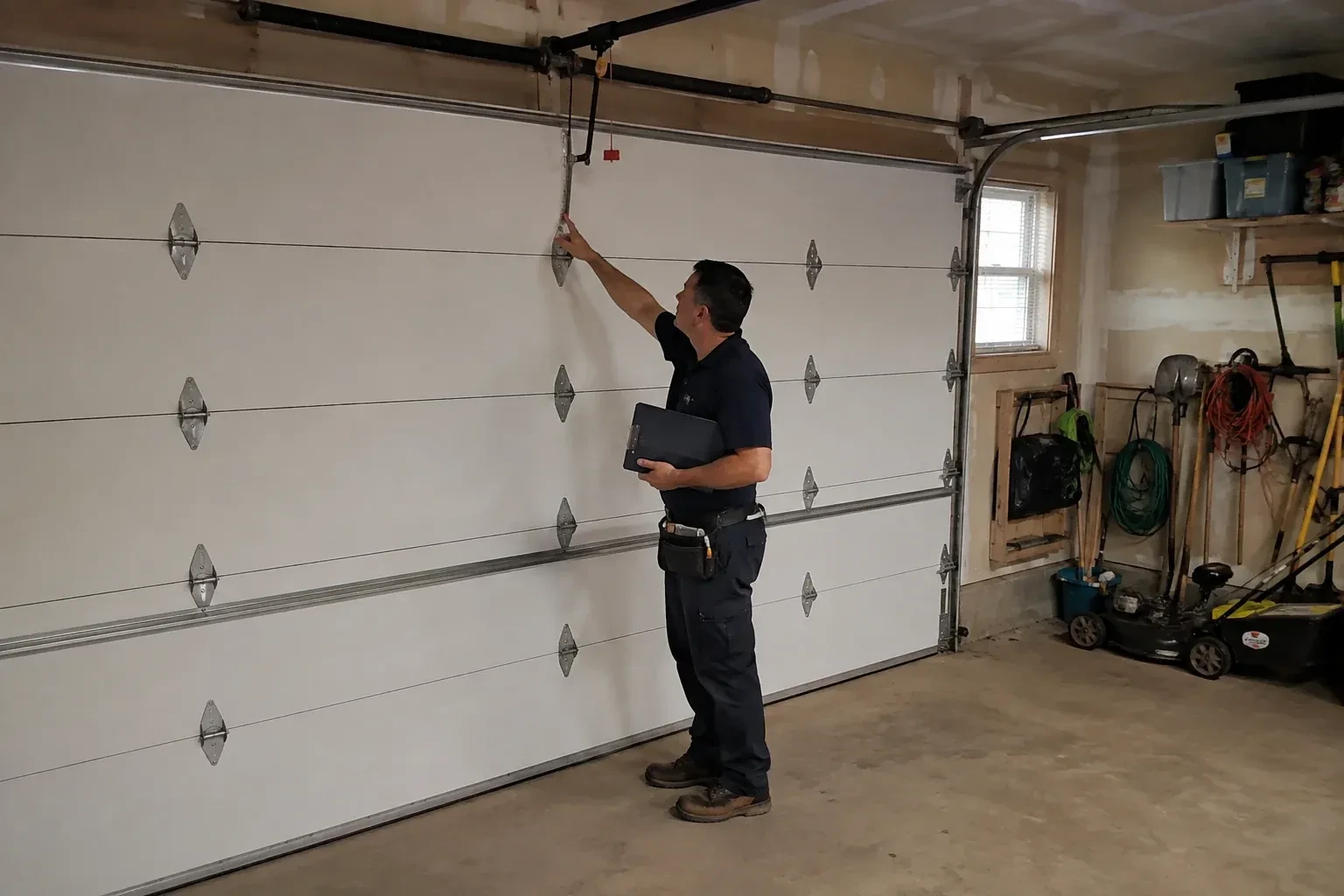
- Garage Door Tune-UpThe door lands with a thud you can feel through the kitchen floor, and sometimes it bounces back up a few centimetres before settling.
- Off-Track Garage Door ResetThe door came down fine but with a scraping noise, and now the vertical track on one side is bowed away from the wall.
- Garage Door Panel ReplacementThe inside face of one section has started to bow outward and the outer skin has a soft, wavy look.