Garage Doors
How doors work
Understanding the why behind a repair makes the fix easier to trust. Our advice pages explain how each part works, what happens when it wears, and how the repair restores it.
Before you book
My opener is old and has no photo eyes. Can it still be inspected?
Yes. Older openers rely on contact reversal alone, so the board test carries more weight and is run carefully against the maker's procedure, along with the manual balance check, the force setting and the release. The report records what the opener has and how it performed. An opener built before photo eyes became standard is flagged for replacement in the report, since makers recommend moving off that generation of opener rather than treating photo eyes as a nice-to-have.
What does a garage door tune-up actually include?
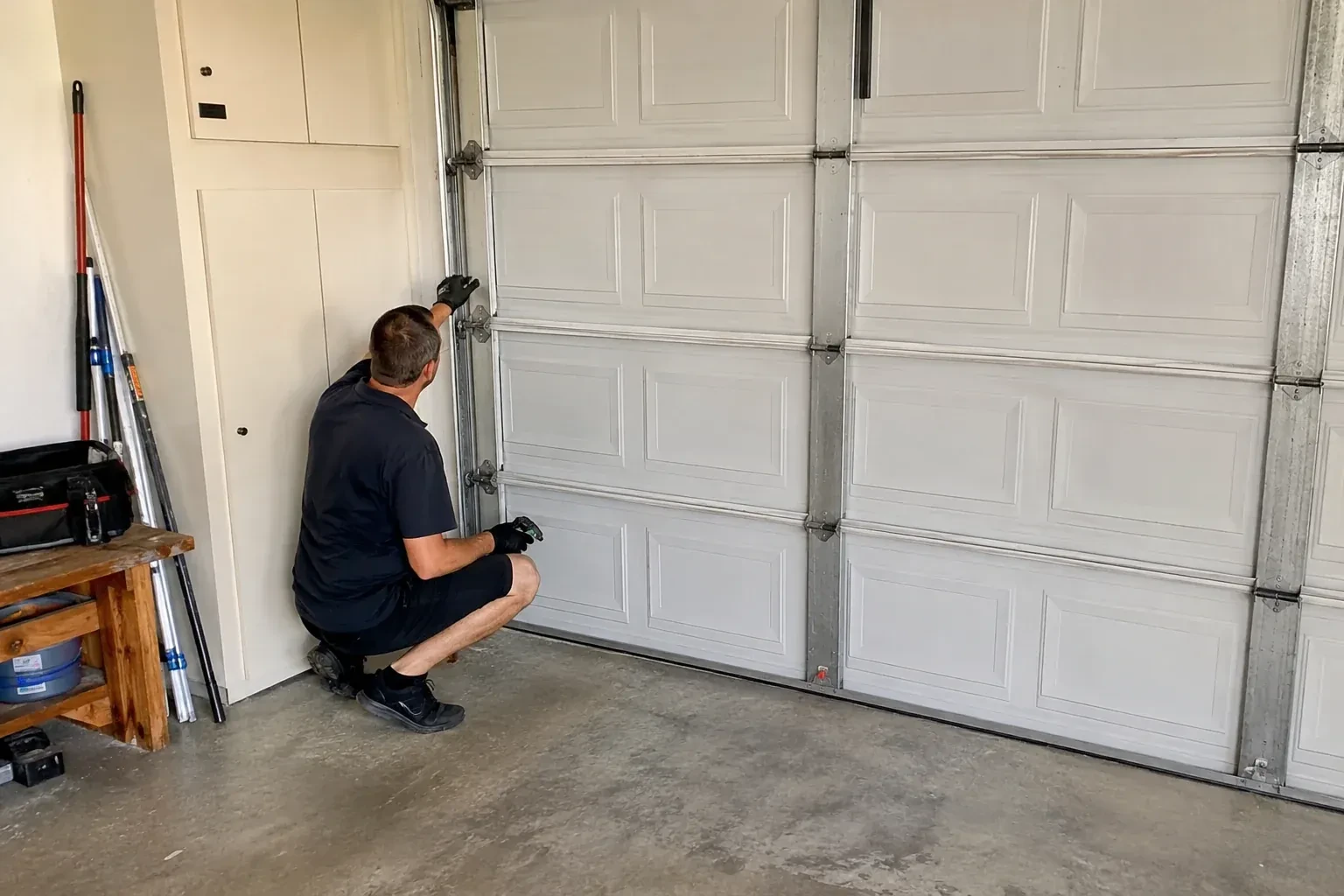
A full cycle observed before any work, a hands-on inspection of hinges, rollers, tracks, springs, cables, drums, brackets and the opener's attachments, tightening of the accessible fasteners, lubrication of the moving points with a garage door lubricant, a balance check with the door disconnected from the opener, adjustment of the opener's travel and force, cleaning and alignment of the photo-eyes, both reversal tests, a look at the seals, and a written record of the findings.
How is a reset different from a track repair?
In a reset the rail is sound and the work is putting rollers, cables and sections back where that rail expects them, with minor alignment corrections. In a track repair the rail itself is the problem and must be straightened, re-hung or partly replaced first. One visit can include both, and the technician tells you which you need after looking at the door rather than guessing from the description.
My door is insulated. Does the new section need the same insulation?
It should. Insulated sections come in different thicknesses and core types, and the replacement needs to match yours so the joints line up, the hinges sit at the right depth and the weight stays consistent with the springs. Mixing an insulated section into an uninsulated door, or the reverse, generally means a step at the joint and a change in balance. The technician reads the thickness and core type from the door before ordering.
What is a threshold seal, and when is it worth adding?
A threshold seal is a rubber or aluminum-backed strip glued to the garage floor along the line where the door closes. The door's bottom seal lands on it, and its raised outer edge turns water, wind-blown debris and small visitors back toward the driveway. It earns its place where the drive slopes toward the garage, the slab sits below the apron, or the floor edge is too uneven for the bottom seal alone to meet cleanly.
Do you adjust the door as part of the seal work?
Small corrections, yes. If a track bracket needs re-setting or the door needs to come plumb so the fin can meet it evenly, that is done so the new seal is fitted to a door that sits properly. Larger work, such as replacing rollers or a bowed section, is explained and offered as its own job so you can decide on it separately.
I have no key for the outside handle. Can it be made to work?
Yes. The cylinder is removed and either rekeyed to a fresh combination, so any key held by a previous owner is retired, or replaced with a new cylinder carrying the correct tailpiece. New keys are cut and tested in the handle before the technician leaves. If a locked door has to be opened first, the technician confirms your connection to the property as a matter of course.
Can I replace just the one roller that looks bad?
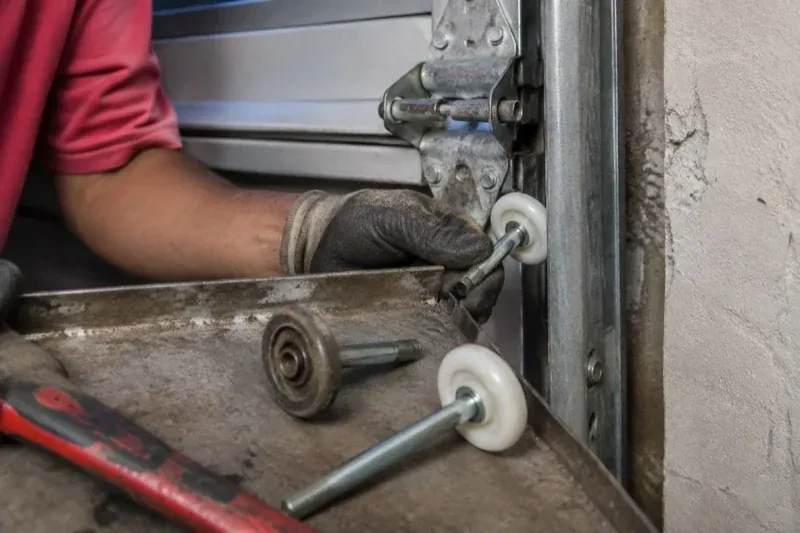
One roller can be changed on its own, and sometimes that is the sensible stopgap after a wheel breaks. The better result comes from a full set, because the other wheels have done the same number of cycles and are close behind, and mixing new with old, or nylon with steel, leaves the door running unevenly and sounding different on each side. A matched set also lets the technician set every top fixture and check every hinge in one pass.
Can I tighten loose hinge screws myself?
Yes, hinge screws are a homeowner task. Disconnect the opener, leave the door closed, and snug each hinge screw with a socket wrench without forcing it, since overtightening strips the hole. Leave the bottom brackets alone; they anchor the cables and are under spring tension. If a screw spins freely or a hinge is cracked, stop there and have it looked at, because a stripped hole needs a fresh anchor rather than more turns.
Can a bent garage door track be straightened, or does it need replacing?
Both happen, and the damage decides. A shallow dent in the vertical run away from the curve is usually dressed back to shape with track pliers or a block, and a channel that has spread can be squeezed closed. A kink, a crack, a bend in the curved piece or steel thinned by rust is replaced with a matching section, because a hard spot in the roller path keeps catching however carefully it is worked.
What information helps when I call?
Whether the door is sitting crooked, jammed partway or on the floor; whether you can see a cable hanging loose, frayed or wrapped around the shaft; whether there is a spring above the door or springs along the tracks; the door's rough height and whether it is a single or double; and what happened just before, such as the door coming down on something. A photo of the drum end and the bottom corner is useful.
How long does a torsion spring replacement take?
Most residential replacements are completed in one visit. Securing the door, measuring, removing the old spring, fitting and winding the new one, balancing and testing the opener typically takes an hour or two, longer if bearings, cables or a bent top section are also being dealt with. The technician confirms the scope after the first checks, so you know what the visit involves before the work starts.
Why does the opener get adjusted after new springs?
Because the door is now much lighter for the opener to move. Over the years, as the old springs weakened, the opener's force setting may have been turned up to keep the door going, and its travel limits were set against a door that sat differently on the floor. Left alone, that extra force would push the newly balanced door too hard. Resetting force and travel, then repeating the reversal tests, matches the opener to the door it now has.
Should I lubricate anything after the visit?
A little, twice a year. Use a product sold for garage doors on the spring coils, hinge pins, roller stems, bearings and bracket pins, and cycle the door a few times to work it in. The tracks want a wipe, not a spray, because a slick track lets the rollers skid and gathers grit. Skip thick grease. Low friction is what lets the springs' setting hold true.
Should I lubricate the chain, the rail or the track?
Rollers, hinges, bearings and springs benefit from a garage door lubricant once or twice a year. The chain, belt or screw-drive rail is a separate question, since each drive type calls for its own product and schedule from the opener's manual rather than one rule for every unit. The track itself should stay clean and dry, because lubricant there collects grit and makes rollers slide instead of turning. The technician can point out the spots on your door at the end of the visit.
Can you turn the force up so the door closes on cold mornings?
Force is set to the lightest level that moves the door reliably, and it is raised only a little for a cold garage. Turning it up further to overcome a heavy door or a seal frozen to the slab is not done, because too much force interferes with the safety reversal and can bend the top section. If the door is hard to move in the cold, the springs, rollers or the frozen seal are dealt with instead.
The motor runs but the door stays still. What has happened?
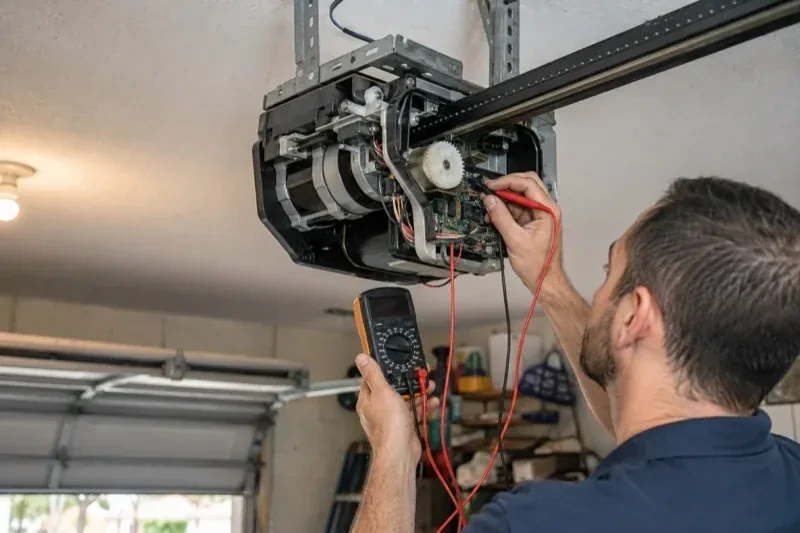
Something between the motor and the door has let go. On a belt drive the usual suspects are a broken clip where the belt joins the trolley, a belt that has jumped off the sprocket or idler pulley, a trolley that failed to re-engage after the red cord was pulled, or a stripped drive gear inside the motor head, which leaves plastic shavings on the housing. Each is a specific repair.
Should an opener from before the mid-1990s be replaced rather than repaired?
Manufacturers recommend replacing units made before 1993, since most lacked external entrapment protection such as a photo-eye pair, a sensing edge or a constant-contact close control. Identify the model rather than guessing its age or remote type, since a fixed-code remote with small switches is not proof by itself. Replacing rather than repairing brings the sensor beam, a contact-sensitive force setting, remotes whose code changes on every press and a console lock button.
Do sensors wear out with age?
They do, slowly. The infrared emitter and the receiver dim over many years, lenses craze or cloud from sun and salt, housings crack, and water finds its way in at floor level. A pair that needs re-aligning more and more often, or whose light drifts between steady and flickering with nothing touched, is usually ageing. Because pairs are matched to the opener, an older opener is worth identifying early so the right replacement is on hand.
Is the door tested for safety after programming?
Yes, every time. Each new control is operated while the technician watches the door's full travel, then a 2x4 is laid flat under the door and the door must climb back up on touching it, and a broom handle passed through the photo-eye beam during a second close must stop and reverse the door. A remote is a way of moving a heavy door, so the visit ends only when both tests pass.
Will I get an alert if the door is left open?
That is one of the first settings made. You choose how long the door can stay open before you hear about it, often ten or fifteen minutes, and the notification goes to every phone on the account or only to some. In a climate with real winters this single alert saves a good deal of heat, and occasionally a pipe in the wall shared with the house.
What happens if someone pulled the release while the door was open?
Sometimes nothing, if the door is well balanced and stayed where it was. If the door came down on its own, the technician checks what took the impact: the door arm, the carriage, the bottom brackets, the rollers and the panel around the arm bracket. A bent arm or carriage is replaced, and the balance test shows whether the springs contributed. Then the release is reconnected with the door closed and the household is shown the right sequence.
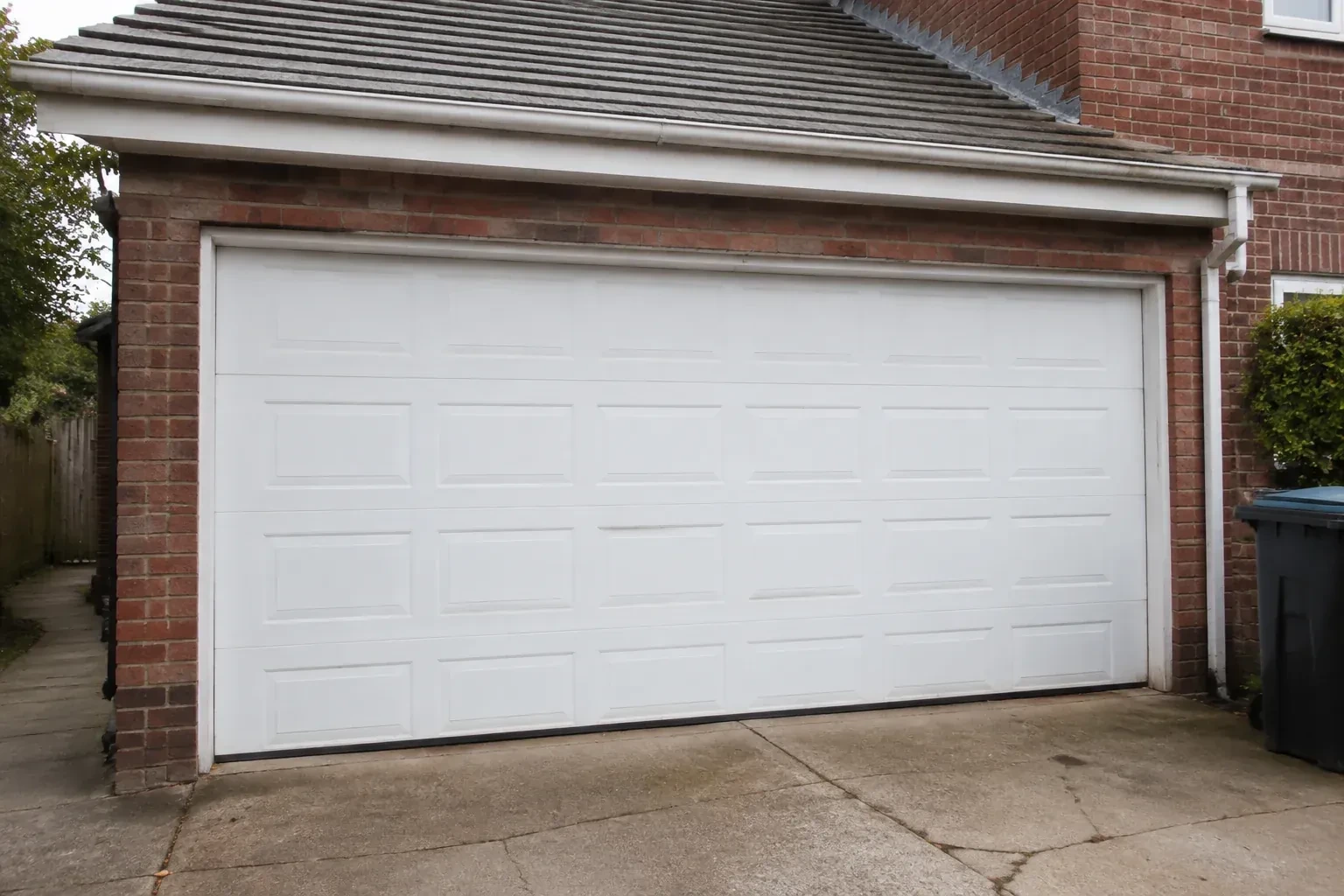
How should I clean the new exterior?
Follow the care information for the selected finish. In general, use a soft cloth or sponge with a suitable mild solution, rinse away residue and clear grime from the lower edge and seals. Road salt deserves regular attention during winter. Avoid abrasive methods unless the product guidance specifically says the surface accepts them.
Can the new door use my old tracks?
A replacement is normally planned with track designed for its section thickness, rollers, weight and required clearances. Old track may look similar while having a different spacing, curve or support arrangement. The installer identifies every component and follows the selected door maker's compatibility information before proposing reuse. Treating panels and track as one system supports clean travel and correct perimeter positioning.
Does every wide double door need this replacement?
Width is an important factor because wind acts across the whole surface, but it is only one input. A sheltered low-rise opening and a broad exposed opening may have different project needs. The practical approach is to measure the door, review its existing reinforcement and documentation, and compare those facts with the criteria established for the building work.
How is the new door balanced before handover?
The opener is disconnected and the door is moved manually through its path. Technicians observe the effort required, whether the door stays controlled at intermediate positions, how cables wind on the drums and whether rollers move freely through the track curves. Spring tension and alignment are refined as a system. Powered settings are addressed only after the manual assembly behaves consistently.
Can I open the new door manually during a power outage?
Yes, once the door has been confirmed balanced and is fully closed, the operator's emergency release allows manual movement. The installer demonstrates the exact release and re-engagement sequence at handover. Use the provided handle or designated gripping points, keeping fingers away from joints and tracks. A door that feels unusually heavy or drifts provides useful information for service.
What information is useful before requesting an installation quote?
Share the construction drawings, opening count, intended sizes, current build stage and photos of the interior and exterior. Note ceiling height, roof slope, beams, ducts, lighting and any planned vehicle lift or storage. Door style, insulation, windows, operator and control preferences help define the package. Also identify who manages framing, electrical work, exterior trim, permits and the project schedule.
What happens during the final operational test?
The technician observes the door through the complete travel path, checking that sections articulate cleanly, rollers stay guided, cables track on their drums and the bottom edge remains level. Balance is evaluated where manual testing is appropriate. Powered controls, stopping positions and installed photoelectric sensors or sensing edges are then checked, followed by a review for vibration or contact.
Why does the operator run but the curtain barely moves?
The door may be binding in a guide, held by a lock, poorly balanced, disconnected from part of the drive or affected by a slipping sprocket, chain or key. The operator itself may also have a brake or internal drive fault. Mechanical movement is checked before settings are changed so the motor is not used to overcome resistance.
What information helps assess feasibility from photos?
Useful photos show the full inside opening, both track sides, the wall above the header, the complete ceiling run, spring and shaft area, opener, beams, lights and other obstructions. Include a wider image showing the planned vehicle lift or equipment zone. Measurements remain necessary, but clear images help identify questions and prepare an efficient site assessment.