Repairs · Vaughan
Garage Door Panel Replacement
The inside face of one section has started to bow outward and the outer skin has a soft, wavy look.
In plain words
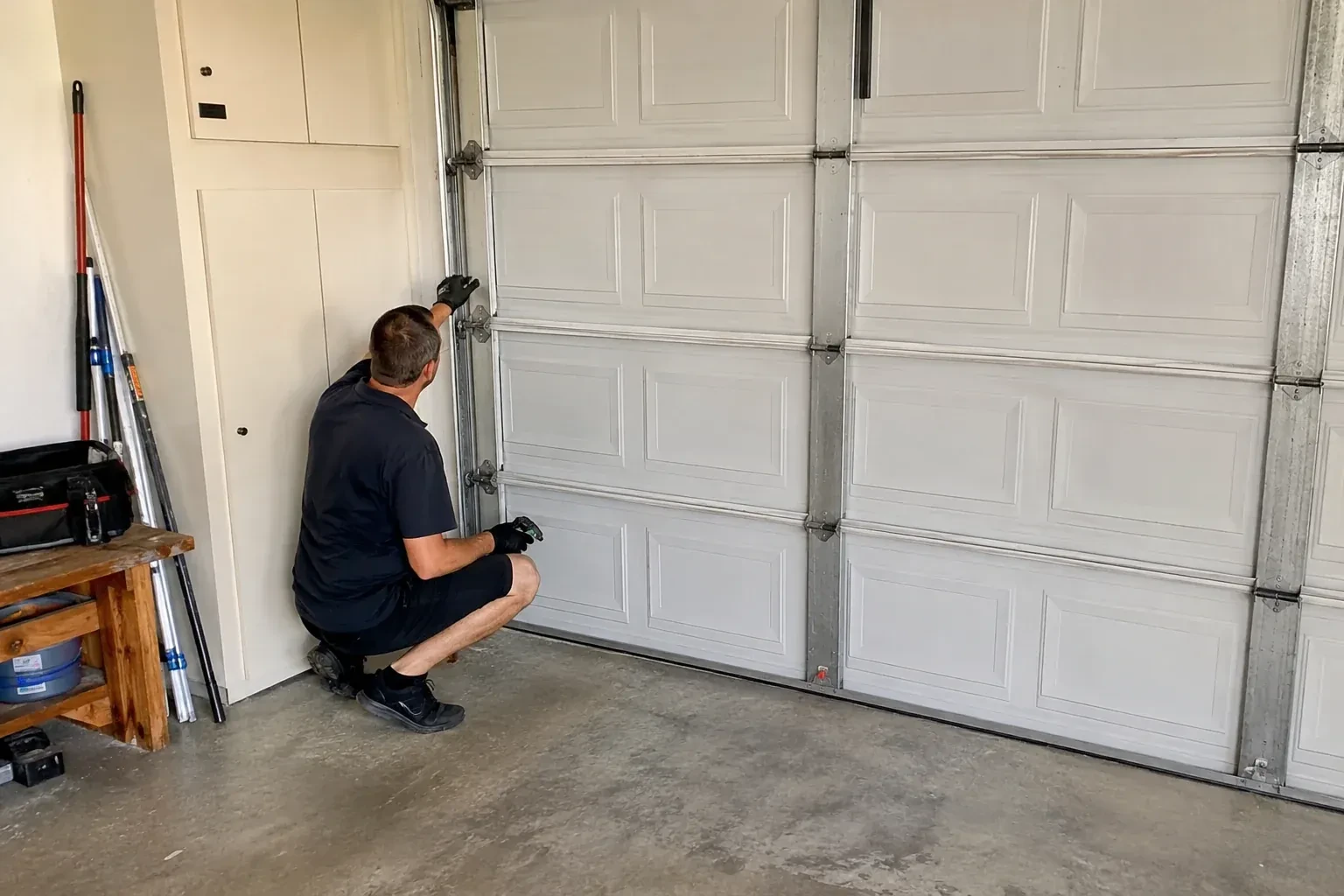
A sectional garage door is built from four or five horizontal sections joined by hinges, each riding on its own rollers in the tracks. Panel replacement takes advantage of that design: when one section is creased, rusted or cracked, it can be unhinged and swapped for a new section of the same make, model and size while the rest of the door stays where it is. The technician identifies the door, confirms a matching section is available, holds the door secure in its tracks, exchanges the section with any bent hinges or rollers, and then re-checks alignment, balance and the opener before handing the door back.
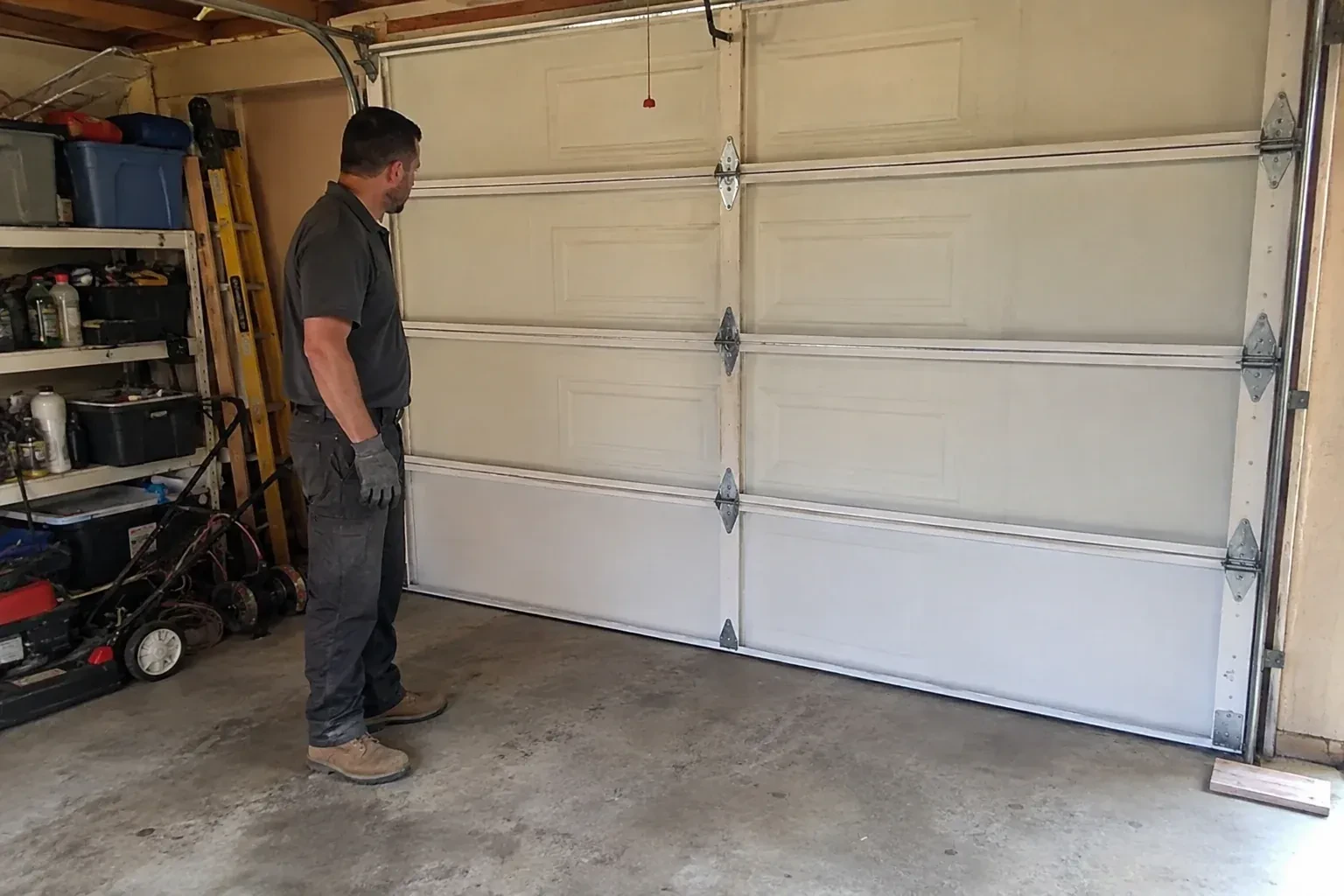
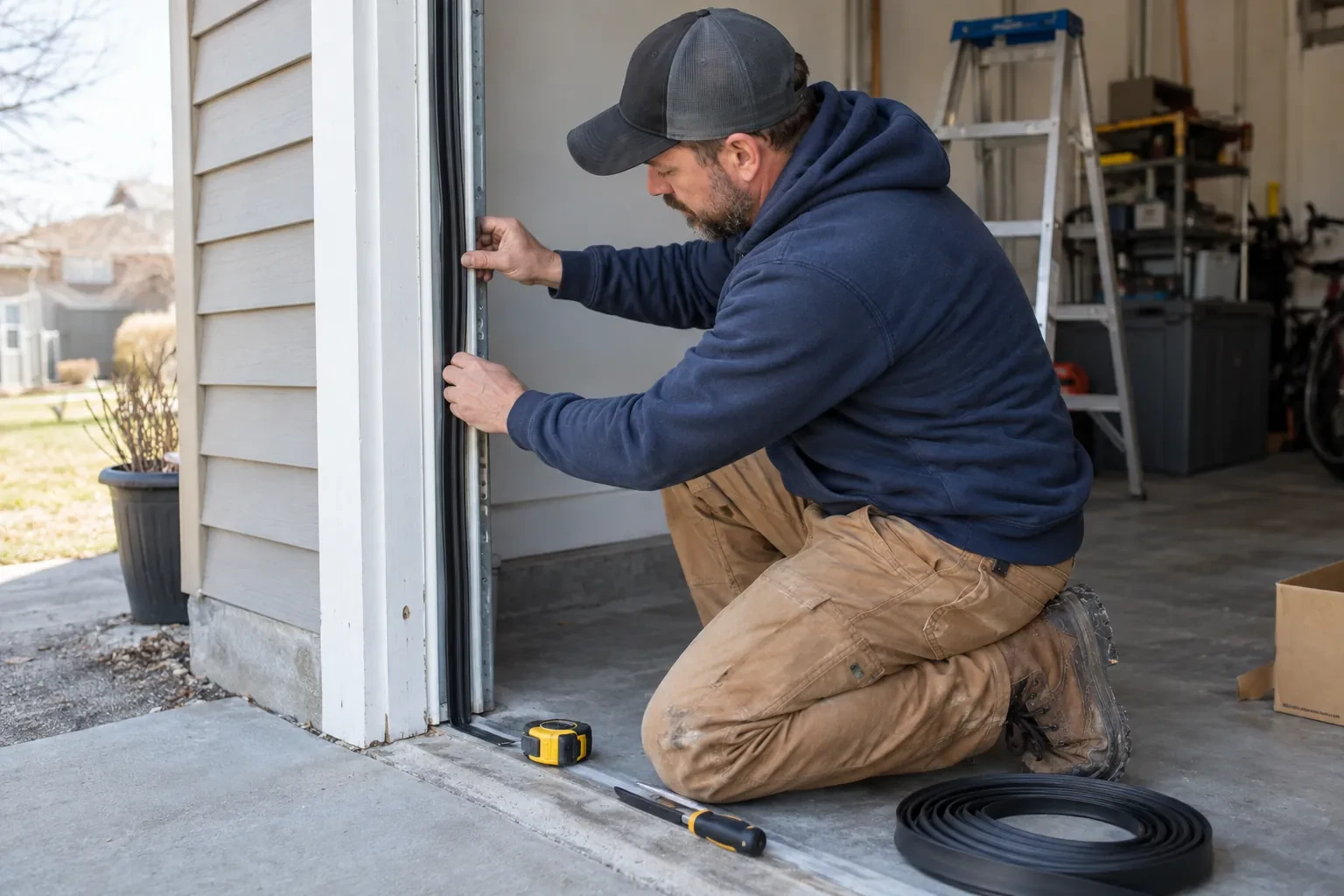
How the visit goesRust has crept along the bottom edge of the lowest section. What began as bubbling paint is now a soft, flaking strip, the seal retainer is working loose, and a screwdriver pressed against the worst spot goes through the steel.
Garage Door Panel Replacement
How the visit goes
Keeping the door safe until the new section arrives
Because a section is ordered rather than pulled from a shelf, the first visit ends with the door in a safe state for the wait. If the damage is cosmetic, the door can usually stay in normal service. If a section is folded, a hinge has torn out or a cable has gone slack, the technician braces the section, disconnects the opener so it cannot pull on a weakened door, and secures the door in the closed position. Sometimes a temporary strut will let a bowed section run until its replacement comes. You are told plainly which of these applies and what to avoid doing in the meantime.
Locking the door before anything comes loose
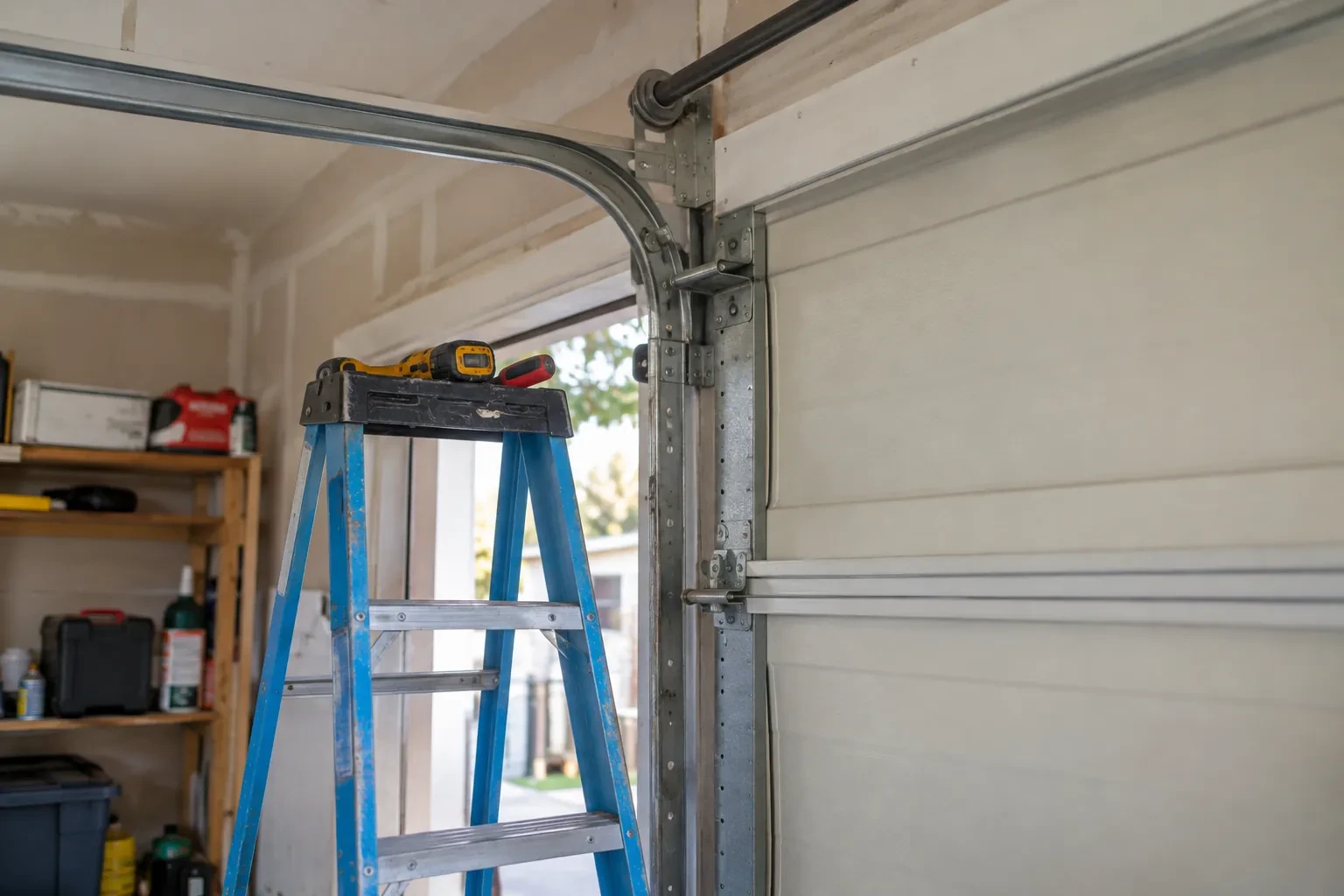
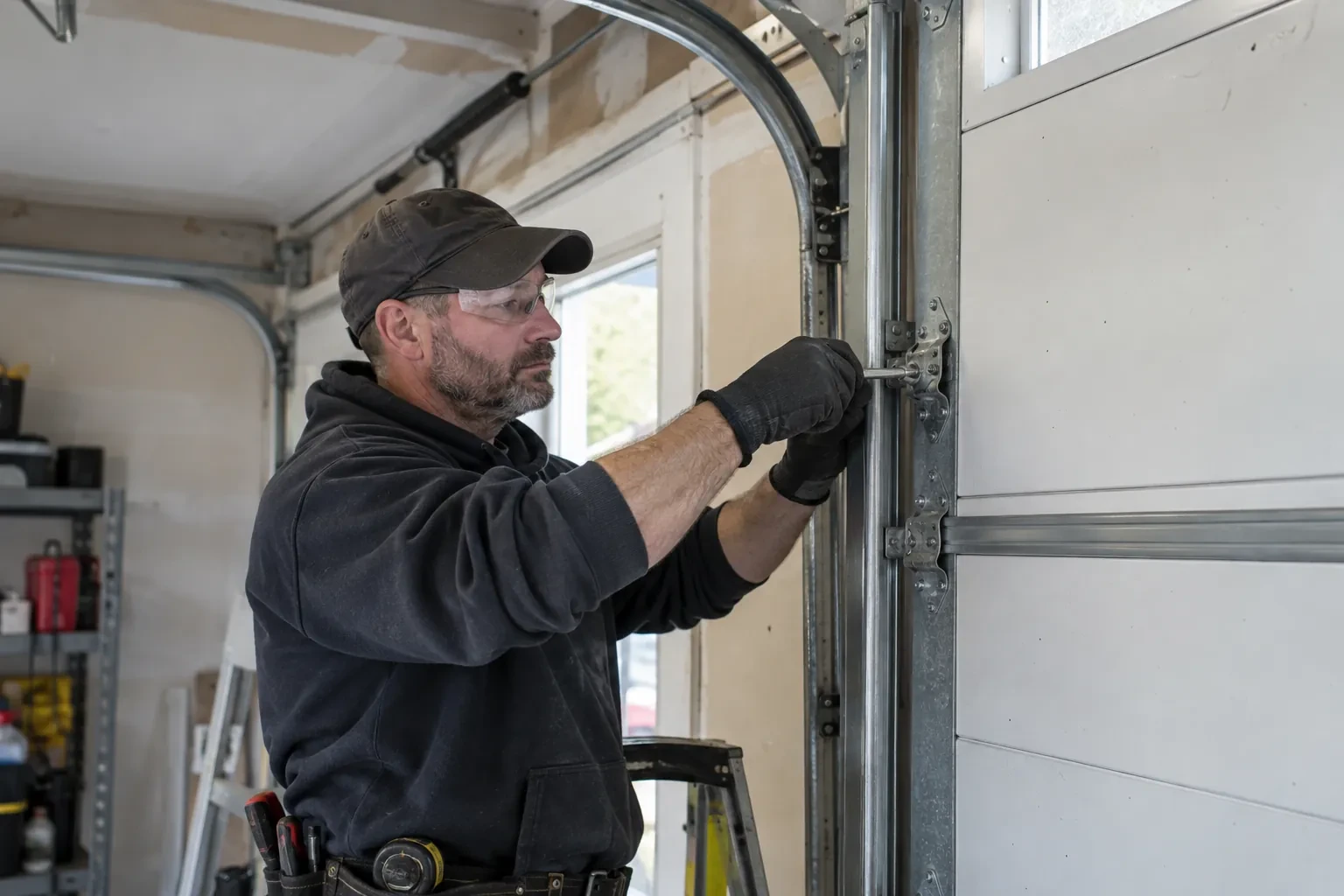
The exchange begins with the door closed, the opener disconnected at the release cord and its power unplugged, and a pair of locking pliers clamped onto each track just above a roller. Held that way, the door cannot creep up or slip down while a section is missing from it, and the sections above the gap have something to rest on. The technician then removes the section's rollers and hinges in an order that keeps the neighbouring sections supported, working from one side to the other. Nothing under spring tension is touched at this stage on a middle or top section; the springs stay loaded and simply hold still.
Habits that keep sections out of harm's way
Most section damage comes from a handful of everyday moments, and small changes head them off. Wait until the door is fully open before pulling in or out; the sensor and lights on many openers make that easy to judge. Give the door a metre of clearance when parking a trailer or leaning bikes. If the driveway is the rink, a practice net or a sheet of plywood on the inside face of the lower sections takes the pucks instead of the steel. And if the door is ever struck, stop using it and have it looked at, because the visible dent is not always the whole story.
Garage Door Panel Replacement
In the van
Matching replacement section
Numbered section hinges
Winding bars and track clamps
Window frame insert and glazing
Self-tapping stile screws
Garage Door Panel Replacement
What affects the quote
Opener adjustments afterwards
Resetting the opener's limits and force and testing the safety reversal is part of finishing the job. Where the opener arm bracket or a worn trolley needs replacing as well, that hardware is listed.
Which position the section sits in
A bottom section includes releasing and resetting spring tension and fitting brackets and seal; a top section involves the opener bracket and top fixtures; a middle section is the plainest exchange. The position shapes the labour.
Special-order handling and freight
Made-to-order sections travel from the factory or distributor, and a long or glazed section needs careful handling in transit. Freight and order handling are shown as their own line rather than folded into labour.
What to have ready
- Are any other sections dented, rusted or out of line?
- Roughly how wide and how tall is the door?
- What caused the damage, and when did it happen?
Garage Door Panel Replacement: questions
QuestionsMy door is insulated. Does the new section need the same insulation?
It should. Insulated sections come in different thicknesses and core types, and the replacement needs to match yours so the joints line up, the hinges sit at the right depth and the weight stays consistent with the springs. Mixing an insulated section into an uninsulated door, or the reverse, generally means a step at the joint and a change in balance. The technician reads the thickness and core type from the door before ordering.
Does a new section bring back the door's original strength?
A section ordered to the same specification carries the same steel gauge, core and reinforcement as the original, and it is fitted with sound hinges, new fasteners and, where the design calls for it, a strut. Combined with the alignment and balance work done at the same time, the door returns to operating the way its manufacturer designed it to. Where an original section had bowed for want of a strut, adding one leaves that part stiffer than before.
Does changing a section affect the springs or balance?
It can. A new section may be a little heavier or lighter than the old one, particularly if insulation, glazing or a strut differs, and the springs are set for the door's actual weight. After the exchange the technician lifts the door by hand with the opener disconnected and adjusts the spring tension until it holds steady at mid-height. On a bottom-section job the springs are unloaded and reloaded as part of the work anyway.
Related services
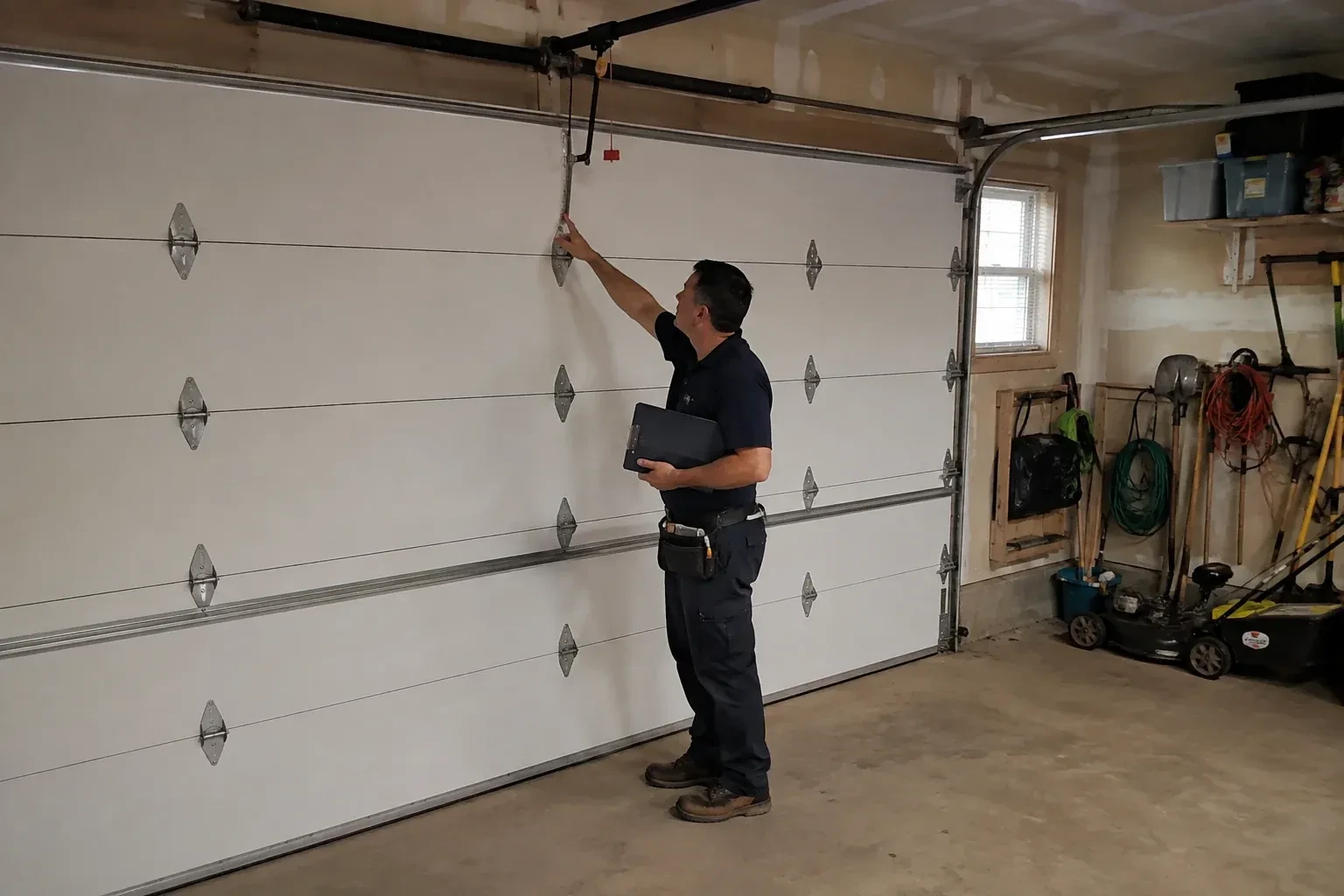
- Garage Door Tune-UpThe door lands with a thud you can feel through the kitchen floor, and sometimes it bounces back up a few centimetres before settling.
- Off-Track Garage Door ResetThe door came down fine but with a scraping noise, and now the vertical track on one side is bowed away from the wall.
- Garage Door Bottom Seal ReplacementOne end of the bottom seal has slipped out of its channel and hangs down like a loose shoelace.