Repairs · Vaughan
Garage Door Perimeter Weatherstrip
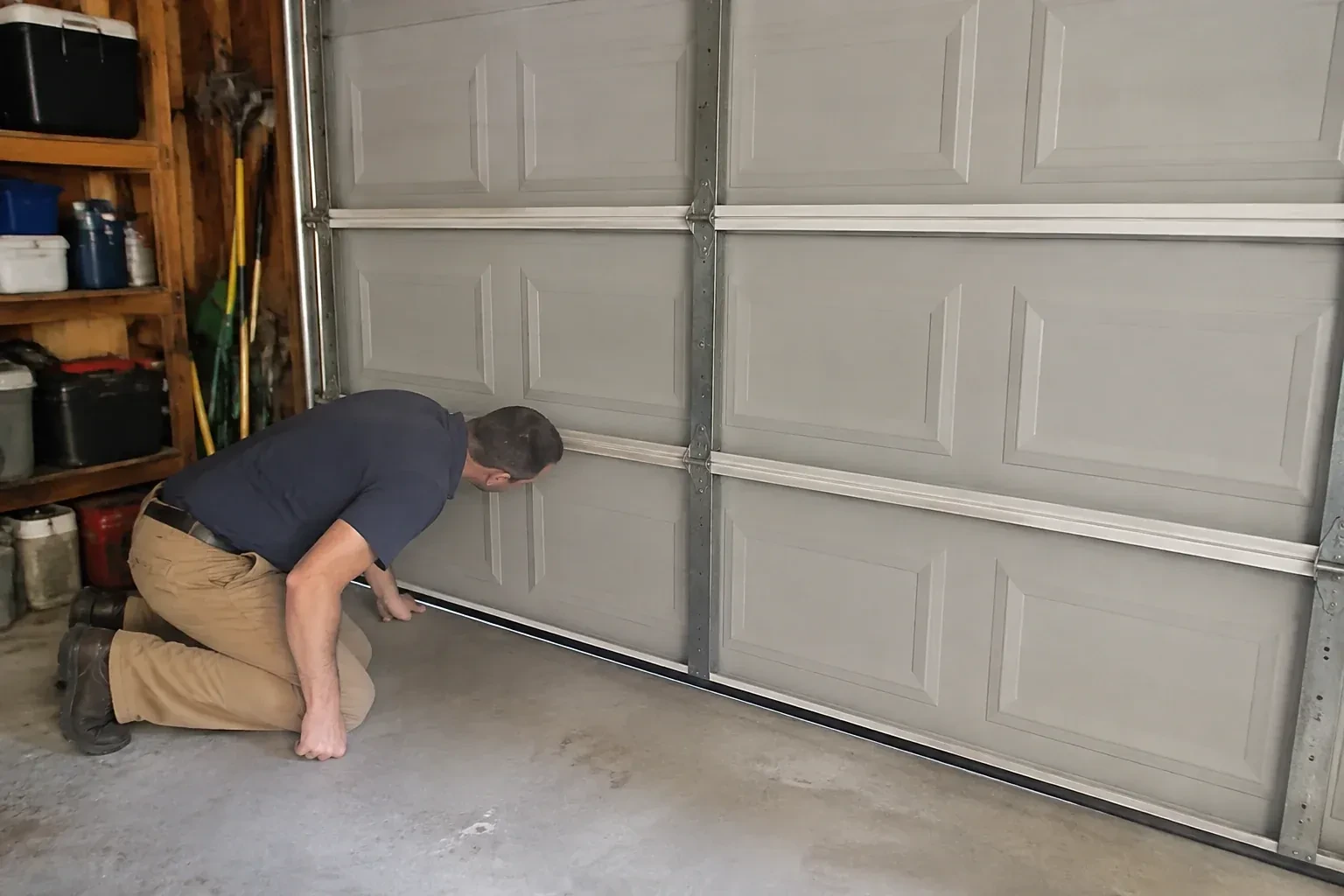
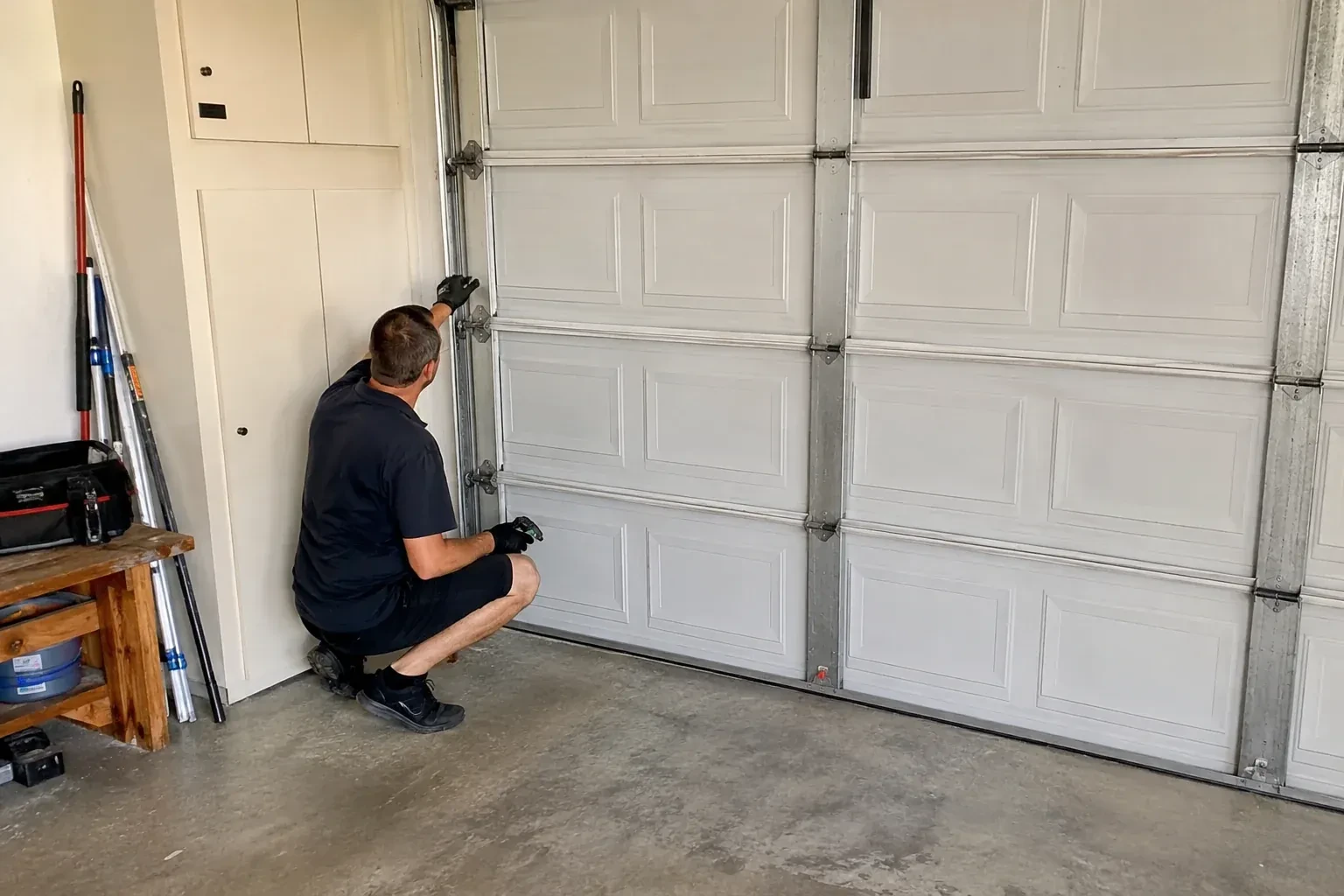
Every time the door closes there is a rubbing squeal along one side, and the flexible fin has folded under itself and torn.
In plain words
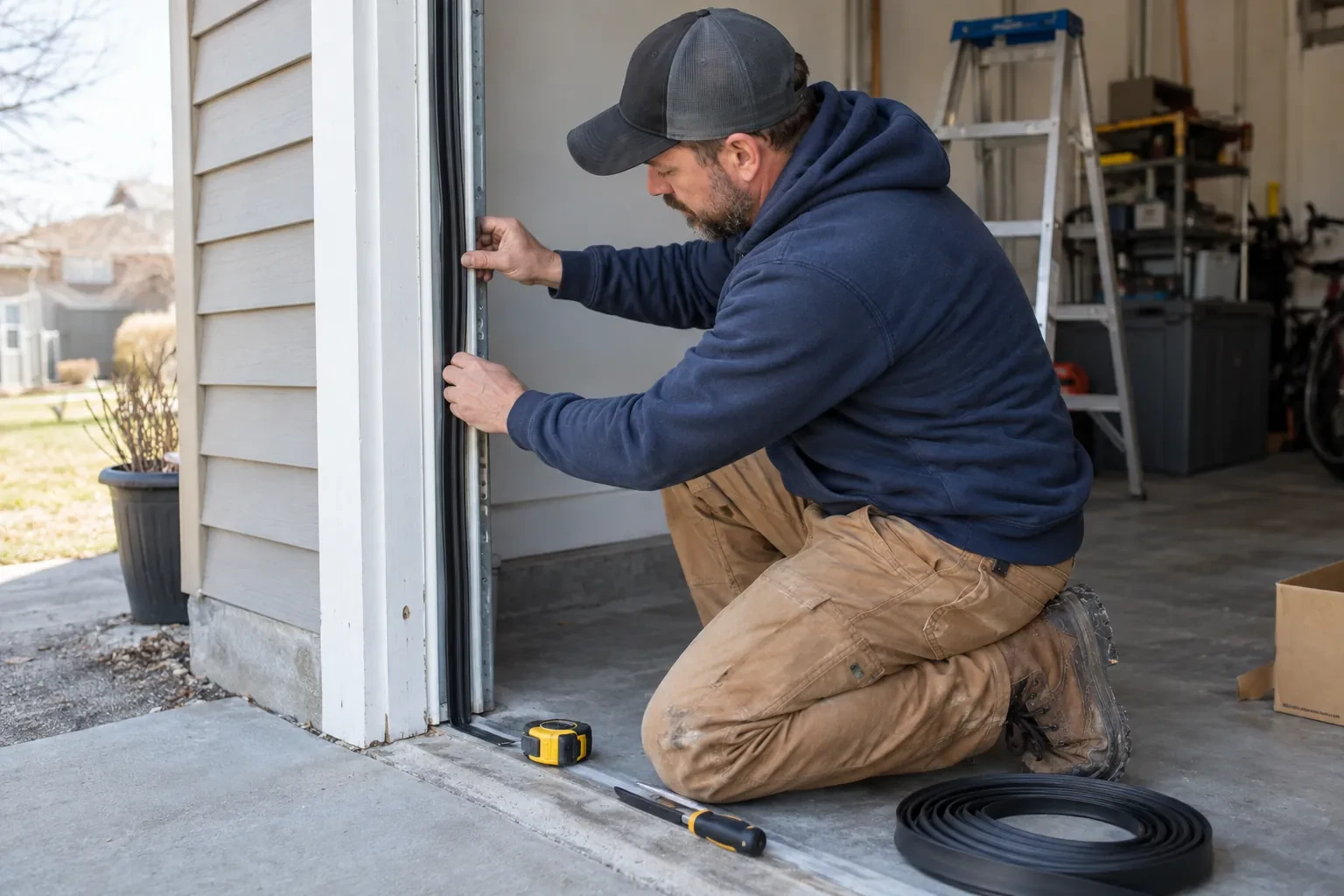
Around a garage door there are three seals: one on the bottom edge of the door, and two running up the sides and across the top of the opening. Those last two are the perimeter weatherstrip. They are fixed to the stop moulding on the jambs and header, and their flexible fin rests against the door face when it is closed, closing the gap between door and frame. Replacing them means fitting new lengths that meet the door evenly, cutting down how much wind, driven snow, dust, leaves and small animals get through. The bottom seal is handled as its own job, but the two are often done together.
How the visit goesEvery time the door closes there is a rubbing squeal along one side, and the flexible fin has folded under itself and torn. Someone painted the trim last summer and painted the seal with it; now it is stiff as a board.
Garage Door Perimeter Weatherstrip
How the visit goes
What has been getting in, and what the garage is for
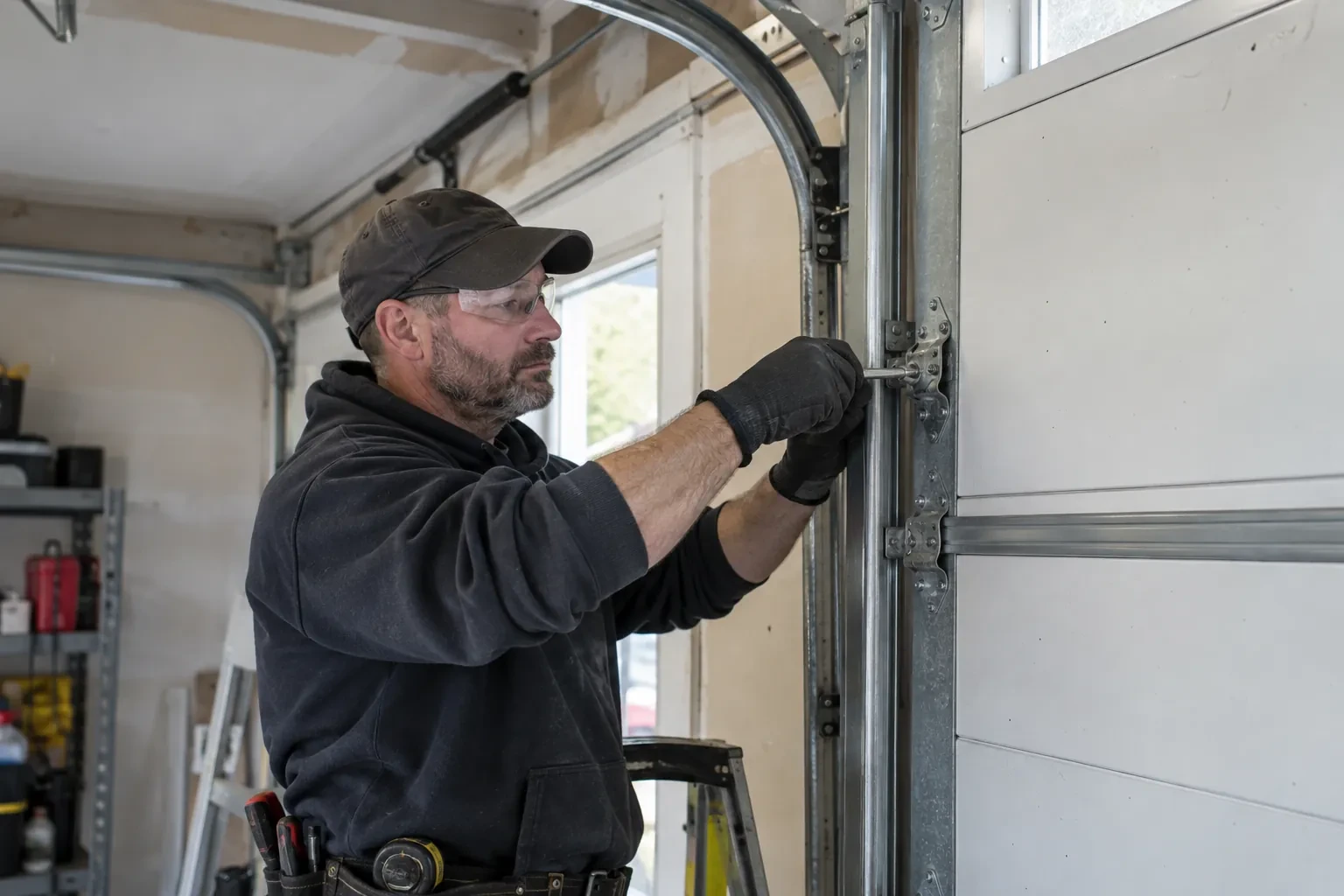
A short conversation shapes the rest of the visit. Is the garage attached and heated, or a detached shell? Has snow, water, leaves or an animal been coming in, and where? Is the door used several times a day or once a week? Was the door itself replaced or adjusted recently? A heated garage under a bedroom justifies a full one-piece stop and careful corners; a detached garage used for storage may want a straightforward fin replacement. Knowing what the household has noticed also tells the technician which side to test first and whether a section of jamb has been wet for a long time.
Fastening that lasts through the seasons
Fasteners are chosen for the weather they will live in: galvanized or stainless trim nails, exterior screws where the stop is heavy or the wood is hard, and weatherproof staples only for a light fin on sound wood. They are spaced evenly so the strip stays straight between them, and a nail set is used so the heads sit flush without crushing the vinyl. In cold weather the lengths are kept warm in the van until the moment they are fitted, because cold vinyl is brittle and splits at the ends. Fasteners near the end of each piece go in a little further back for the same reason.
Keep paint off the fin
When the trim is next painted, the flexible fin stays bare. Paint fills the flexible material and stiffens it, and a stiff fin cracks well before its time once the cold takes hold. If the rigid part of the stop is wood, it can be painted, but with the brush kept off the fin or the fin masked. One-piece vinyl stop needs no paint at all and simply washes clean. This single habit is the difference between a seal that stays soft for many years and one that fails early, and it is the most common cause of early failure the technician sees.
Garage Door Perimeter Weatherstrip
In the van
Tape measure, level and square
Flat bar, hammer and nail set
Aluminum retainer and rubber insert
Flexible vinyl fin seal
Galvanized or stainless trim nails
Garage Door Perimeter Weatherstrip
What affects the quote
Working height and access
A tall header, a sloped driveway that makes a ladder awkward, shrubs against the jambs or cars and storage close to the door all affect how long the work takes.
Size of the door
A double door has a longer header and the same two sides as a single, so more material and a two-person lift for the top piece; taller openings take longer side lengths.
Doing the bottom seal at the same time
When the bottom seal on the door is also worn, renewing it during the same visit is offered as a separate line and saves the cost of a second call.
What to have ready
- Is the existing seal a flexible strip on a wood stop, or a one-piece vinyl moulding?
- Is the wood around the opening soft or rotten near the floor?
- What colour is the trim around the door?
Garage Door Perimeter Weatherstrip: questions
QuestionsDo you adjust the door as part of the seal work?
Small corrections, yes. If a track bracket needs re-setting or the door needs to come plumb so the fin can meet it evenly, that is done so the new seal is fitted to a door that sits properly. Larger work, such as replacing rollers or a bowed section, is explained and offered as its own job so you can decide on it separately.
Why should the seal only touch the door lightly?
The fin is meant to bend against the door with a small, even deflection. That is enough to seal, and it lets the fin spring clear as the door lifts. Pressed hard, it drags on the door face, folds under on the way down, squeals and wears through well before its time, and it adds load to the opener. Set too far off, it leaves a standing gap. The light touch is the setting that lasts.
What are perimeter seals made of?
Most residential seals are flexible vinyl or a rubber compound formed into a fin that bends against the door. They come either as a flexible strip that is nailed to a wood stop or moulded onto a rigid vinyl stop as one piece. Commercial doors sometimes use an aluminum retainer holding a replaceable rubber insert, or a brush seal. Manufacturers make them to flex thousands of times as the door operates.
Related services
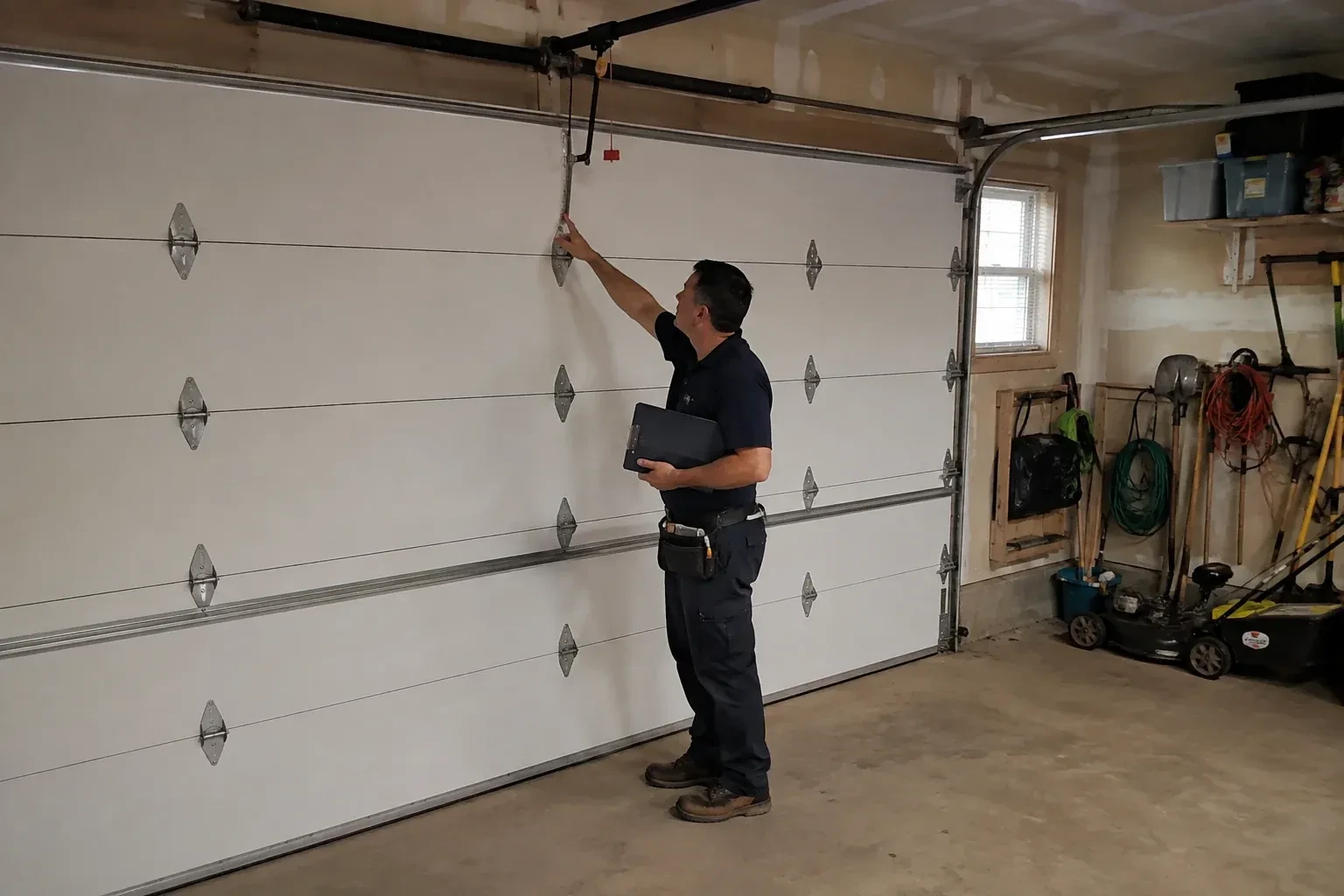
- Garage Door Tune-UpThe door lands with a thud you can feel through the kitchen floor, and sometimes it bounces back up a few centimetres before settling.
- Off-Track Garage Door ResetThe door came down fine but with a scraping noise, and now the vertical track on one side is bowed away from the wall.
- Garage Door Panel ReplacementThe inside face of one section has started to bow outward and the outer skin has a soft, wavy look.