Garage Doors in Edgeley, OntarioWarmer abovethe garage.
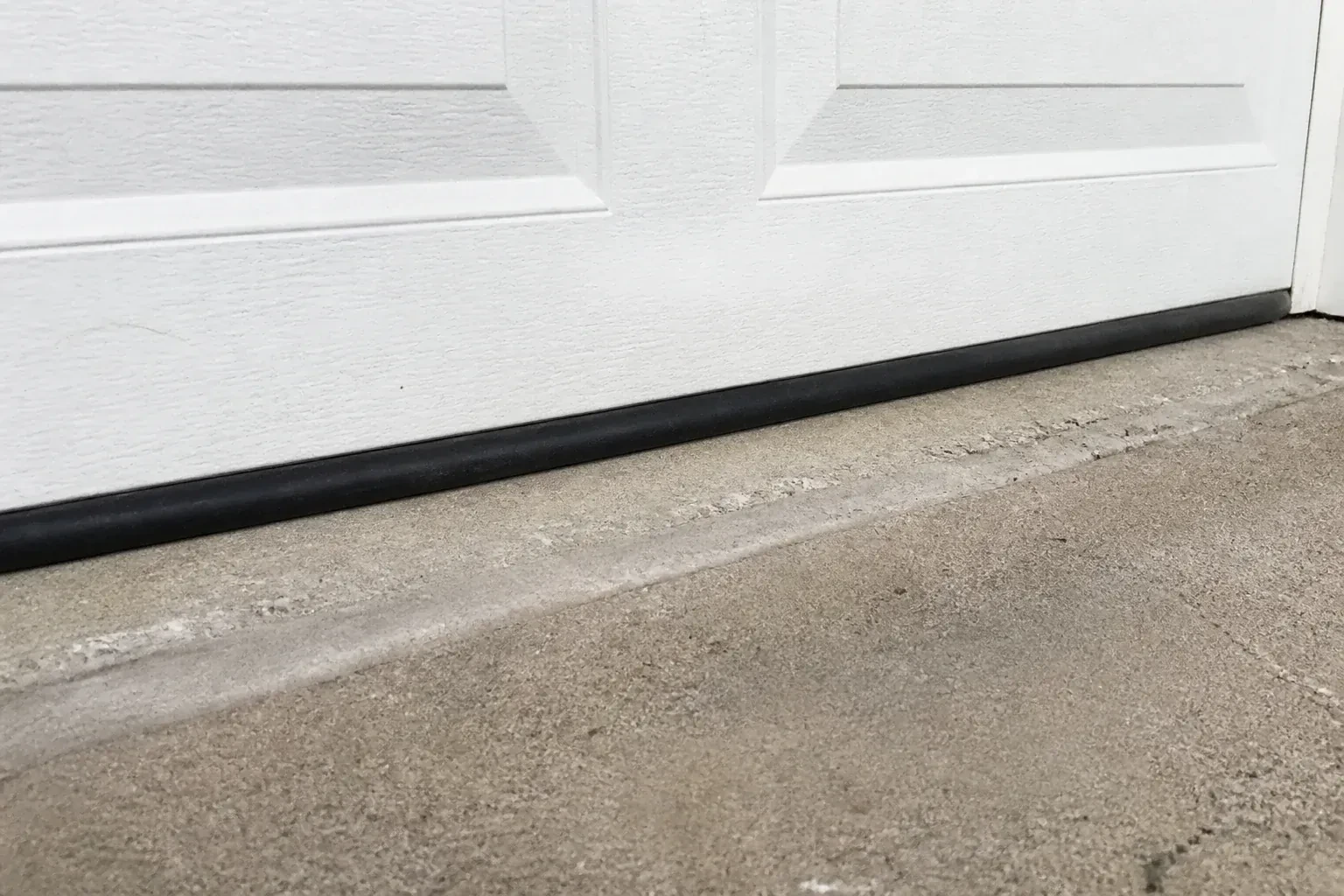
When a bedroom or office sits over the garage in Edgeley, the door is part of the building envelope. An insulated door, tight weatherstrip and a properly adjusted bottom seal make that room noticeably more comfortable in January and July alike, and the difference shows up on the heating bill.
When a bedroom or office sits over the garage in Edgeley, the door is part of the building envelope. An insulated door, tight weatherstrip and a properly adjusted bottom seal make that room noticeably more comfortable in January and July alike, and the difference shows up on the heating bill.
Springs, openers and everything between.
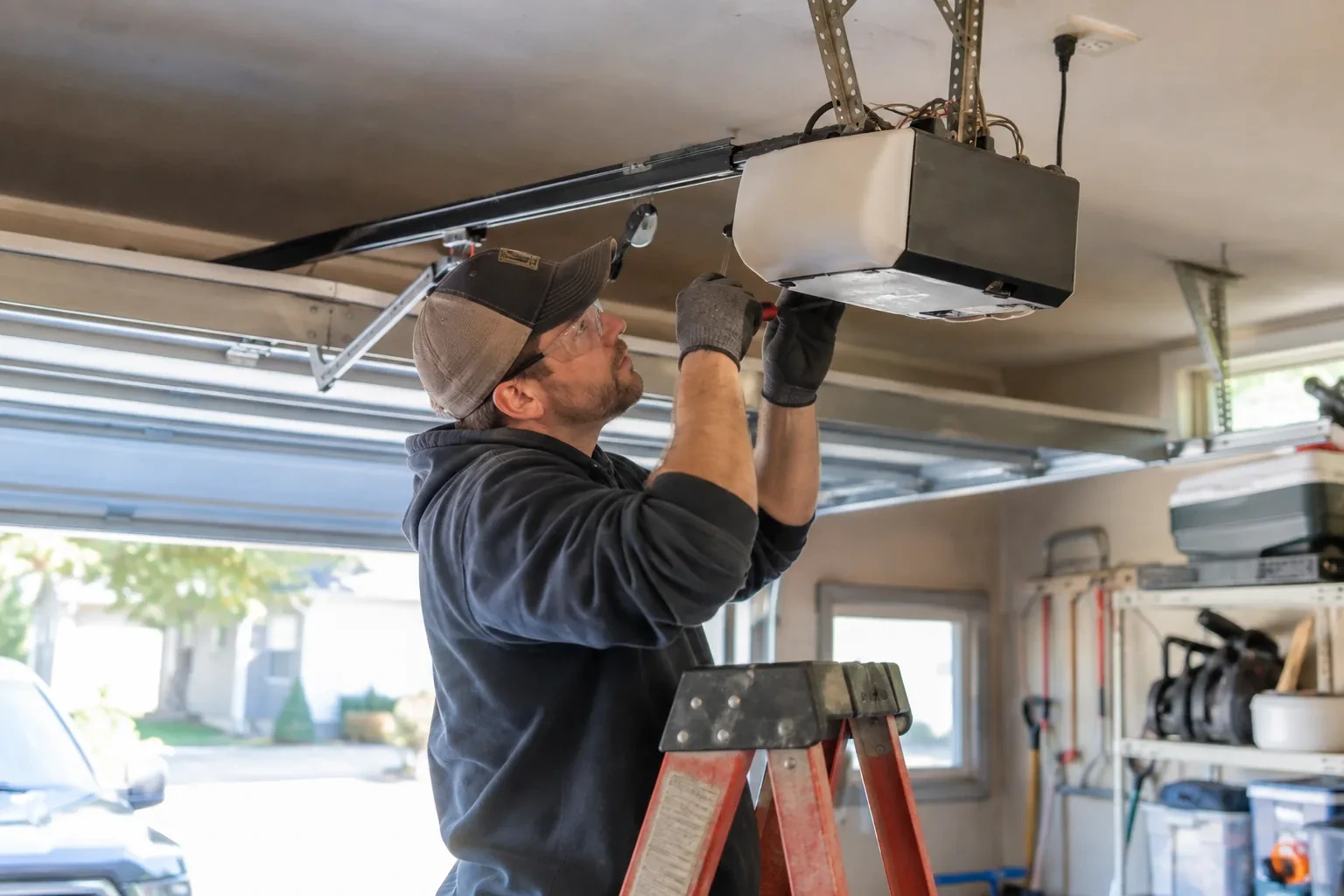
When a garage door in Edgeley has stopped, the household is usually stuck too, so we organise the day around getting the door moving safely. The technician clears the fault, checks the rest of the door so the next part does not follow, and explains what he did before he drives away.
We serve Edgeley with the same small-company habits that built our reputation: the person who answers knows the technicians by name, the van carries the common parts, and notes are kept on every door so the second visit is easier than the first. Garage door repairs, openers and new installations for homes and businesses are all handled by that same team.
30years in business
24/7open every day
Explained on the spot. As each part is checked, the technician tells you what it shows and what it means for the door as a whole.
Tidiness as standard. Old springs, cables and packaging leave with us, and the workspace is swept. A clean finish is part of every visit.
Options at your pace. Hear the choices, ask your questions, take the time you need. The work starts when you say so and not before.
Whatever brought you to this page from Edgeley, a door that stopped, a noise that started or a plan for a new door, the services below explain what we do about it. Repairs and maintenance, springs and hardware, openers and remotes, and new door installation are each covered in detail.
About 8% of homes in Vaughan were built in 1980 or earlier, according to the 2021 Census.
Newer homes
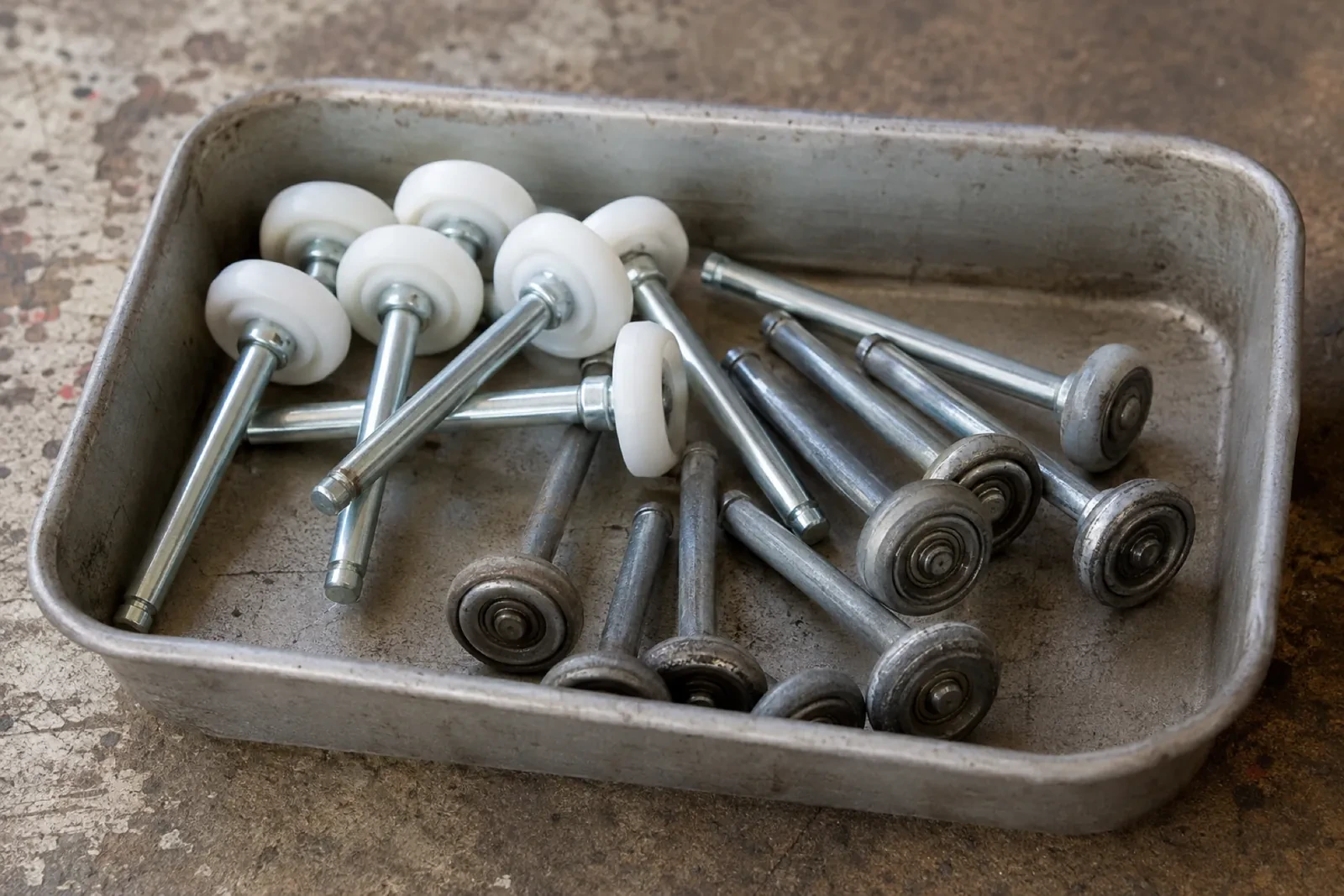
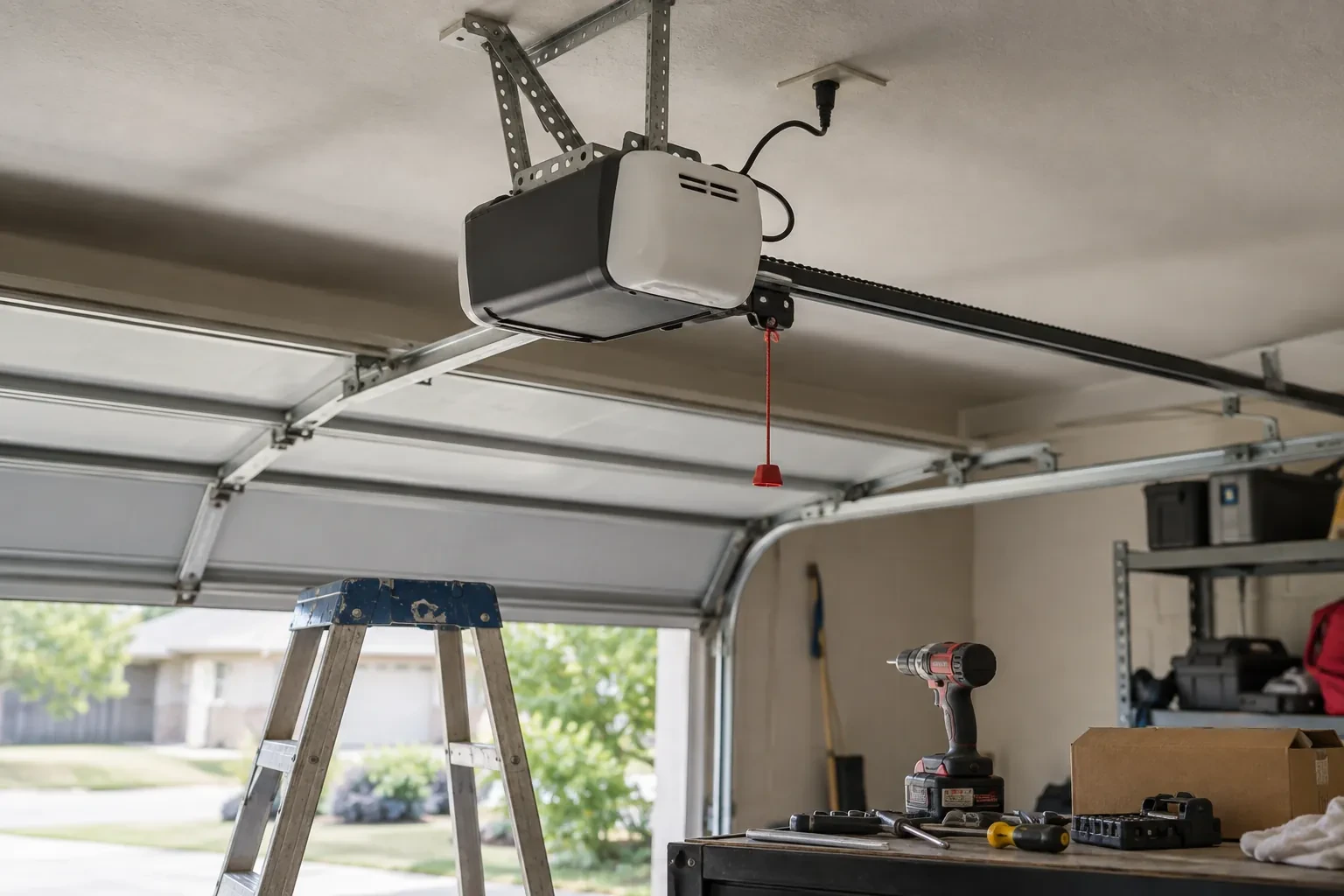
Builder-grade hardware is common on newer doors: light rollers, thin hinges and a basic opener that met the specification on the day. Upgrading to nylon rollers, heavier hinges and a belt-drive opener turns a serviceable door into a quiet one, which matters when bedrooms sit above.
Single-detached houses make up about 63% of homes in Vaughan (2021 Census).
Mostly houses
Where houses are detached, a side door into the garage and an interior door into the house are common, so the garage door is one of several ways in. Making sure it closes fully, locks properly and has its old remote codes cleared keeps the whole house secure.
Doors that are hard to lift by hand, or that slam shut when released, are out of balance. Balance lives in the springs, and the services here restore it, whether that means new springs, a fresh cable or a careful adjustment.
The door opens about a third of the way and stops. Turning the limit screw on the head has made no difference, and the trolley seems to sit in the wrong place along the rail when the door is fully closed.
The belt looks fine from a distance, but up close the rubber has cracked across the back in dozens of places and, in one spot, you can see the steel cords showing through.
During the ice storm the power was off for two days. You came home in the dark, found the door dead, and had to climb out of the car to pull the red cord in the cold.
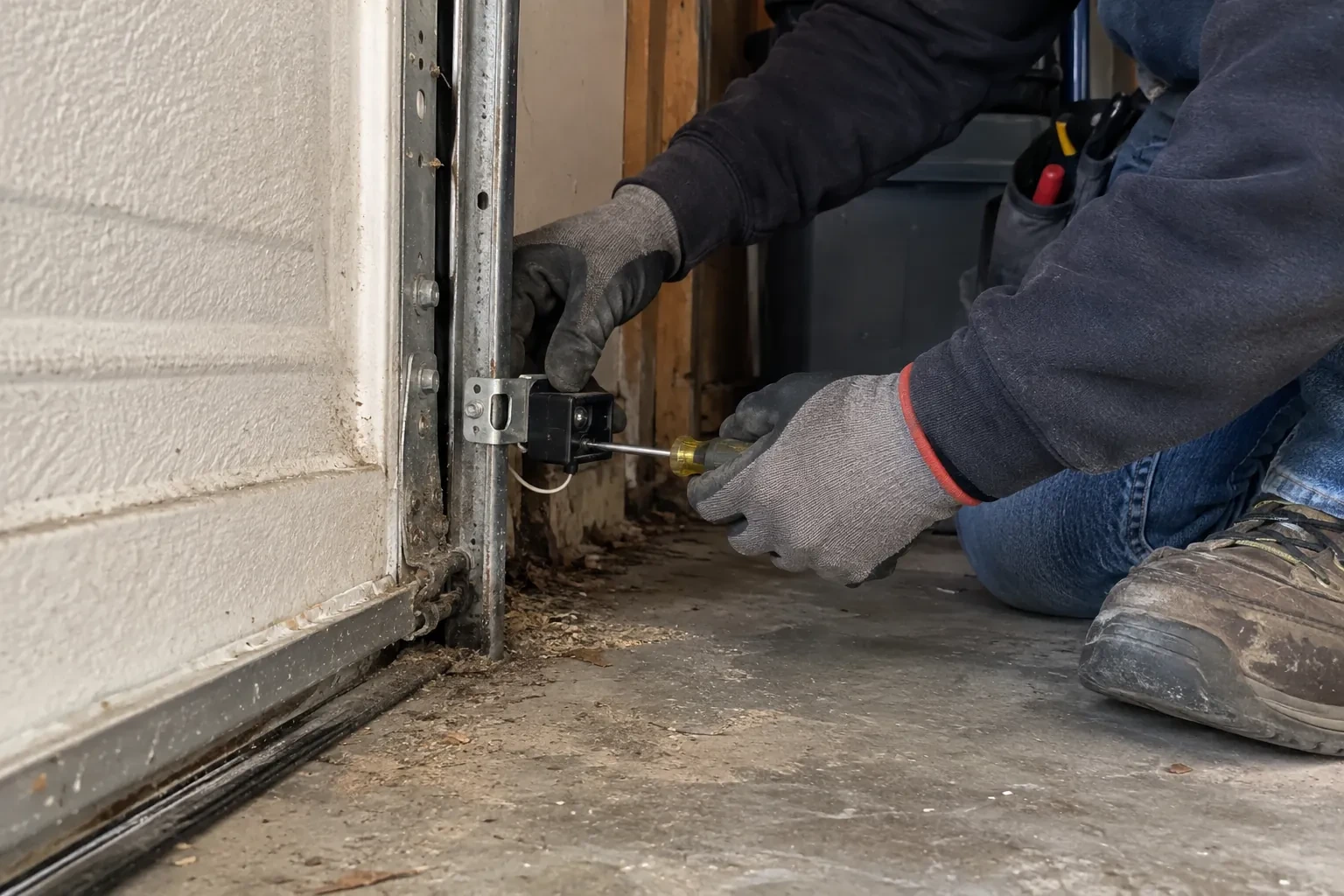
Since shelving went up along the garage wall, the door will not close and both sensor lights are dead. A screw or staple may have gone through the thin wire that runs from the opener to the sensors.
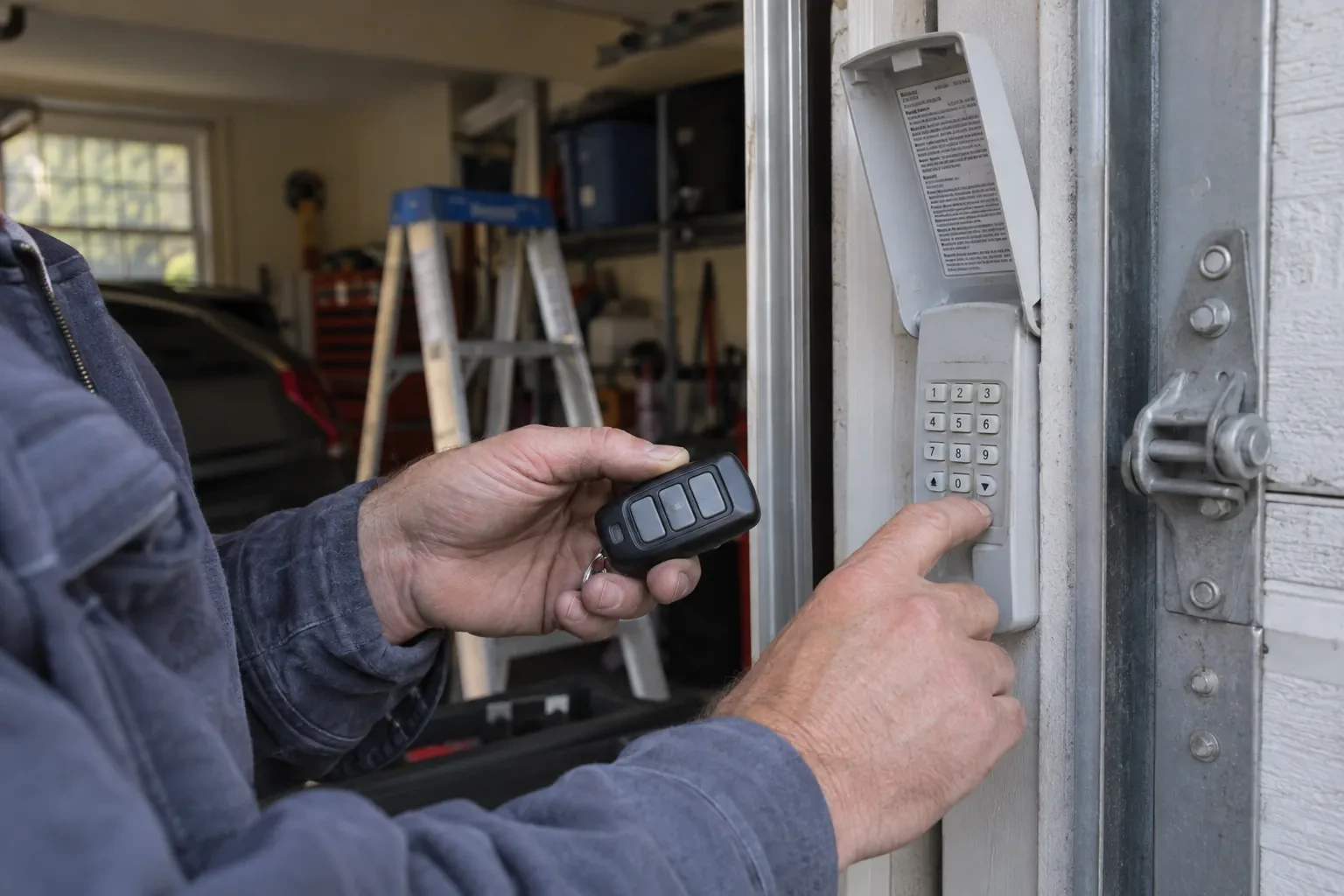
The new car has three buttons in the mirror for garage doors. You held the old remote up to it as the manual said, the light in the car changed, and yet the door ignores it completely.
A previous owner knotted the release cord around the rail and stacked storage shelves right beneath it. You only discovered this in the dark, with the power off, a flashlight in your teeth and a car that needed to be somewhere.
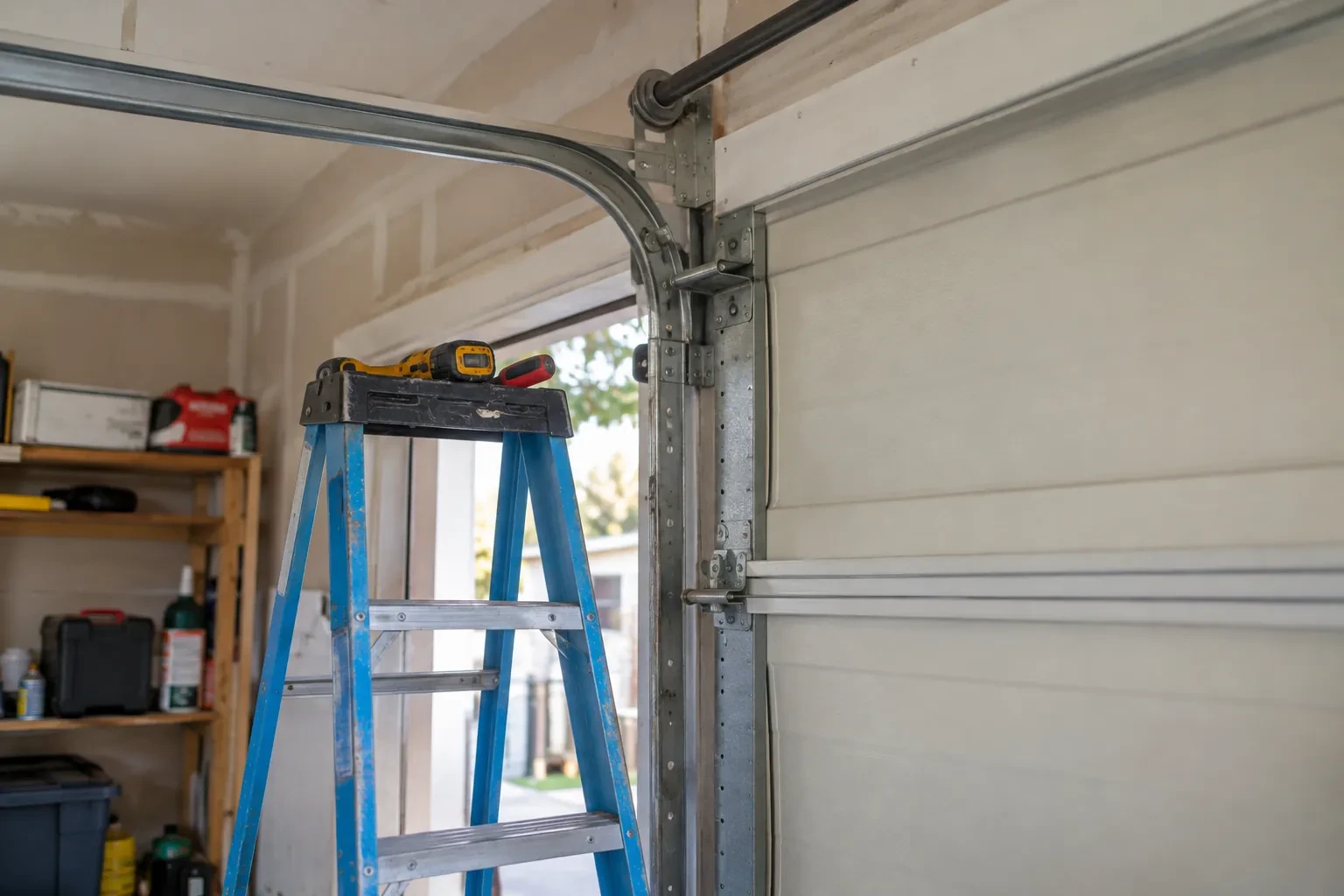
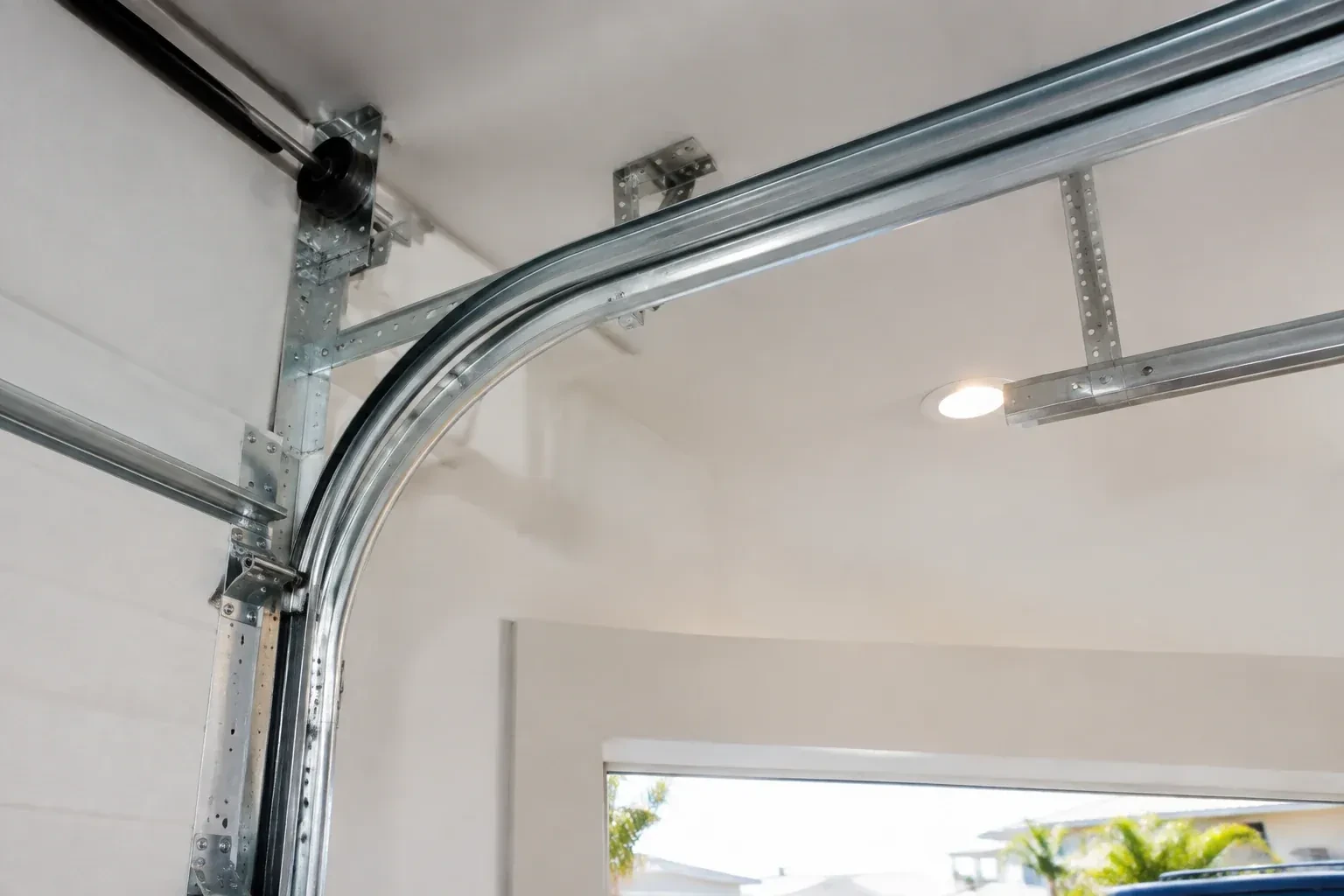
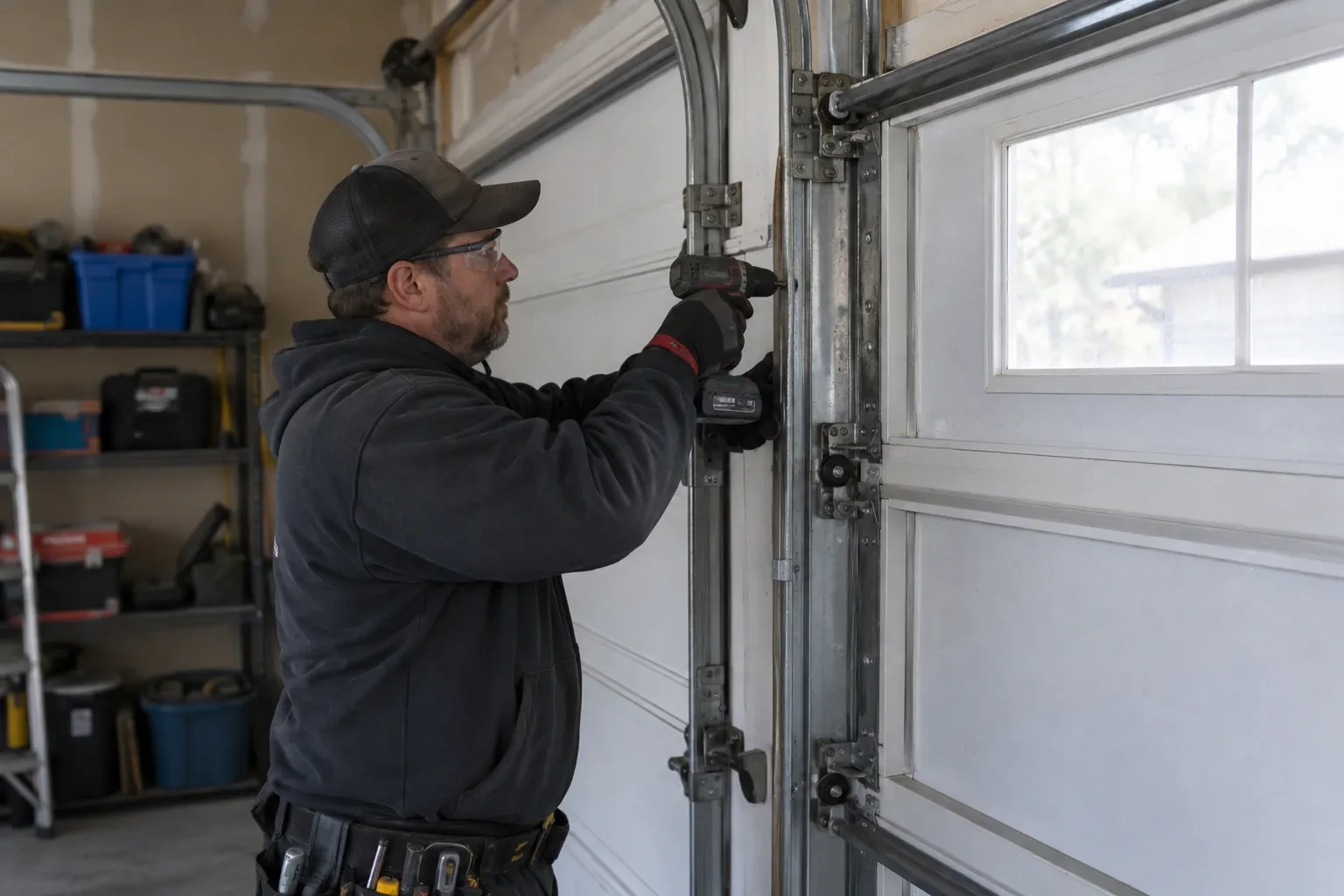
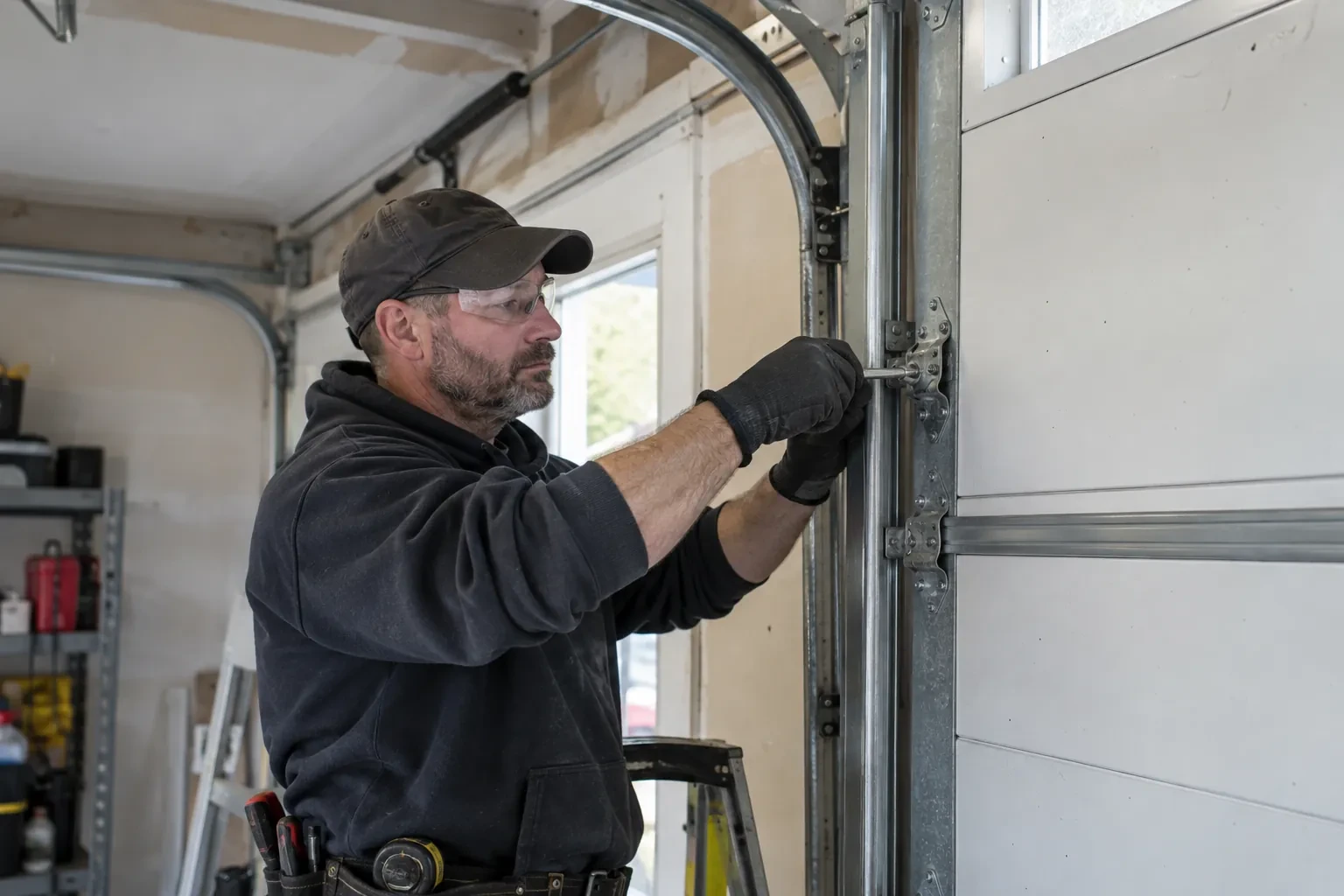
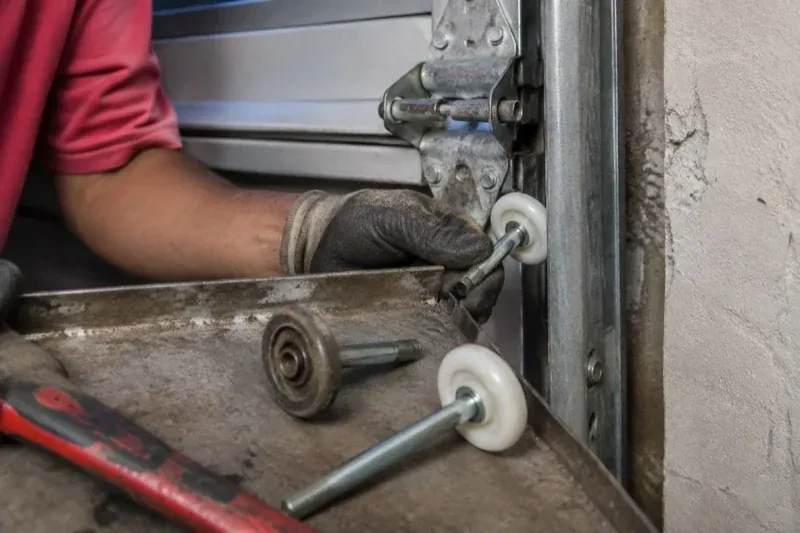
WhyThe track is the pair of steel channels that guide every roller on a sectional garage door: a vertical run fixed to each jamb, a curve overhead, and a horizontal run hung from the ceiling.
The cable has wrapped itself around the shaft above the door instead of sitting on its drum.
WhyBeyond the repair, this service leaves every adult in the house able to use the release confidently.
How a visit goes
Describe the property, the hardware and what has changed, and the visit starts from what you have seen.
01
One conversation
Tell us about the problem, the door and a good time to come. We confirm what to expect and roughly how the visit will go.
02
Checking the safety features
Photo-eyes, the auto-reverse setting and the emergency release are tested on every visit, whatever you called about.
03
Fixing and explaining
We do the agreed repair, explain each part that was changed and why, and run the door with you until you are comfortable with it.
An entrance. Not an afterthought.
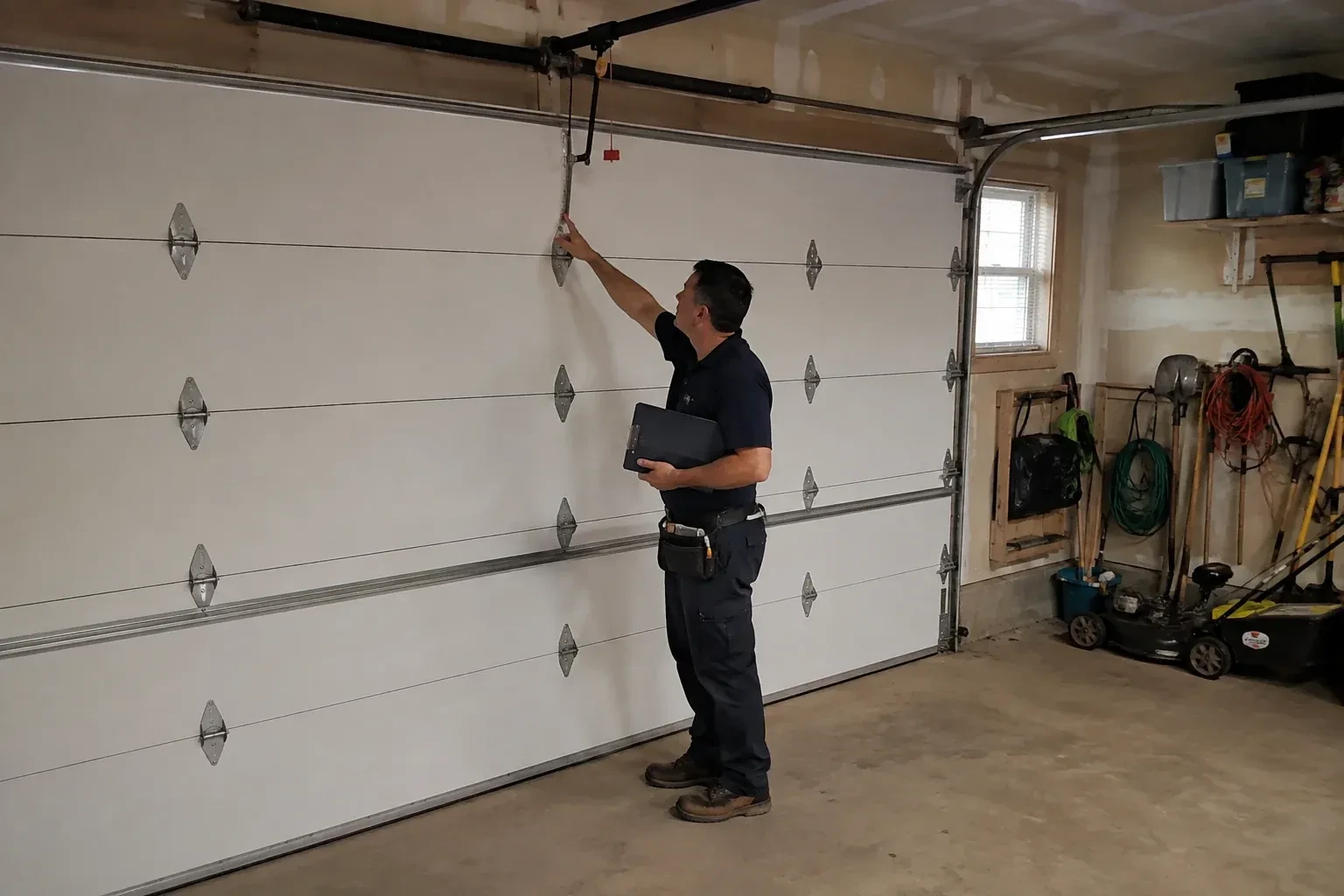
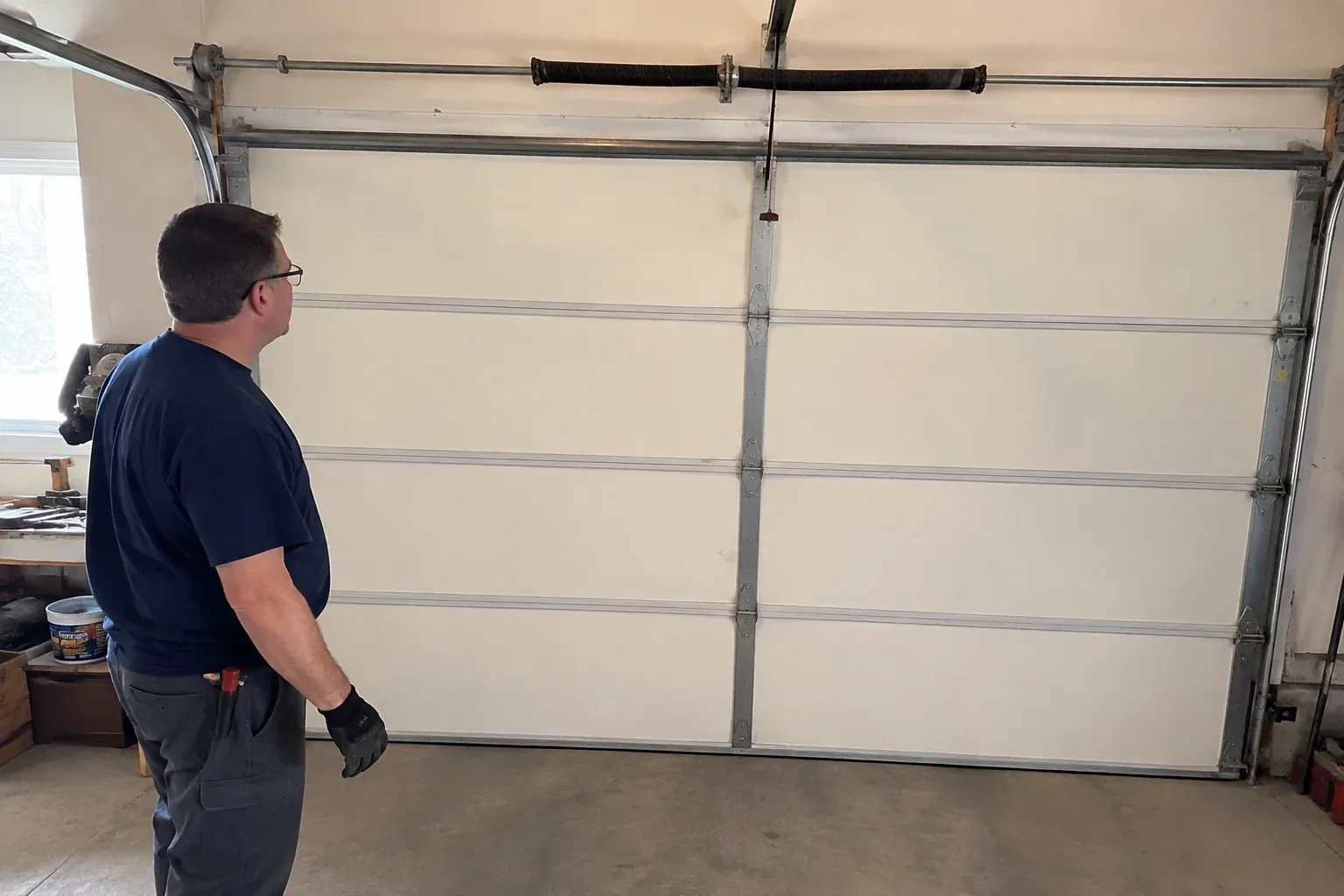
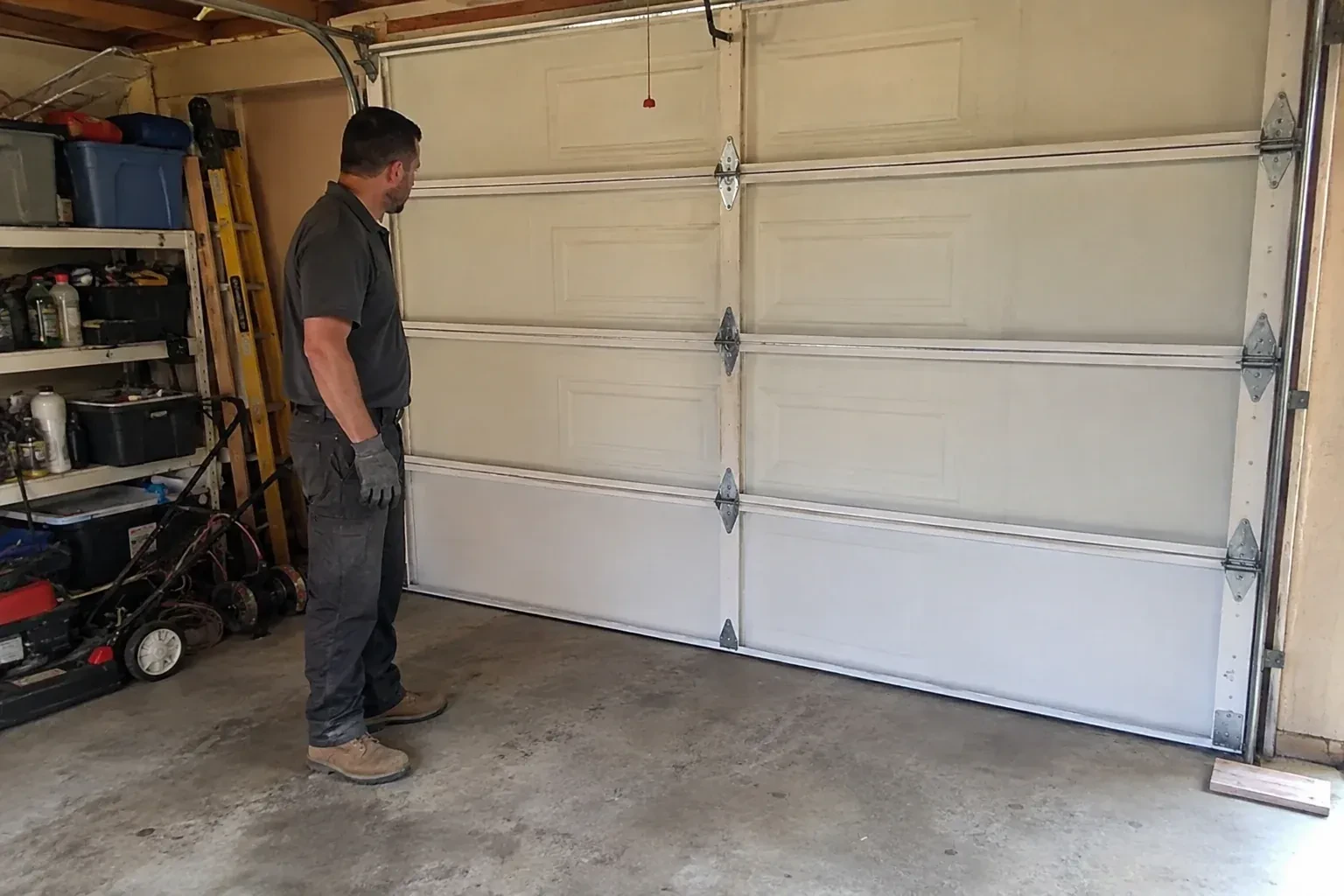
1/10Garage Door Safety Inspection
Your toddler has discovered the wall button. You want to know, from someone who checks these things for a living, that the door will stop and reverse if a small person is under it.
The door lands with a thud you can feel through the kitchen floor, and sometimes it bounces back up a few centimetres before settling. The bottom section has a small dent where it keeps slamming the concrete.
A delivery van backed into the shop's overhead door this afternoon. The lower panel is pushed in, the track on that side is kinked, and the door is hanging unevenly with staff unable to close up for the night.
The inside face of one section has started to bow outward and the outer skin has a soft, wavy look. Tap it and it sounds hollow in places. The door is insulated, and the foam core seems to have parted from the steel.
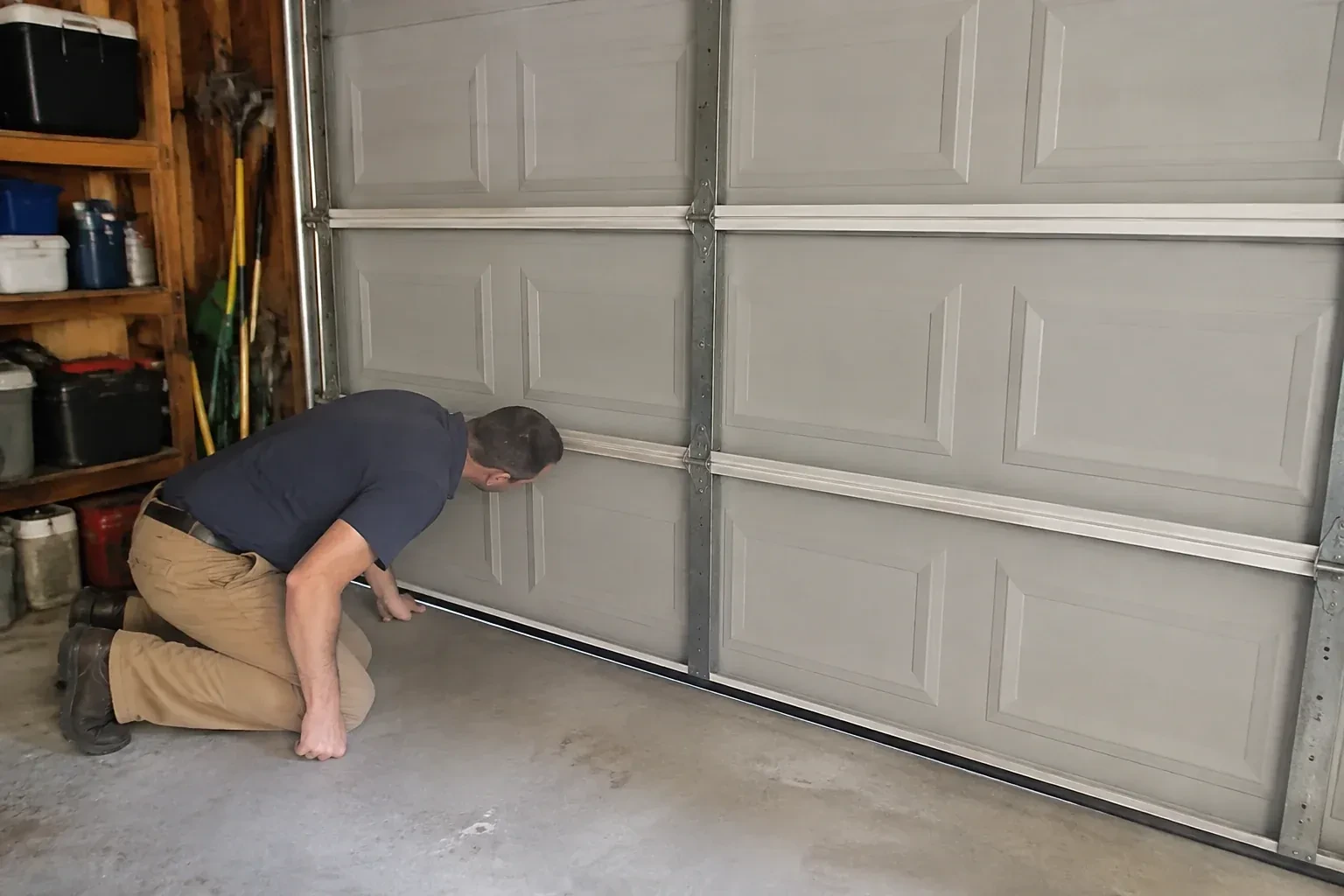
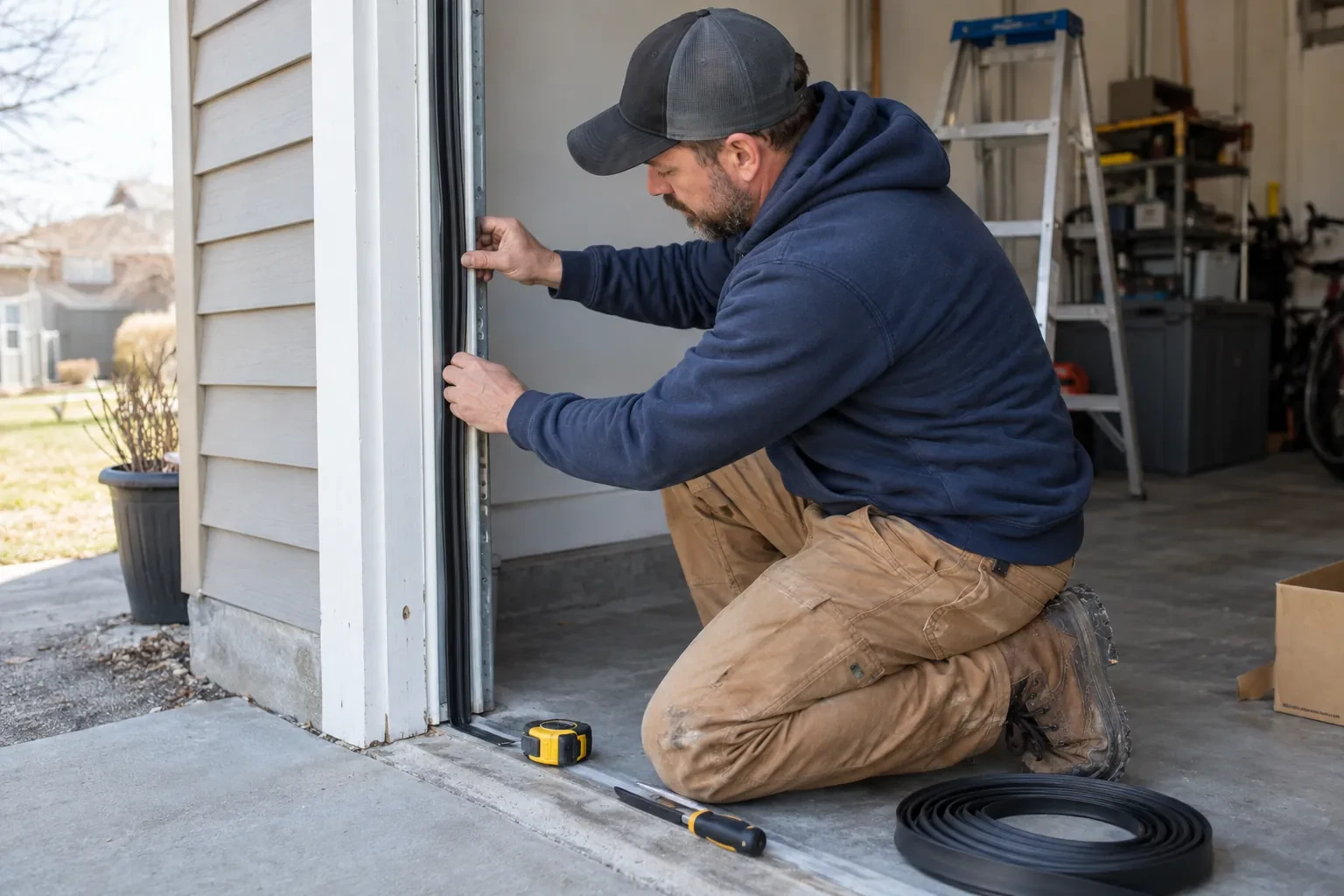
Every mild afternoon the snow melts off the car, runs to the door, and by morning the rubber strip along the bottom is frozen to the concrete. Last week the opener lifted the door and left half the seal on the floor.
After a windy night there is a fine ridge of snow on the garage floor along one side of the door, and another across the top step. The door was shut the whole time; the snow came in around it.
You bought the house with a door that sticks near the top of its travel. The vertical track was screwed tight against the jamb, so the door drags along its stop moulding on every trip instead of swinging clear.
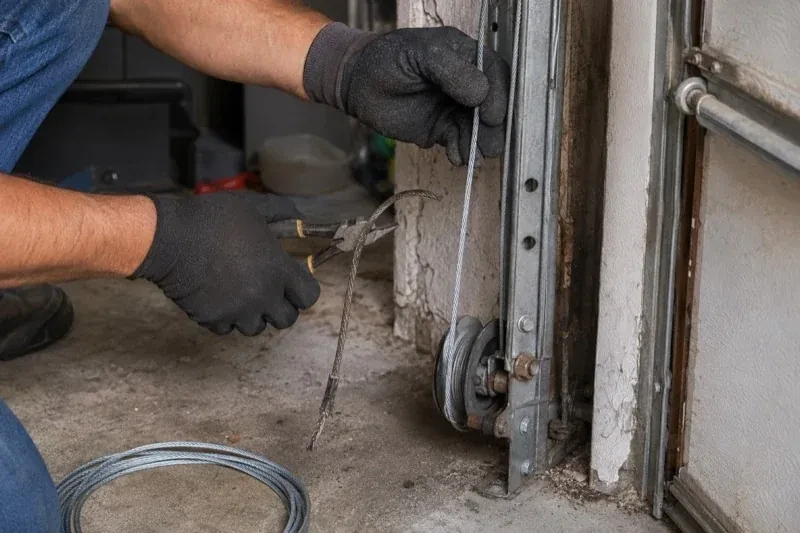
The cable has wrapped itself around the shaft above the door instead of sitting on its drum. When the opener runs, the door lurches, one side rises before the other, and the top panel twists.
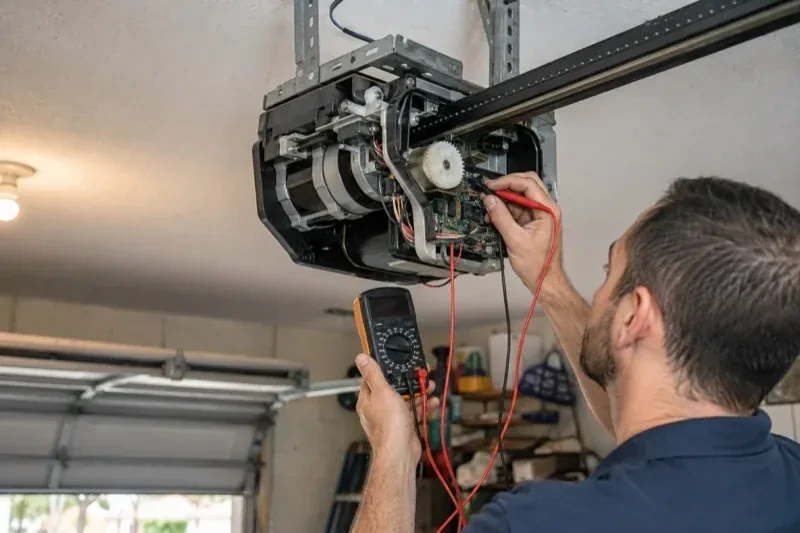
The door stops partway up for no reason, or opens fine and then refuses the next time. Some days the keypad works and some days it does not. The opener is the one that came with the house twenty-odd years ago, and nobody has the manual.
The power went out in the middle of an ice storm, the car is inside, and when you reach up for the red handle there is nothing there. A frayed stub of cord hangs from the trolley, well above your fingertips, and the door sits shut.
It is the contact-reversal check. A short length of 2x4 lies flat on the floor in the middle of the opening and the door is closed from the wall button. When the bottom edge meets the wood, the door should halt and travel back up without help. Passing shows the opener's down-force and travel limits are set to back off from something solid. The technician never substitutes a hand or foot for the board.
Can a tune-up make my noisy door quieter?
Usually, yes, and often dramatically. Most garage door noise comes from dry hinge pins, dry roller bearings and hardware that vibration has loosened, and those three are exactly what a tune-up addresses. Some noise comes from parts that have worn, such as a roller gone out of round or a chain that has stretched, and the technician tells you which sounds were settled by maintenance and which point to a part worth replacing, with a separate quote for that.
Can I keep using the opener until someone comes?
It is better to leave the opener alone. A racked door does not become straighter with another cycle; every press of the button forces the crooked sections deeper into the rails and strains the hinges and wall brackets. Unplug the opener or pull the red release cord if the door is fully closed, keep people and vehicles clear, and let the technician move it in a controlled way.
Does a new section bring back the door's original strength?
A section ordered to the same specification carries the same steel gauge, core and reinforcement as the original, and it is fitted with sound hinges, new fasteners and, where the design calls for it, a strut. Combined with the alignment and balance work done at the same time, the door returns to operating the way its manufacturer designed it to. Where an original section had bowed for want of a strut, adding one leaves that part stiffer than before.
How do I look after the new seal?
Wipe it clean of salt and grit a few times a year, and give it a light coat of silicone spray each autumn so meltwater has nothing to bond to. Keep petroleum products and solvents away from it, since they soften vinyl. Clear ice and packed snow from the threshold before running the door in winter. Once a season, look under the closed door for daylight. That is the whole routine.
Why should the seal only touch the door lightly?
The fin is meant to bend against the door with a small, even deflection. That is enough to seal, and it lets the fin spring clear as the door lifts. Pressed hard, it drags on the door face, folds under on the way down, squeals and wears through well before its time, and it adds load to the opener. Set too far off, it leaves a standing gap. The light touch is the setting that lasts.
Can I hammer the track back myself?
A track is under load from the door resting in it and, at the top, from the spring shaft on the flag bracket, so working on it means securing the door and sometimes unloading the springs first. Freehand hammering also tends to push a dent into a ripple that a roller feels even more. The technician clamps the door, shapes the steel in small steps with a block or track pliers, and gauges the result with a roller.
Why did the cable come off the drum?
A cable leaves its drum when it goes slack for a moment while the drum keeps turning. The usual reasons are the door closing onto an object or a ridge of ice so the bottom stops early, a spring that has lost tension or broken, or a drum whose set screws let it slip on the shaft. The technician finds which of these happened and corrects it so the new cable stays seated.
What is the red cord for, and is it safe to pull?
It is the emergency release that disconnects the door from the opener so you can move it by hand, for instance during a power outage. It is safe when used with the door closed. Pulling it with the door open is the risk, because an unbalanced door can then drop. Pull straight down, lift the door by its handle, and reconnect afterwards by running the opener or lifting until the trolley clicks back in.
Can I replace the cord and handle myself?
A rope and handle kit is a simple part, and many homeowners fit one. The details matter, though: the knot at the lever has to hold under a hard pull, the handle has to end up at the right height, and the lever should be checked for wear while you are up there. If the cord failed because the lever or trolley is worn, a new rope alone leaves the real fault in place. Have it done as part of a release check and both get looked at.
Request a visit
When a garage door in Edgeley has stopped, the household is usually stuck too, so we organise the day around getting the door moving safely. The technician clears the fault, checks the rest of the door so the next part does not follow, and explains what he did before he drives away.