Openers · Edgeley
Garage Door Opener Diagnosis and Repair in Edgeley
You press the remote from the driveway and hear the motor hum overhead, a steady drone with no movement behind it.
In plain words
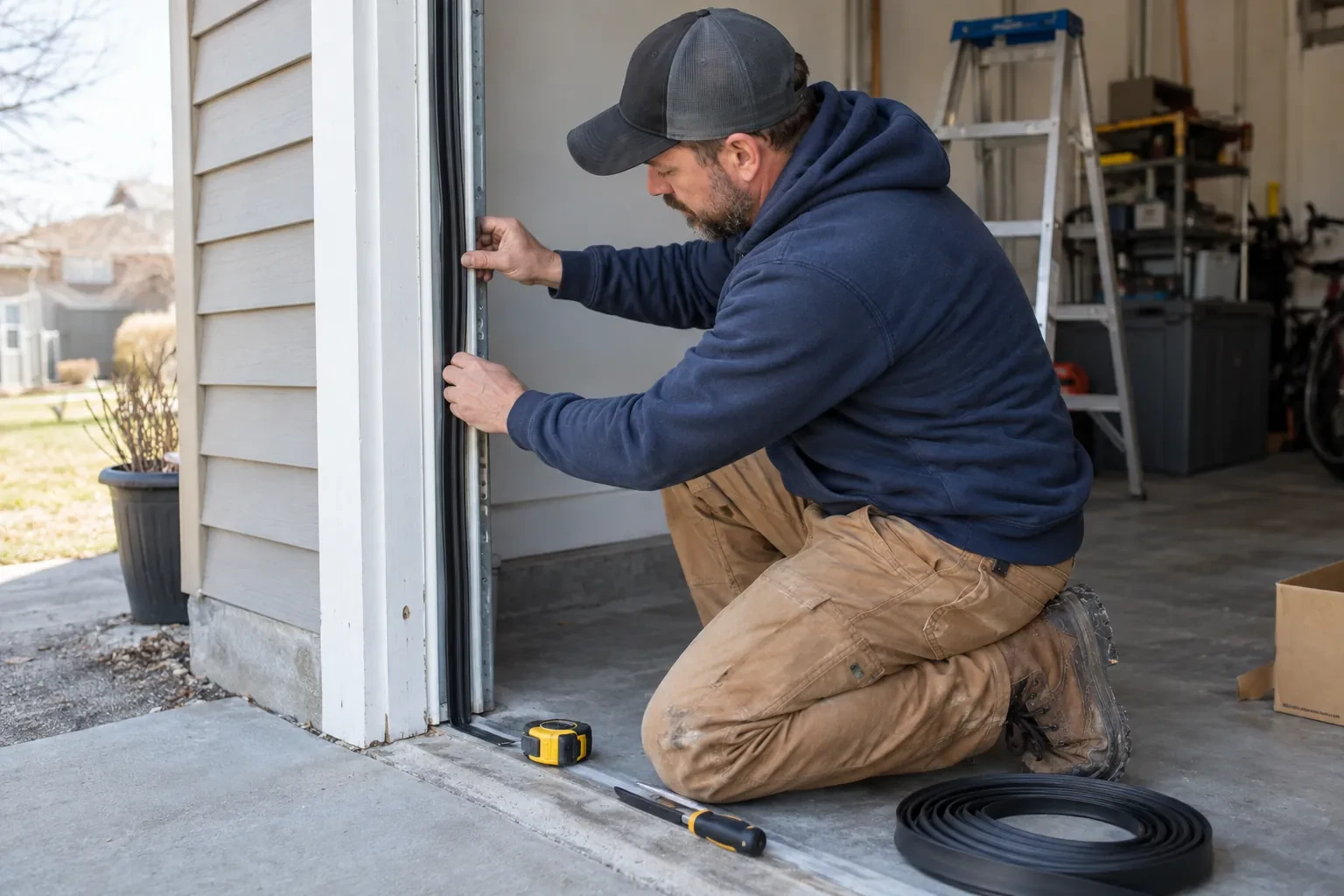
Winter changes what an opener is asked to do. Grease in the gear case and on the rail thickens in the cold, rollers turn stiffly, and the bottom seal can freeze to the concrete overnight so the door is briefly glued shut. A force setting that was right in July now reads every one of those as an obstruction and stops. A cold-weather diagnosis sorts the seasonal from the structural: freeing the seal, lubricating the moving parts with a product made for low temperatures, checking that the balance is still right, and then confirming the force is low enough to stay safe while high enough to work.
How the visit goesThe door stops partway up for no reason, or opens fine and then refuses the next time. Some days the keypad works and some days it does not. The opener is the one that came with the house twenty-odd years ago, and nobody has the manual.
Garage Door Opener Diagnosis and Repair
How the visit goes
Power at the ceiling
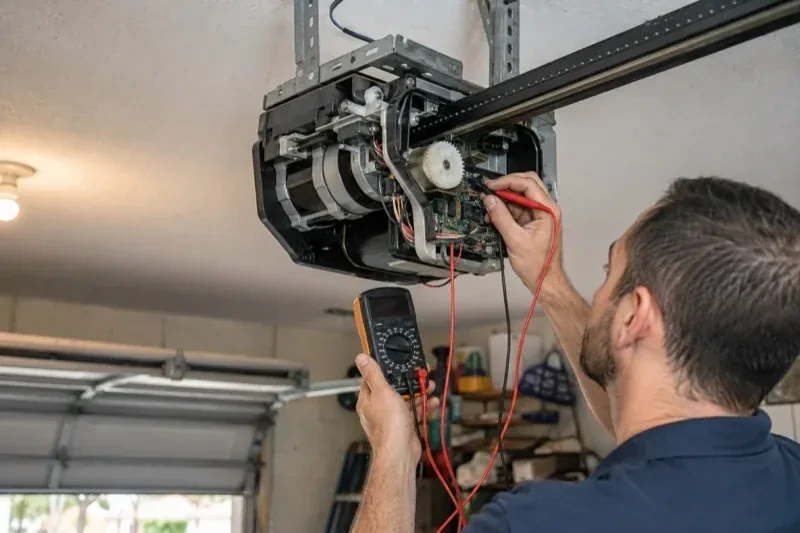
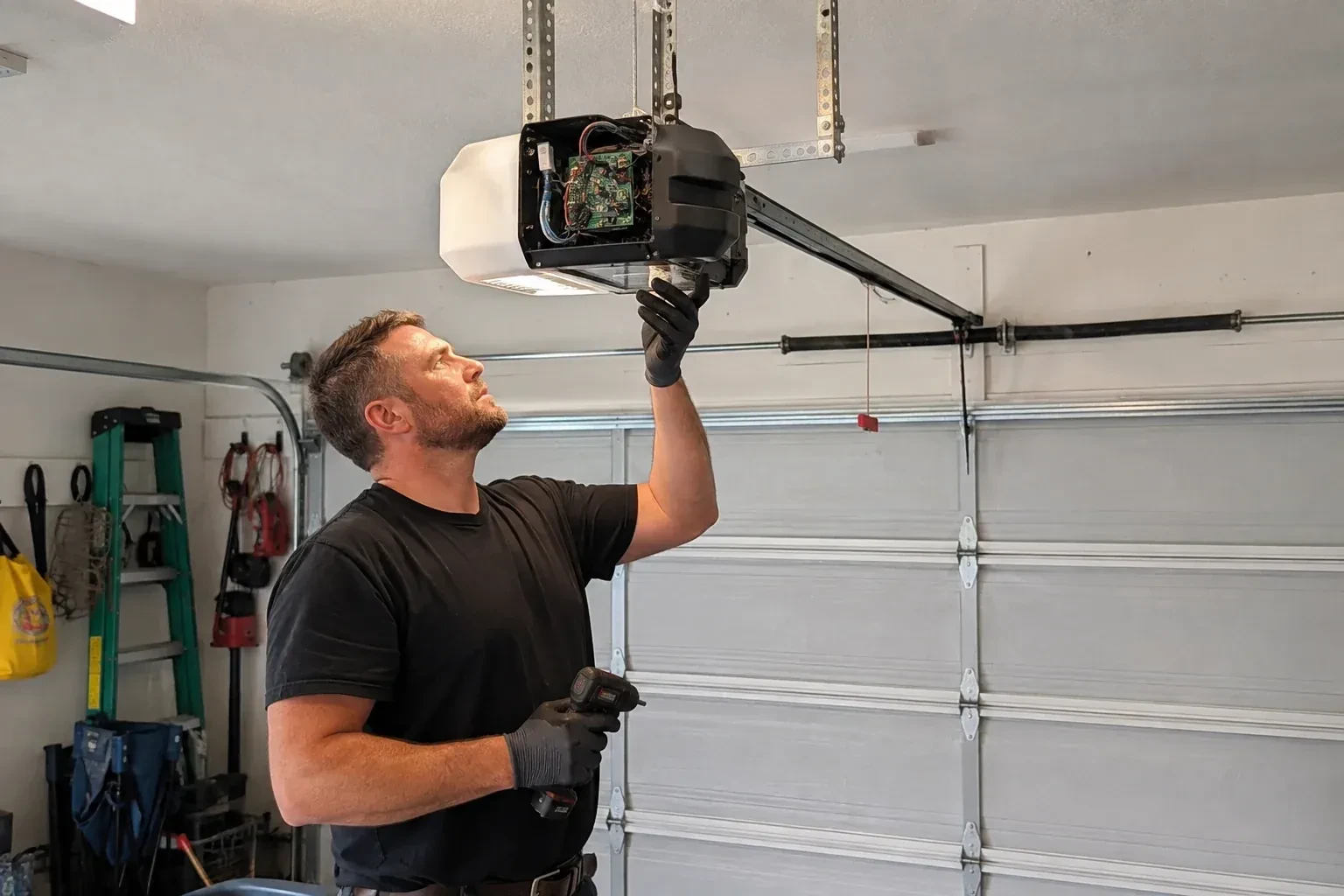
The receptacle above the opener is checked before anything cleverer. A plug can work loose when a car door is slammed underneath it, a breaker or ground-fault device can trip during a storm and stay tripped, and an outlet that shares a circuit with a freezer or a workshop tool may have failed quietly. The technician confirms voltage at the receptacle, watches for the head unit's light and indicator when power is restored, and where the model allows it checks the transformer output and the small fuse on the board. A silent opener is very often an unpowered one, and this step settles that early.
Door first, opener second
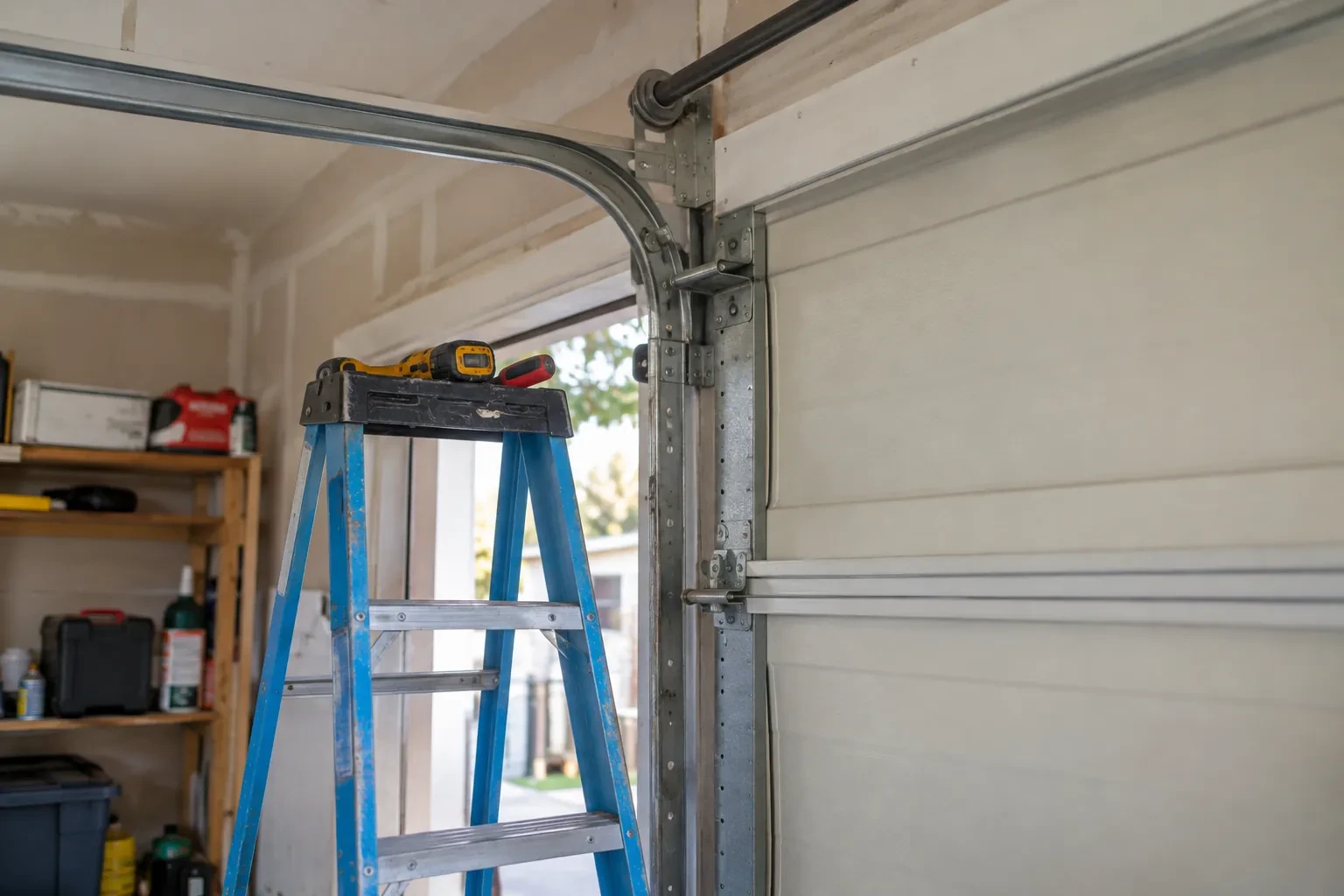
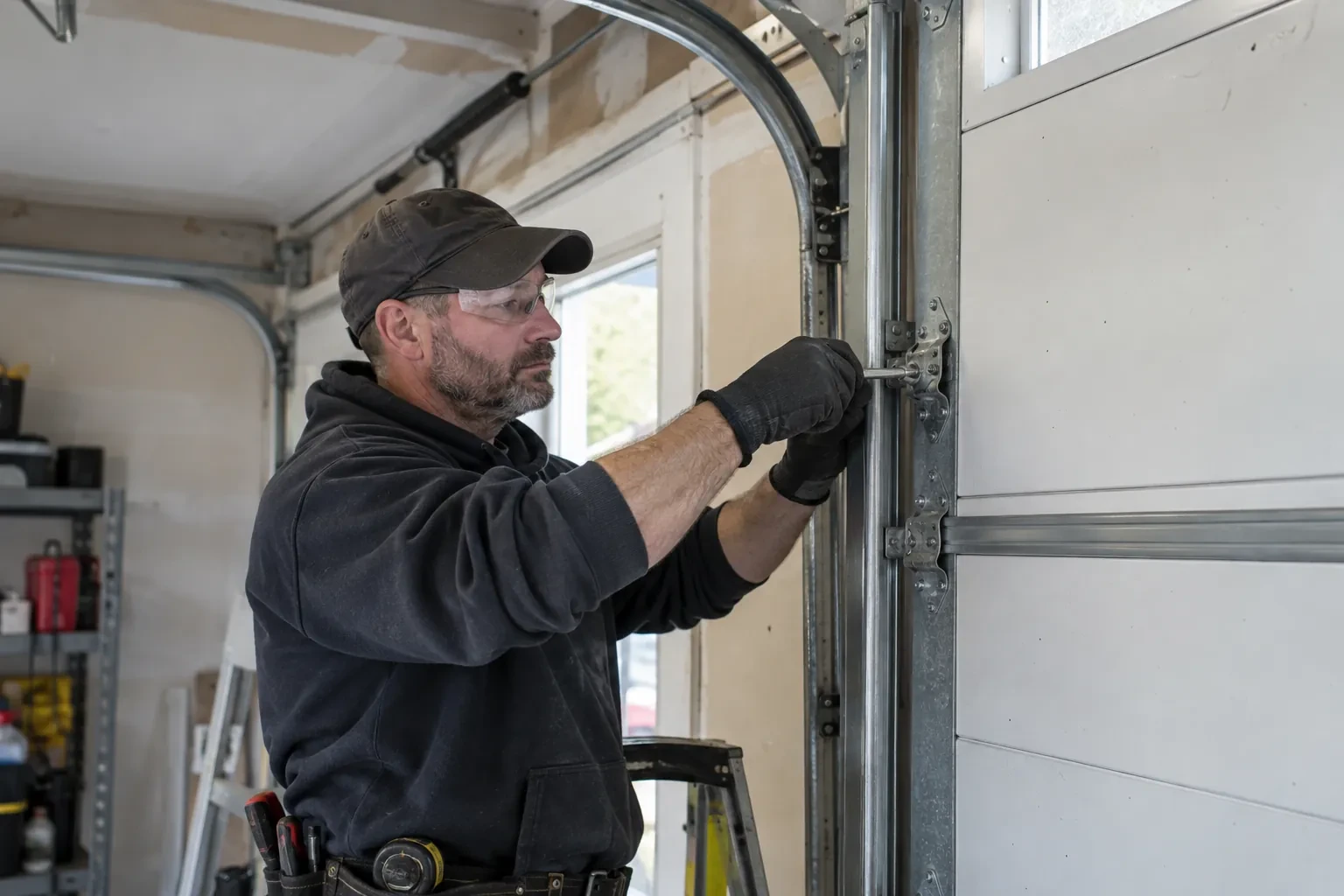
When the by-hand check shows the door is heavy, drifting or binding, the work order changes. The opener is left disconnected and the door side is corrected first: worn rollers replaced, dry hinges and rollers lubricated, loose track brackets tightened, a dropped header bracket re-secured, and spring or cable faults handed to the tensioned-hardware work they require. Only when the door lifts and holds by hand is the trolley re-engaged and the opener tested again. Very often the opener that seemed faulty runs perfectly once it is moving a balanced door, and the repair becomes lighter and longer-lived than any change made at the motor.
The monthly test you can do yourself
You leave knowing a short check that catches most opener trouble early. Once a month, with the door open, lay a piece of 2x4 flat on the floor under the middle of the door and press close; the door should touch it and go straight back up. Then close the door again and pass a broom handle through the sensor beam near the floor; the door should stop and reverse. Watch the sensor lights stay steady. If either test fails, stop using the opener and book a visit. These are the same tests the technician just performed, and they are all the standard asks of a working unit.
Garage Door Opener Diagnosis and Repair
In the van
Chain or belt
Travel limit switch or RPM sensor
Wall control
Trolley and carriage
Transformer and board fuse
Garage Door Opener Diagnosis and Repair
What affects the quote
Remotes and keypads
Each remote or keypad to be reprogrammed, re-batteried or replaced is counted individually. Say how many devices you have so the quote reflects all of them.
Ceiling height and access
A standard-height garage puts the head unit in easy ladder reach. High ceilings, high-lift tracks, storage lofts or a car that cannot be moved add setup time and sometimes a taller ladder.
Time of the call
A weekday daytime visit and an evening, weekend or holiday call cost the same amount for an opener diagnosis. The technician confirms the exact figure once the drive, the sensors and the wiring have been checked in person.
What to have ready
- Are the two small lights on the sensors near the floor steady, flickering or off?
- Roughly how old is the opener, and is the model label readable?
- Has anyone pulled the red emergency release cord recently?
Garage Door Opener Diagnosis and Repair: questions
QuestionsShould I lubricate the chain, the rail or the track?
Rollers, hinges, bearings and springs benefit from a garage door lubricant once or twice a year. The chain, belt or screw-drive rail is a separate question, since each drive type calls for its own product and schedule from the opener's manual rather than one rule for every unit. The track itself should stay clean and dry, because lubricant there collects grit and makes rollers slide instead of turning. The technician can point out the spots on your door at the end of the visit.
What is the red cord for, and is it safe to pull?
It is the emergency release that disconnects the door from the opener so you can move it by hand, for instance during a power outage. It is safe when used with the door closed. Pulling it with the door open is the risk, because an unbalanced door can then drop. Pull straight down, lift the door by its handle, and reconnect afterwards by running the opener or lifting until the trolley clicks back in.
The wall button works but none of my remotes do. What happened?
Three things account for most of these. The wall control has been put into lock mode, sometimes by a child or a visitor, which blocks all remotes until it is released. The opener's memory was cleared, usually by someone pressing the learn button while trying to program a new remote, so every remote needs programming again. Or the receiver in the head unit has failed. The first two are simple settings; the third is a part.
Related services
- Belt-Drive Opener RepairThe belt looks fine from a distance, but up close the rubber has cracked across the back in dozens of places and, in one spot, you can see the steel cords showing through.
- Garage Door Opener ReplacementDuring the ice storm the power was off for two days.
- Photo-Eye Sensor Alignment or ReplacementSince shelving went up along the garage wall, the door will not close and both sensor lights are dead.