Repairs · Edgeley
Garage Door Panel Replacement in Edgeley
The inside face of one section has started to bow outward and the outer skin has a soft, wavy look.
In plain words
A sectional garage door is built from four or five horizontal sections joined by hinges, each riding on its own rollers in the tracks. Panel replacement takes advantage of that design: when one section is creased, rusted or cracked, it can be unhinged and swapped for a new section of the same make, model and size while the rest of the door stays where it is. The technician identifies the door, confirms a matching section is available, holds the door secure in its tracks, exchanges the section with any bent hinges or rollers, and then re-checks alignment, balance and the opener before handing the door back.
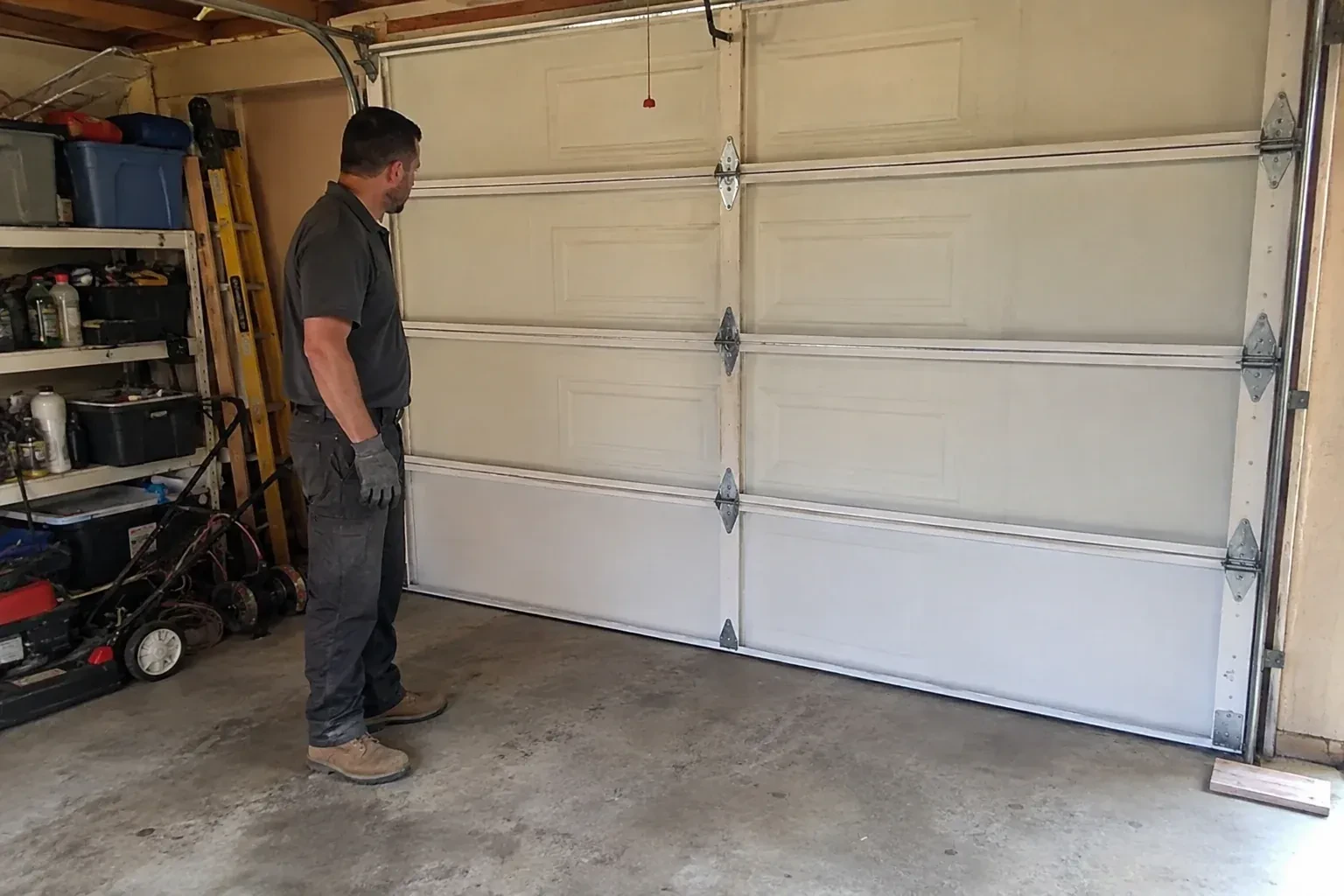
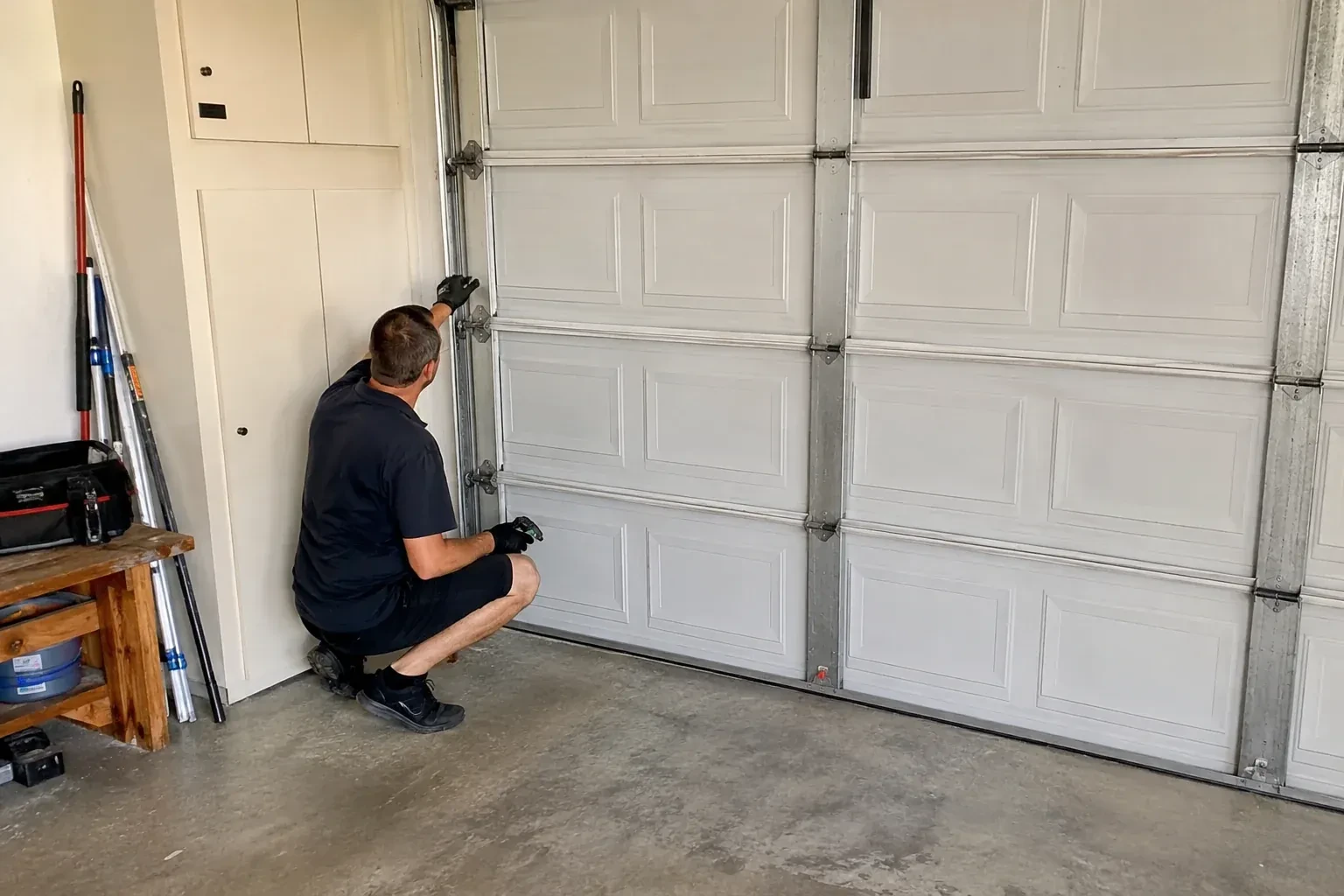
How the visit goesThe inside face of one section has started to bow outward and the outer skin has a soft, wavy look. Tap it and it sounds hollow in places. The door is insulated, and the foam core seems to have parted from the steel.
Garage Door Panel Replacement
How the visit goes
What the impact did to everything else
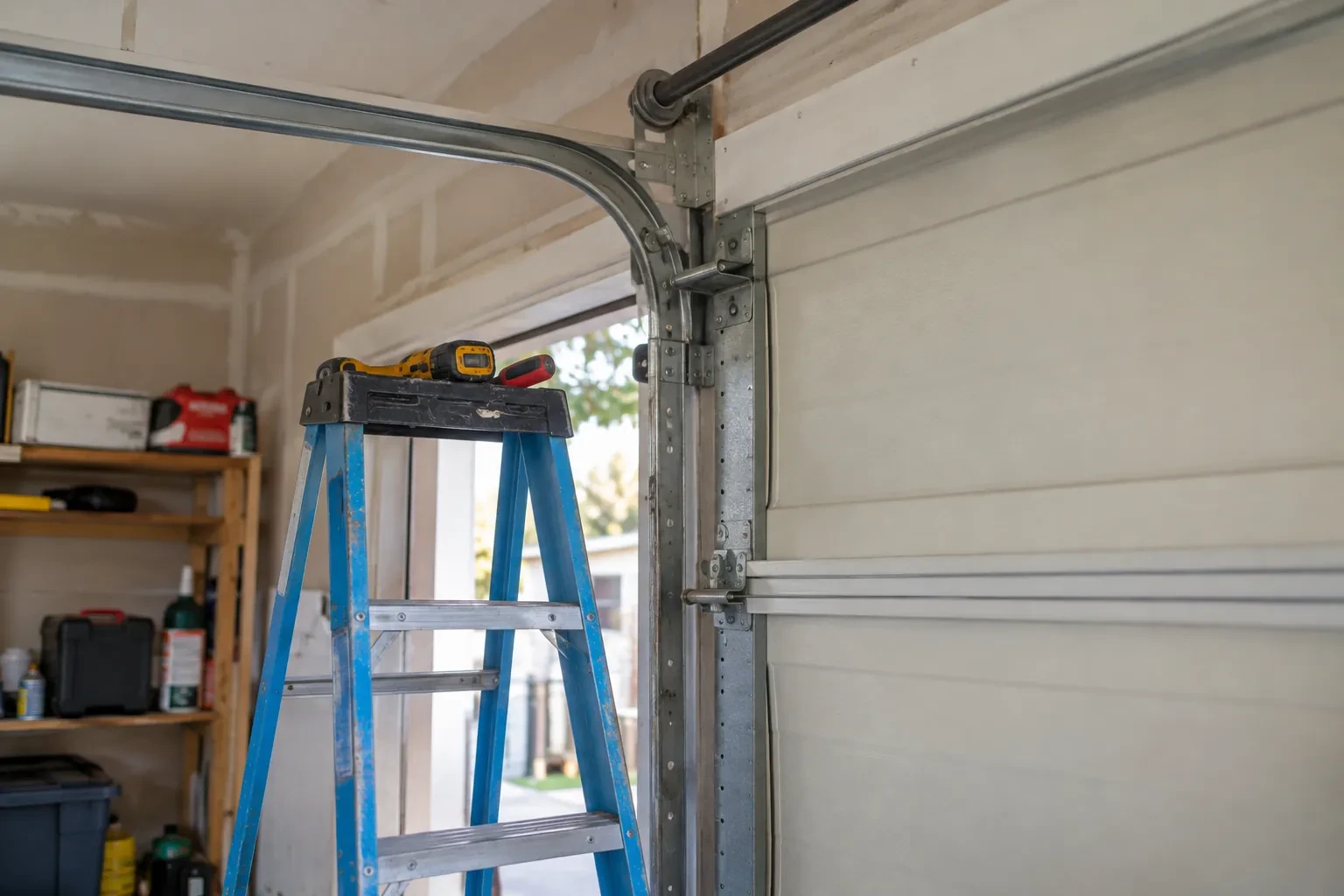
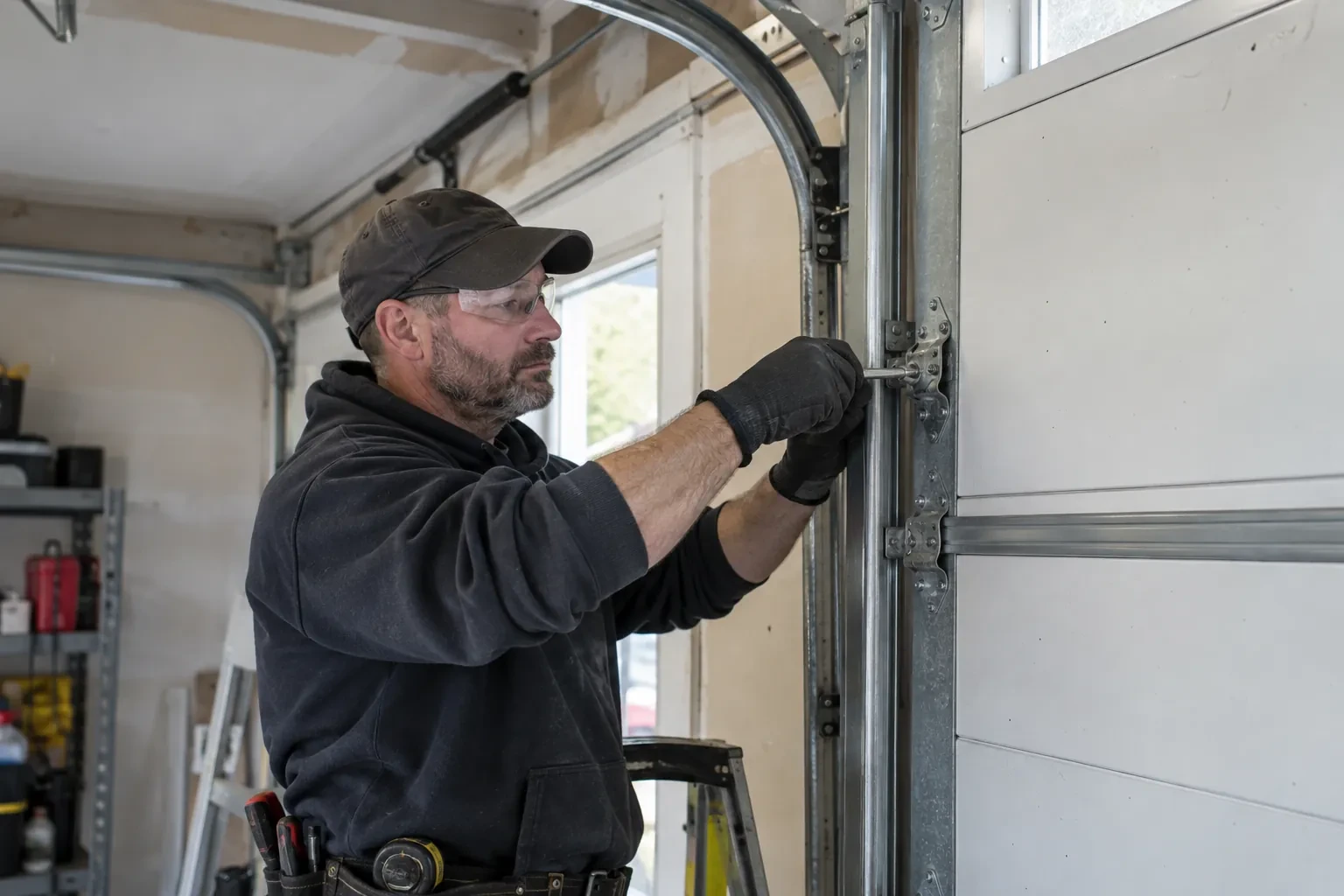
Trade-association guidance is clear that after a vehicle strike, a storm or a freeze-up the whole door is looked at, not just the dented part. The technician runs a hand along the hinges for cracks and pulled screws, spins each roller for flat spots and bent stems, sights down both tracks for kinks and checks the brackets that hold them to the jambs. Cables are inspected for fraying where they wrap the drums, spring anchors and the centre bearing plate are checked, and the opener arm and its bracket are examined for bending. Anything the impact disturbed goes on the list alongside the section.
Fitting the new section into the door
The new section is lifted into the gap, its rollers guided into the tracks and its joint mated to the section below so the two profiles nest. Hinges go on according to the number stamped on them: each position in the door uses a different hinge offset, which places the roller progressively further from the door face so the upper sections follow the curve of the track. New self-tapping screws are driven into the stiles at the factory hole positions, a strut is bolted across if the section calls for one, and the technician confirms the section sits flat and the joint above closes tight.
A door that runs as one piece again
When the work is finished the new section is indistinguishable in the way the door moves. The joints close tight with no daylight, the door rises without the shudder or catch that gave the damage away, and it sits level on the floor with the seal compressed evenly across its width. The technician walks you through the cycle with the opener and by hand so you can see the balance for yourself, points out the hinges and rollers that were replaced, and leaves the old section for disposal or takes it away as you prefer. Any temporary bracing from the first visit is gone.
Garage Door Panel Replacement
In the van
Matching replacement section
Numbered section hinges
Winding bars and track clamps
Window frame insert and glazing
Self-tapping stile screws
Garage Door Panel Replacement
What affects the quote
Access and working room
A section is wider than the door opening and is carried in and manoeuvred by two people. A cluttered garage, a low ceiling around the spring, or a tight driveway adds handling time.
Colour and finish decisions
The section comes in the manufacturer's current version of your colour. If you choose to repaint the whole door afterwards, or order a colour change across all sections, that becomes a separate item.
Spring work required
A bottom section means torsion springs are unwound and rewound, or, on an extension-spring door, the door is raised and secured so the springs relax and its hooks and cables are reset instead. A section changing the door's weight may call for a balance adjustment.
What to have ready
- What colour and panel design is the door?
- Does the door still open and close, by opener or by hand?
- Are any other sections dented, rusted or out of line?
Garage Door Panel Replacement: questions
QuestionsMy door is insulated. Does the new section need the same insulation?
It should. Insulated sections come in different thicknesses and core types, and the replacement needs to match yours so the joints line up, the hinges sit at the right depth and the weight stays consistent with the springs. Mixing an insulated section into an uninsulated door, or the reverse, generally means a step at the joint and a change in balance. The technician reads the thickness and core type from the door before ordering.
Does a new section bring back the door's original strength?
A section ordered to the same specification carries the same steel gauge, core and reinforcement as the original, and it is fitted with sound hinges, new fasteners and, where the design calls for it, a strut. Combined with the alignment and balance work done at the same time, the door returns to operating the way its manufacturer designed it to. Where an original section had bowed for want of a strut, adding one leaves that part stiffer than before.
Does changing a section affect the springs or balance?
It can. A new section may be a little heavier or lighter than the old one, particularly if insulation, glazing or a strut differs, and the springs are set for the door's actual weight. After the exchange the technician lifts the door by hand with the opener disconnected and adjusts the spring tension until it holds steady at mid-height. On a bottom-section job the springs are unloaded and reloaded as part of the work anyway.
Related services
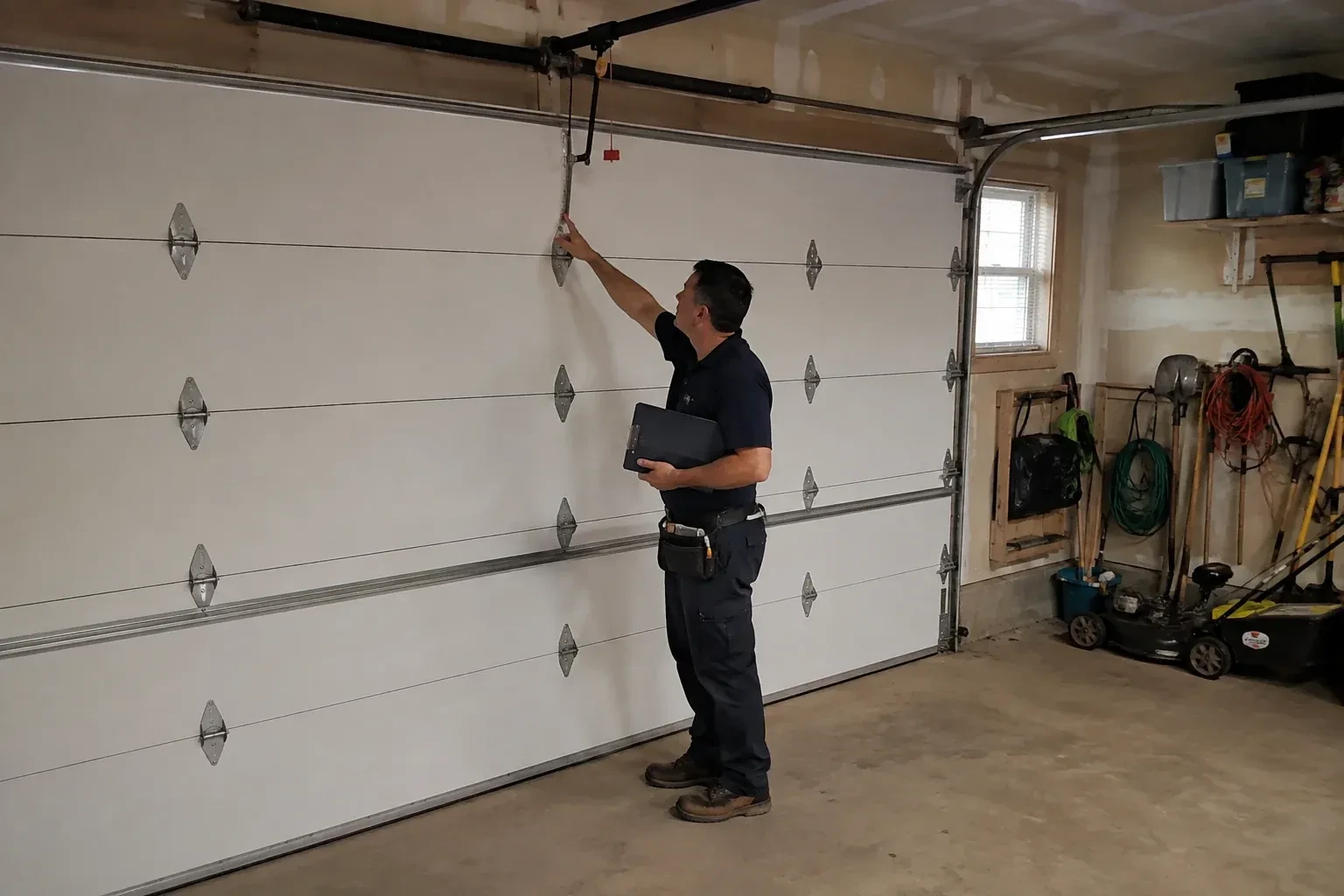
- Garage Door Tune-UpThe door lands with a thud you can feel through the kitchen floor, and sometimes it bounces back up a few centimetres before settling.
- Off-Track Garage Door ResetThe door came down fine but with a scraping noise, and now the vertical track on one side is bowed away from the wall.
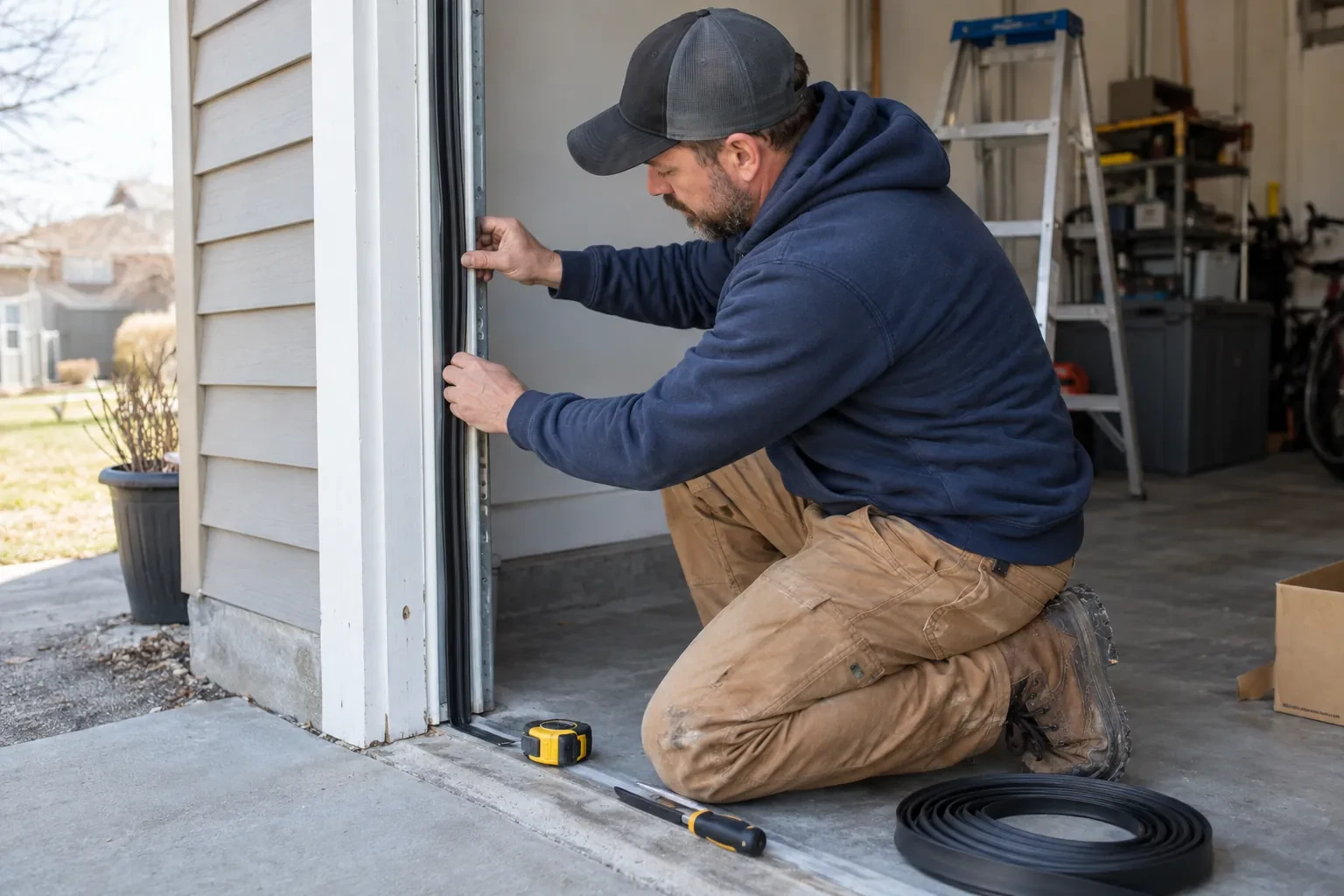
- Garage Door Bottom Seal ReplacementOne end of the bottom seal has slipped out of its channel and hangs down like a loose shoelace.