New Doors · Vaughan
Commercial Sectional Door Repair
A high-lift door begins smoothly, then a cable loses tension as the top sections change direction.
In plain words
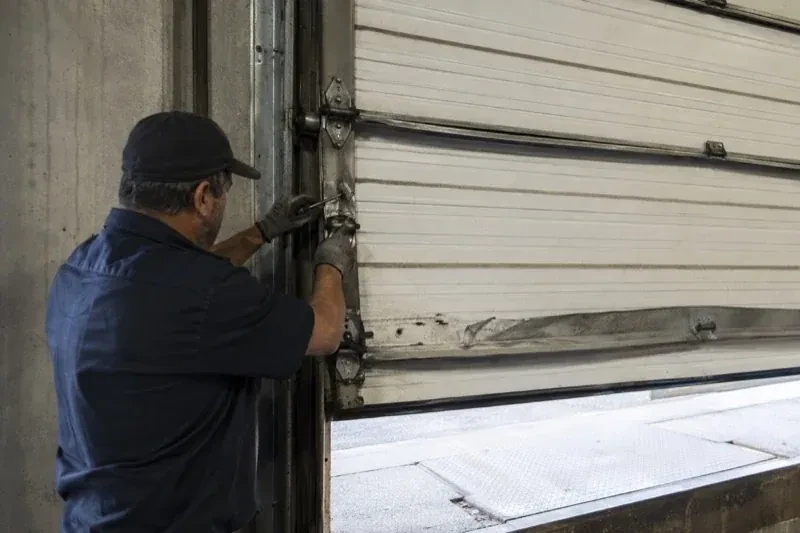
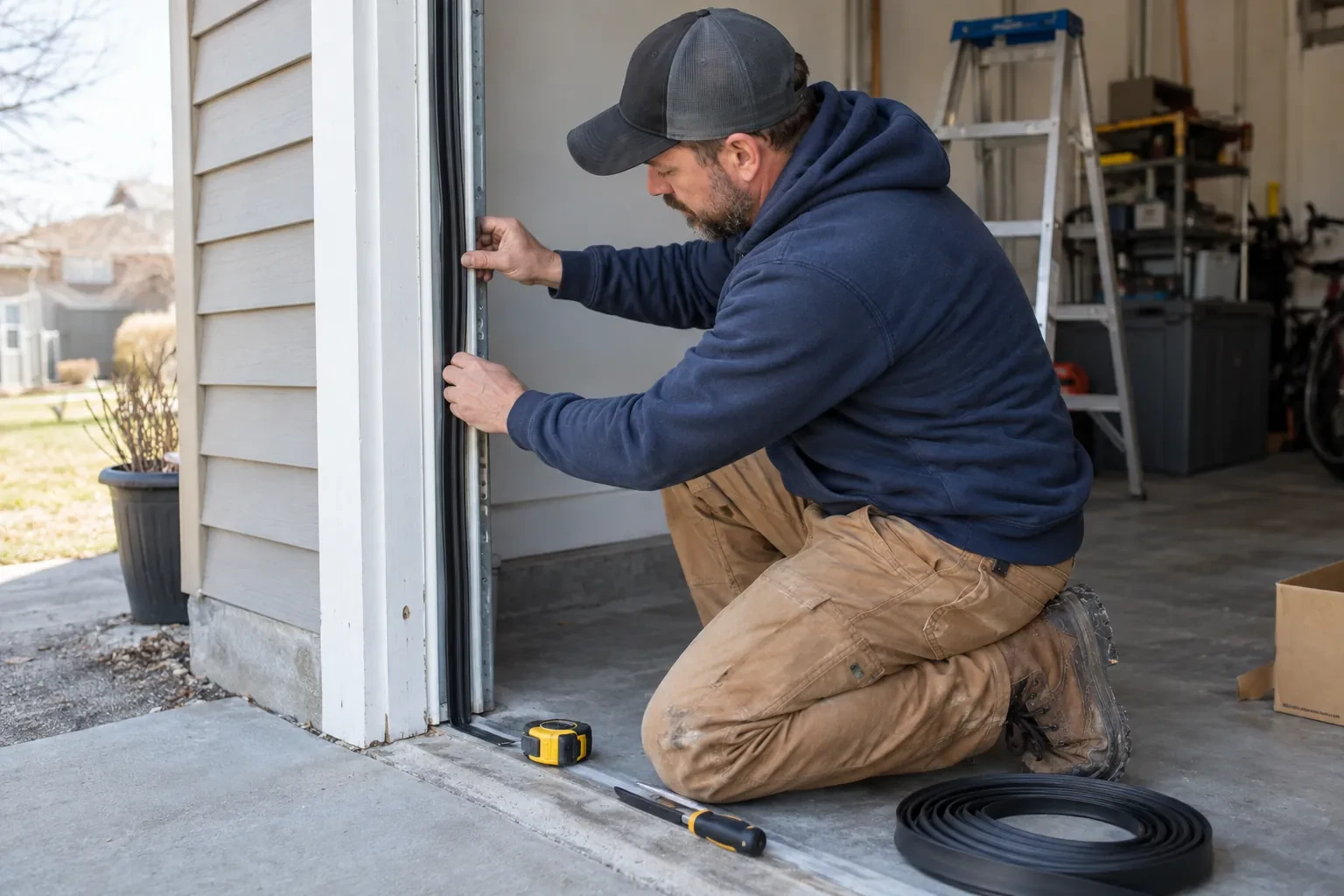
Weather-related repair focuses on the lower part of the opening as well as the moving door. Ice at the threshold, slush, salt, a torn bottom seal and corrosion around lower fixtures can change how the door lands and how long components last. The technician clears the travel path, checks the bottom section and retainer, examines cables and brackets for deterioration, and corrects the seal or alignment issue. The result is an opening that closes squarely and manages drafts and moisture more effectively through changing seasons.
How the visit goesCold weather has exposed a widening gap below the closed door. The bottom retainer is bent, the rubber seal is split, and uneven seating lets drafts and slush enter the work area.
Commercial Sectional Door Repair
How the visit goes
Reviewing high-lift geometry
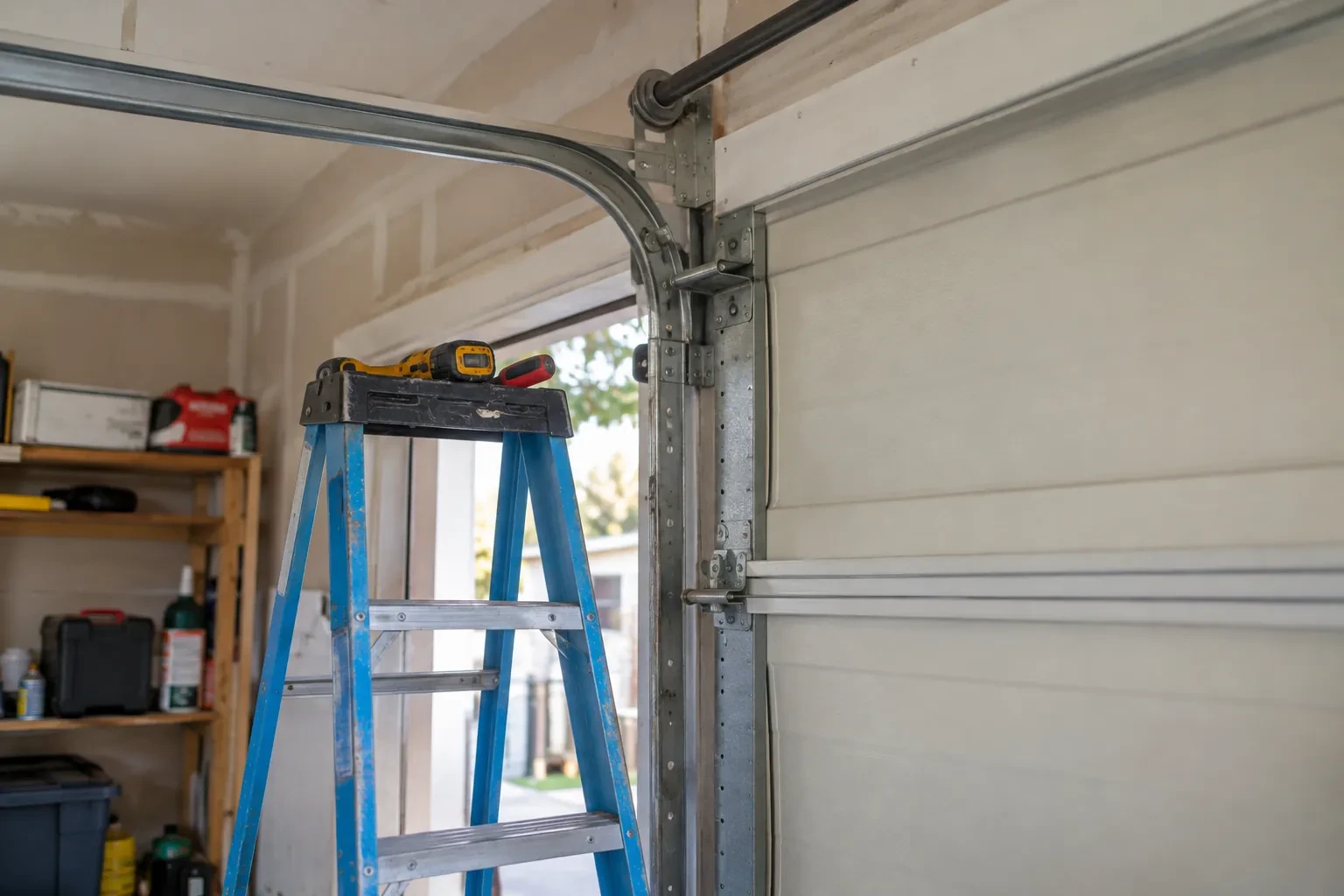
High-lift and vertical-lift systems are identified before components are ordered. The technician records door dimensions, track rise, drum arrangement, shaft location, cable path, spring information and operator connection. Back hangs, sway braces, track splices and end stops are examined because movement overhead can appear as cable trouble below. Cable tension is observed at key transitions, especially near the open position. The resulting measurements guide part selection and show whether the fault came from wear, lost support, changed adjustment or a mismatch within the lift arrangement.
Renewing hinges and rollers
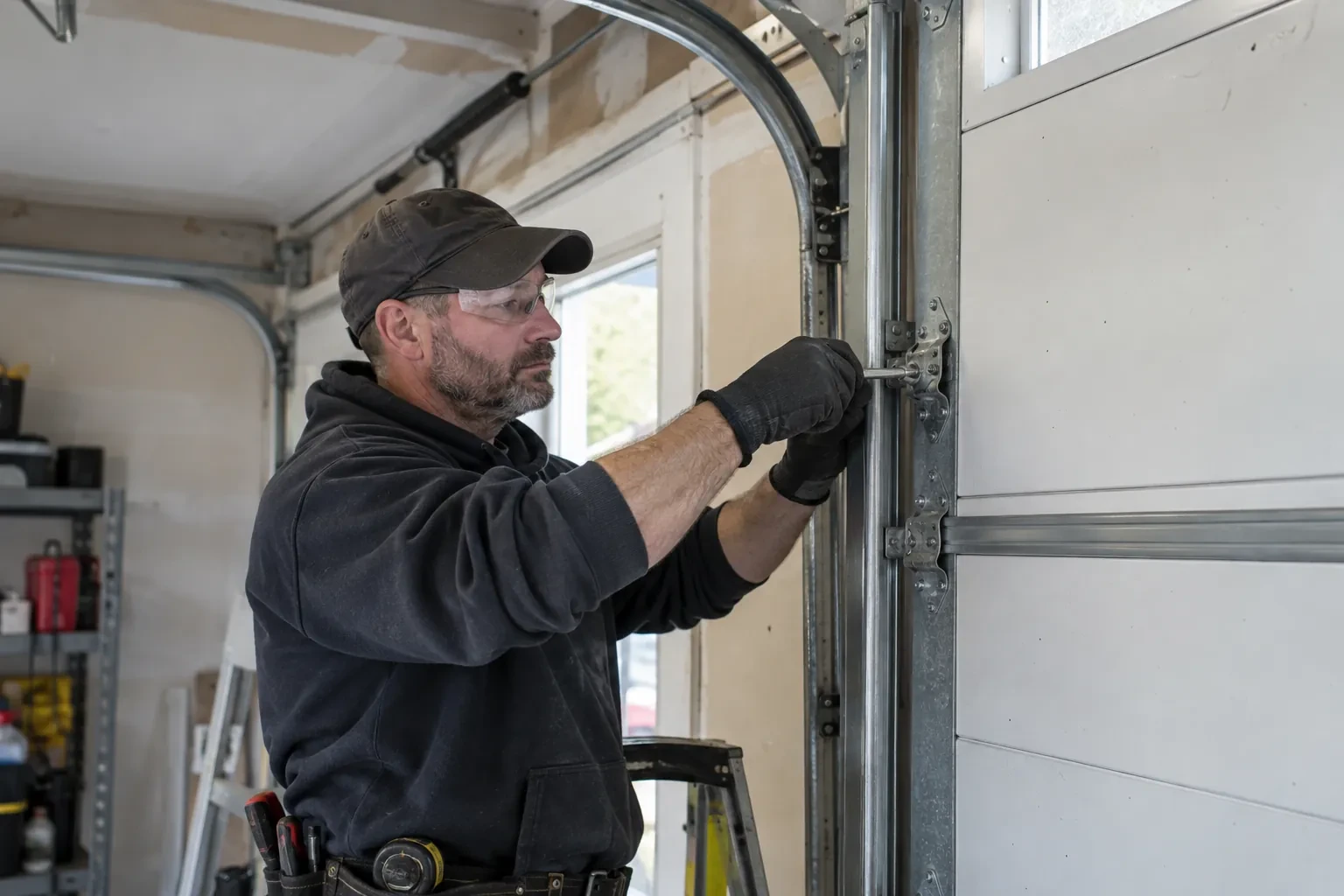
Worn running hardware is replaced in its correct sequence rather than mixed between positions. Numbered end hinges maintain the changing roller offset that guides stacked sections around the track curve, while centre hinges keep adjoining panels connected across the width. Roller stem length, diameter and bearing type are matched to the track and door duty. Each mounting area is checked for enlarged holes or cracked stile material before new fasteners are installed. With side play reduced and alignment restored, the sections articulate smoothly instead of knocking or twisting through the bend.
High-lift cables that remain controlled
Corrected lift geometry leaves the cables tensioned and seated as the door moves from vertical travel into its upper position. Because overhead components can be difficult to view from the floor, the service record should capture the drum, cable and spring details used in the repair. Staff can monitor the visible lower cable runs and listen for changes near the transition. A planned inspection can then review track supports, shaft bearings and cable condition at height with suitable access equipment, preserving the adjustments made during repair.
Commercial Sectional Door Repair
In the van
Bottom seal and retainer
Reinforcement struts
Commercial rollers
Track brackets and back hangs
Photoelectric sensors and sensing edges
Commercial Sectional Door Repair
What affects the quote
Section construction and finish
Steel, aluminum, insulated sandwich and full-vision sections have different profiles, reinforcement, glazing and hardware patterns that affect matching and replacement scope.
Number of affected openings
A single bay with one defined fault differs from a facility request covering several numbered doors, separate symptoms and individual operational tests.
Operator repair requirements
Drive chains, sprockets, shaft couplings, hoists, brakes, clutches, limits and control wiring each add distinct mechanical or electrical tasks to the quote.
What to have ready
- Was there a vehicle, forklift or load impact?
- Is the door operated electrically, by hoist or by hand?
- Is the track standard, high-lift or vertical-lift?
Commercial Sectional Door Repair: questions
QuestionsWhat happens during the final operational test?
The technician observes the door through the complete travel path, checking that sections articulate cleanly, rollers stay guided, cables track on their drums and the bottom edge remains level. Balance is evaluated where manual testing is appropriate. Powered controls, stopping positions and installed photoelectric sensors or sensing edges are then checked, followed by a review for vibration or contact.
Can bent track be straightened or must it be replaced?
That depends on the location and degree of deformation. A minor change in an accessible straight section may be corrected while restoring spacing and support. A sharply creased rail, damaged curve, opened seam or track that can no longer hold the roller securely usually calls for a compatible replacement. Brackets, anchors and adjoining track are checked either way.
Does a torn bottom seal always mean a seal-only repair?
Not always. The rubber may simply be worn, but a bent retainer, uneven floor, crooked door or impact-damaged bottom section can produce the same gap. The technician checks how the door lands before replacing material. Correcting level or retainer shape first allows the new seal to contact evenly without being stretched to compensate for another fault.
Related services
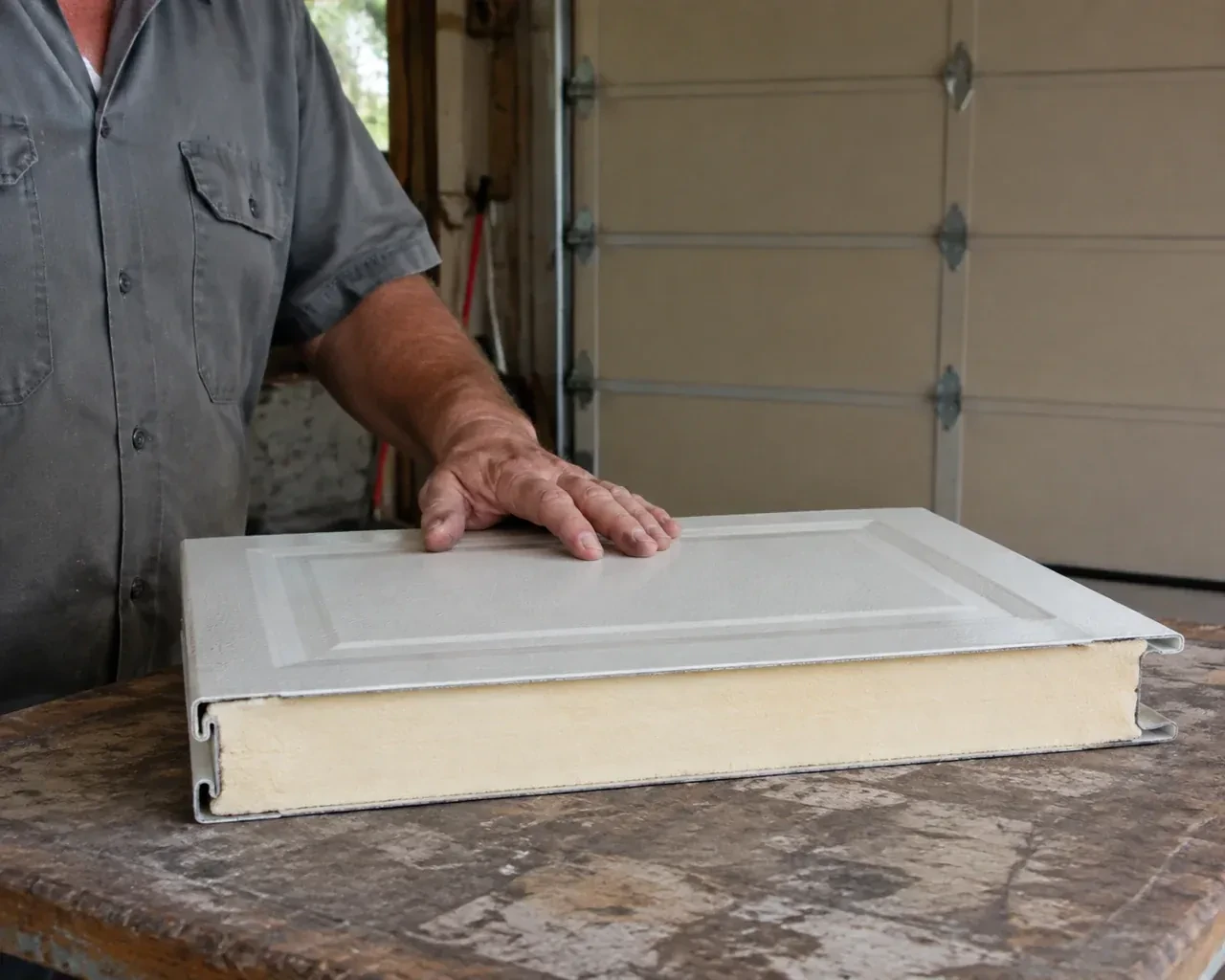
- Insulated Steel Garage Door InstallationYou want windows for natural light without turning the garage into a cold glass wall.
- Wind-Rated Garage Door ReplacementYour building designer has supplied positive and negative pressure values for the garage opening.
- Carriage-House Garage Door InstallationYour garage door works, yet its broad plain panels feel disconnected from the brick, gables and entry details around them.