Repairs · Vaughan
Garage Door Safety Inspection
You moved in three months ago.
In plain words
For a home you have just bought, or one you are about to sell, the inspection gives the door a starting point. The report records the door and opener models, the spring type, the condition of every wearing part and the results of the balance and safety tests, all against a date. Anything that needs attention is listed with a suggested order. From then on you have something to compare against: a noise that appears next year means something changed since the record, not a mystery, and a buyer or an insurer asking about the door gets a factual answer instead of a shrug.
How the visit goesYour toddler has discovered the wall button. You want to know, from someone who checks these things for a living, that the door will stop and reverse if a small person is under it.
Garage Door Safety Inspection
How the visit goes
Watching one full cycle under power
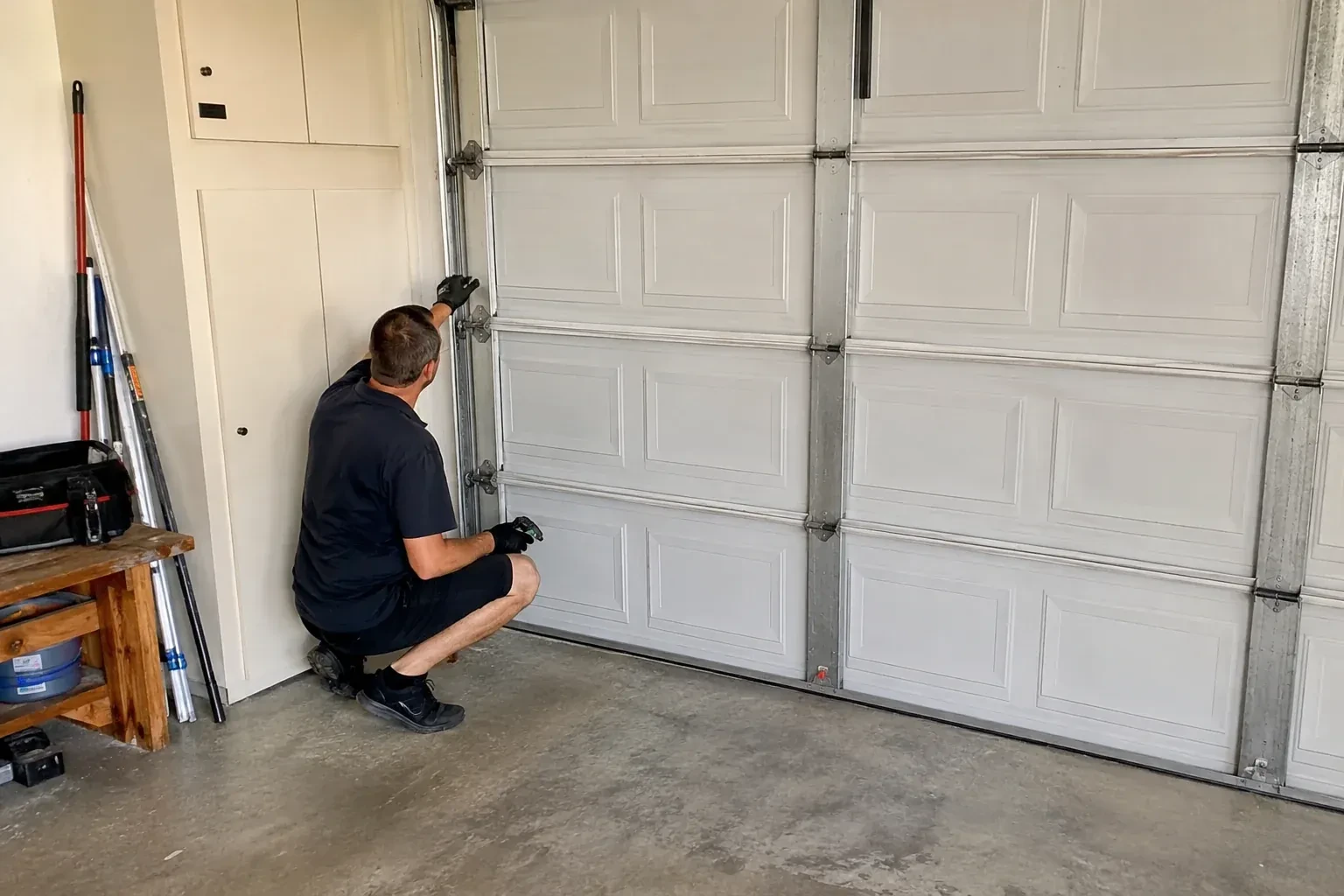
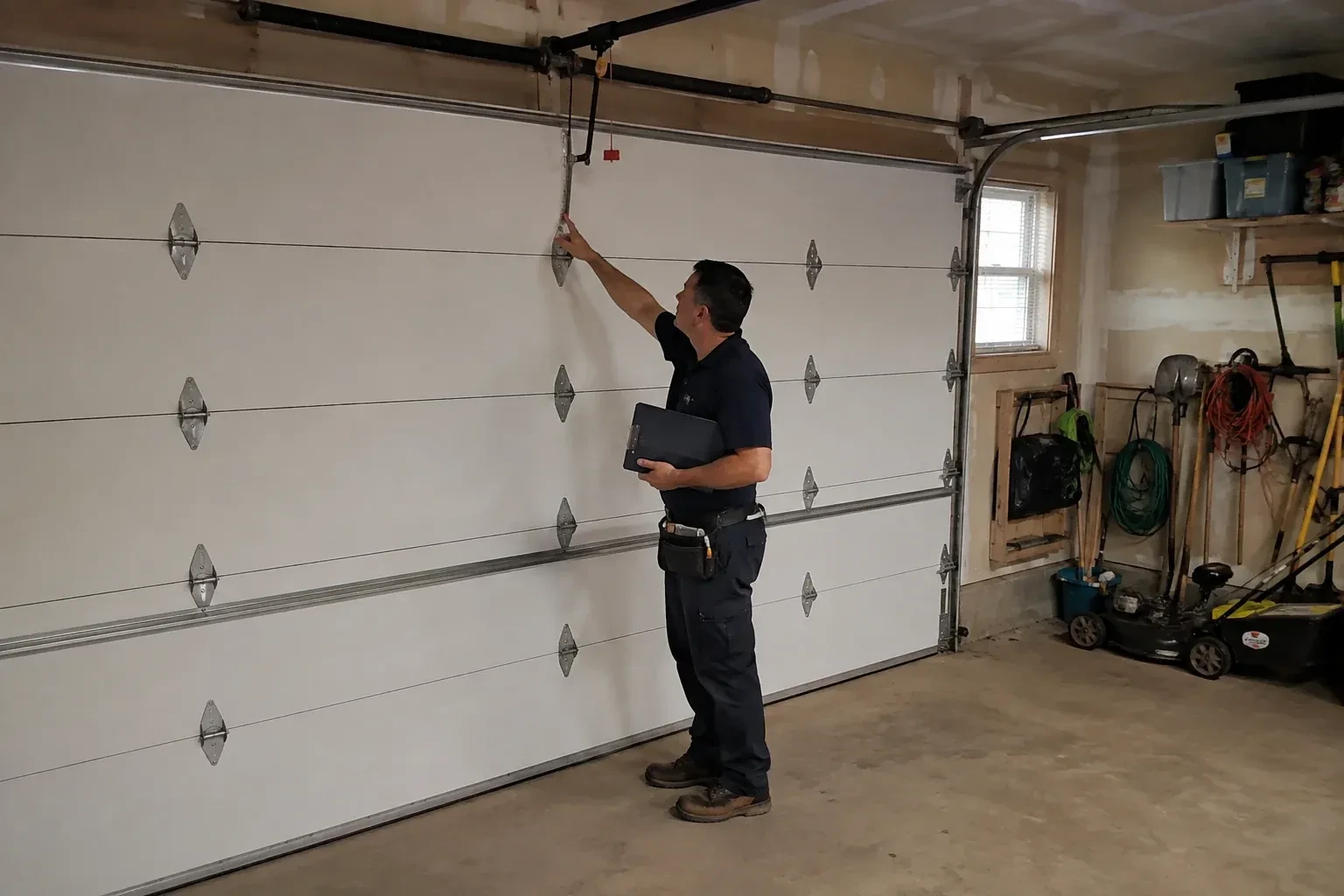
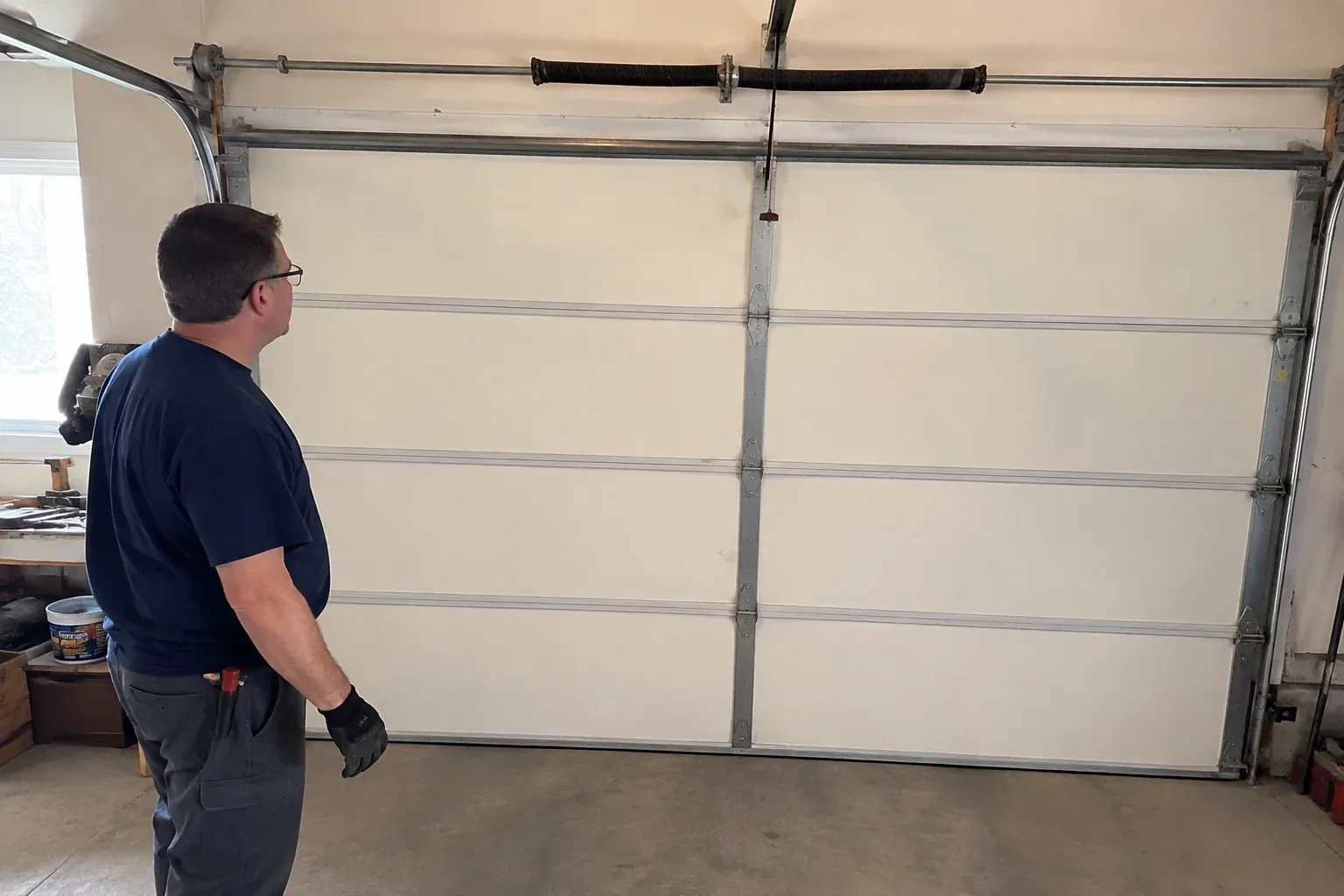
Before anything is measured, the technician stands back and runs the door through a full open and close, listening as much as watching. A healthy door sounds even from bottom to top; a knock at the turn into the horizontal track, a squeal at a particular hinge, a grinding drum or a motor that changes pitch under load each point somewhere specific. The eyes follow both bottom corners to see whether they leave the floor together, the top section as it passes the curve, and the final inch of closing, where the door should settle onto its seal without a thud. This one cycle often tells the technician where to spend the rest of the visit.
Maintenance done on the spot, if you wish
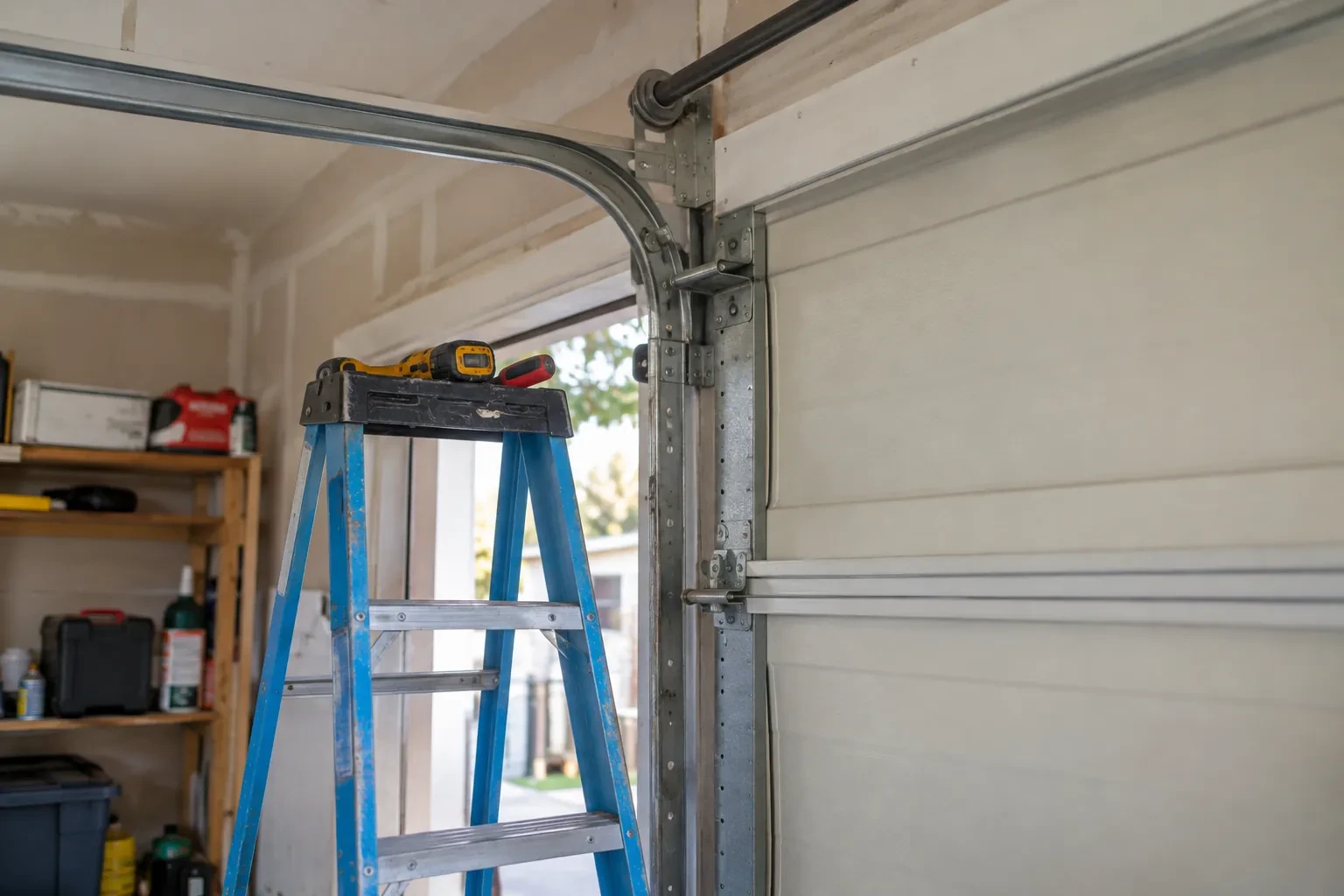
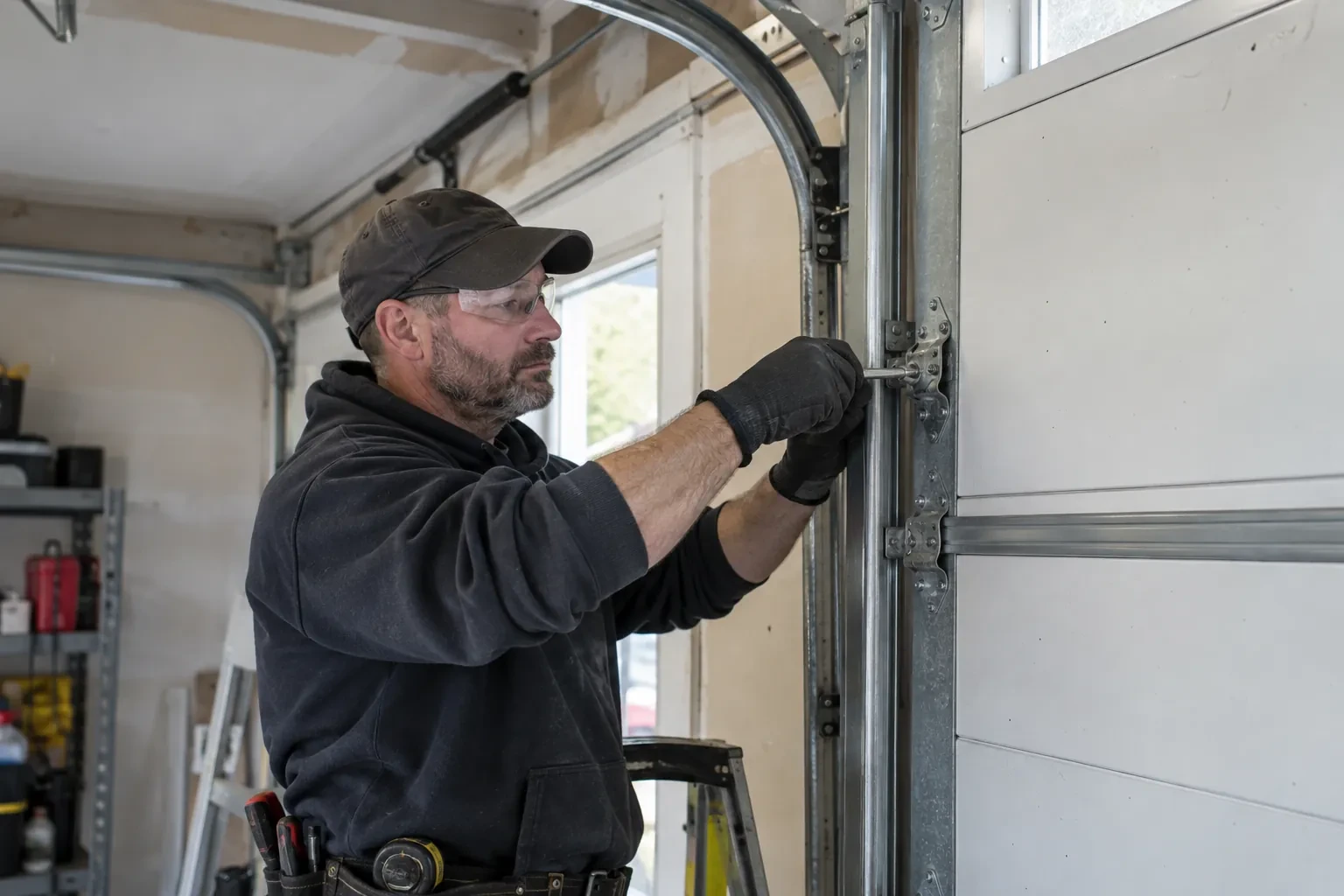
Some findings are simply maintenance, and with your agreement the technician handles them during the same visit. A garage-door lubricant is applied to the springs along their length, to hinge pins, roller bearings and bracket pins, then the door is run to spread it. The tracks are wiped clean and left dry. Photo-eye lenses are cleaned and aligned, loose fasteners tightened, remote and keypad batteries replaced. None of this touches the counterbalance tension or the opener's force settings; those are noted for planned work. It adds a few minutes to the visit and it means the door goes back into service better than it was found.
Repairs in a sensible order
If the report lists planned repairs, it also suggests an order, because some items lean on others. A cable showing rust at the loop comes before a new roller set, since cables are changed with the counterbalance unloaded and rollers are a simple job at any time. Springs near the end of their cycle life are planned as a pair, with the cables checked in the same visit. Photo-eye alignment and a stripped bracket fastener are done first because they are small and they matter. You can take the list in one go or over a few months; either way, nothing in it is a surprise when the technician returns.
Garage Door Safety Inspection
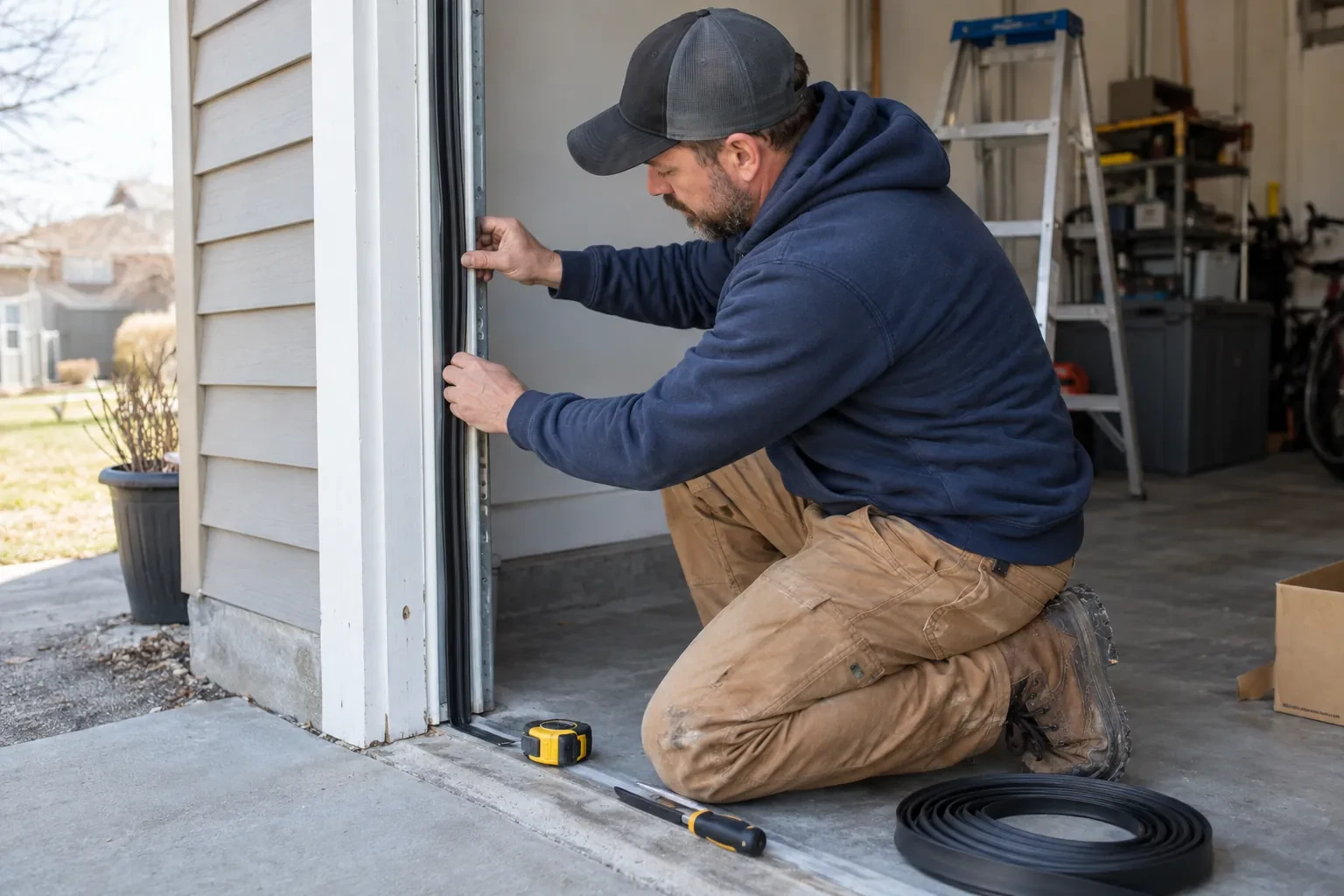
In the van
Tape measure and level
Spring and cable gauges
Weatherstrip samples for matching
Work light and inspection mirror
Replacement hinge and track fasteners
Garage Door Safety Inspection
What affects the quote
Access to overhead track or a locked mechanical room
Some tracks run behind storage or into a locked mechanical room, and reaching every bracket and fixture takes longer when a ladder or a key has to be found first. Clearing a path to the track ahead of the visit lets the inspection move through the whole door without interruption.
Opener type and age
A current opener with photo eyes, a keypad and several remotes has more devices to test than an older unit with contact reversal alone, and the test procedures differ by model.
Distance to the property
Travel is part of every visit. A property across town and one at the end of a rural road involve different driving time, and the quote reflects the trip.
What to have ready
- Is there a spring on a shaft above the opening, or springs stretched along the tracks?
- How many remotes, keypads and wall buttons operate the door?
- When was the door last serviced, and do you have the paperwork?
Garage Door Safety Inspection: questions
QuestionsMy opener is old and has no photo eyes. Can it still be inspected?
Yes. Older openers rely on contact reversal alone, so the board test carries more weight and is run carefully against the maker's procedure, along with the manual balance check, the force setting and the release. The report records what the opener has and how it performed. An opener built before photo eyes became standard is flagged for replacement in the report, since makers recommend moving off that generation of opener rather than treating photo eyes as a nice-to-have.
What is the board test?
It is the contact-reversal check. A short length of 2x4 lies flat on the floor in the middle of the opening and the door is closed from the wall button. When the bottom edge meets the wood, the door should halt and travel back up without help. Passing shows the opener's down-force and travel limits are set to back off from something solid. The technician never substitutes a hand or foot for the board.
Is the inspection a repair visit?
It is a look and a record first. Small maintenance items such as lubrication, cleaning and aligning the photo eyes and tightening fasteners can be done on the spot if you wish. Anything involving spring tension, cables, drums, worn rollers or damaged sections is written up with a clear explanation and quoted as its own job, so you decide with the full picture in front of you.
Related services
- Off-Track Garage Door ResetThe door came down fine but with a scraping noise, and now the vertical track on one side is bowed away from the wall.
- Garage Door Panel ReplacementThe inside face of one section has started to bow outward and the outer skin has a soft, wavy look.
- Garage Door Bottom Seal ReplacementOne end of the bottom seal has slipped out of its channel and hangs down like a loose shoelace.