Springs · Vaughan
Torsion Spring Replacement
On a cold morning the remote does nothing useful: the light comes on, the motor turns briefly, the door stays shut.
In plain words
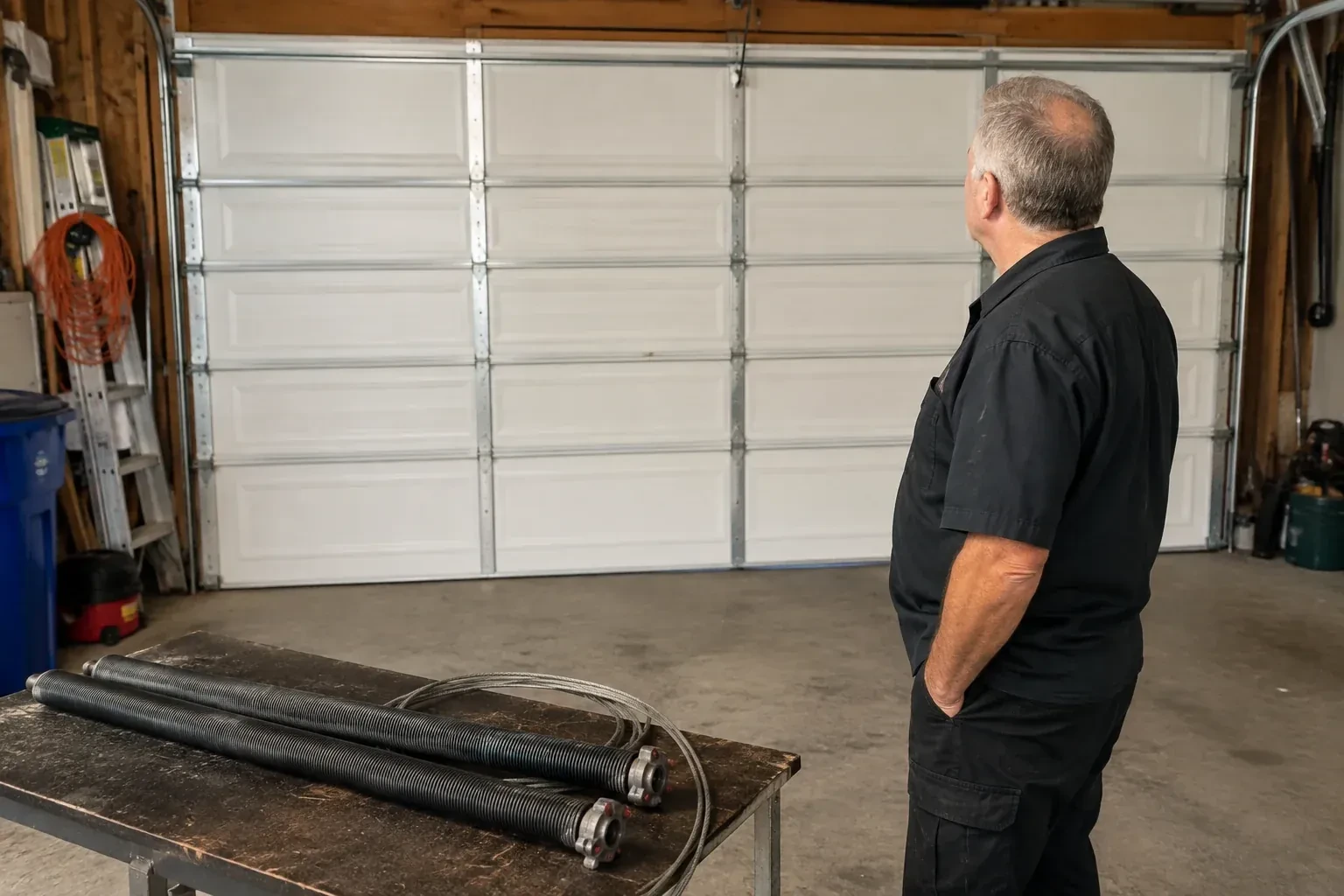
Torsion spring replacement restores the counterweight that makes a garage door light enough to lift. A sectional door often weighs more than a fridge, and the spring above the opening carries nearly all of that load, storing energy as the door closes and releasing it as it opens. When a spring breaks or wears out, the technician removes it, fits a spring matched to the door's weight and height, winds it to the correct number of turns and checks that the door balances at every point of travel. The opener returns to doing its light share of the work, and the door moves smoothly and evenly again.
How the visit goesThe door drops the last stretch to the floor rather than settling, and when you stop it halfway by hand it slides down instead of staying put. Balance has drifted, and the spring is no longer holding its share of the weight.
Torsion Spring Replacement
How the visit goes
Following the hardware the spring drives
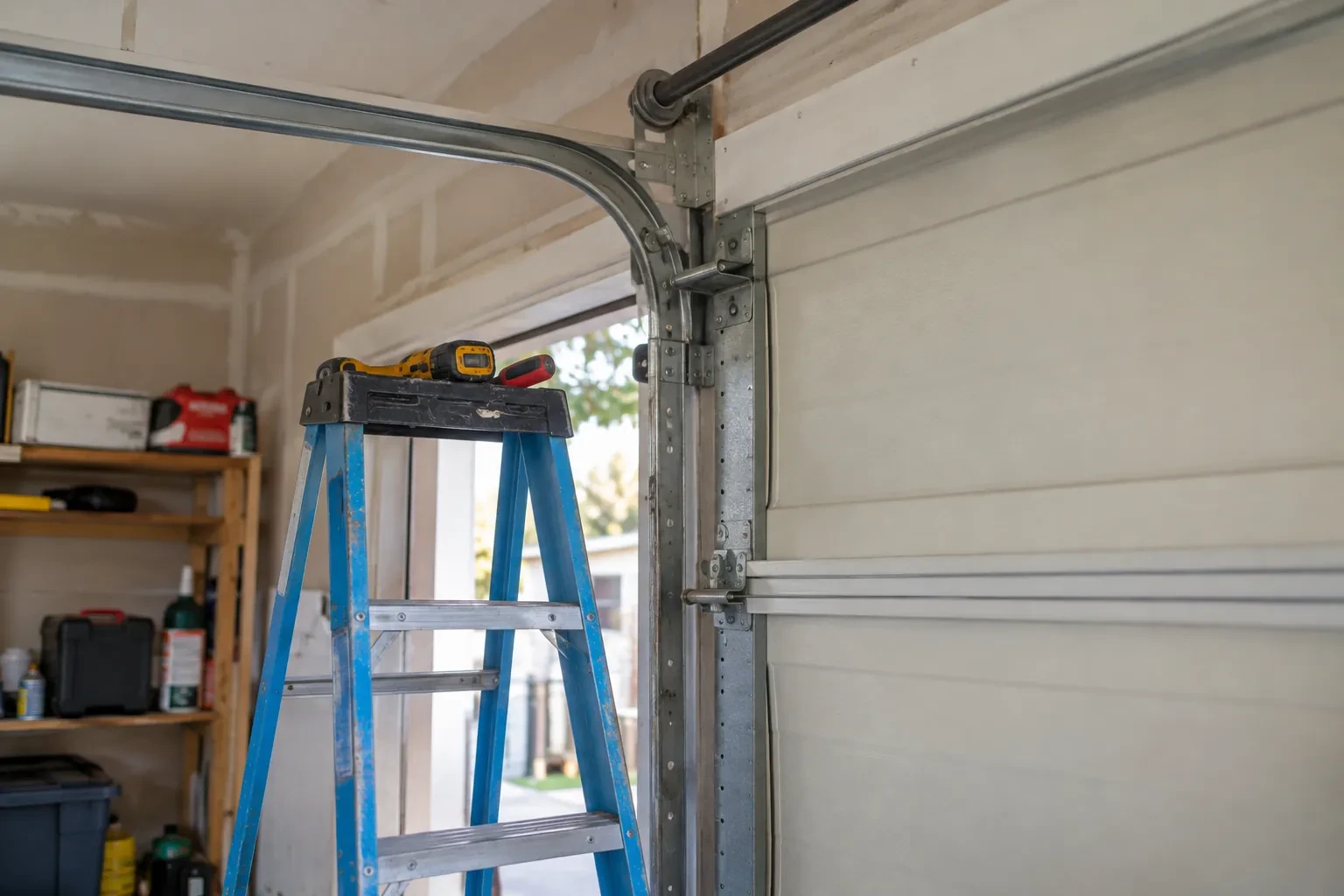
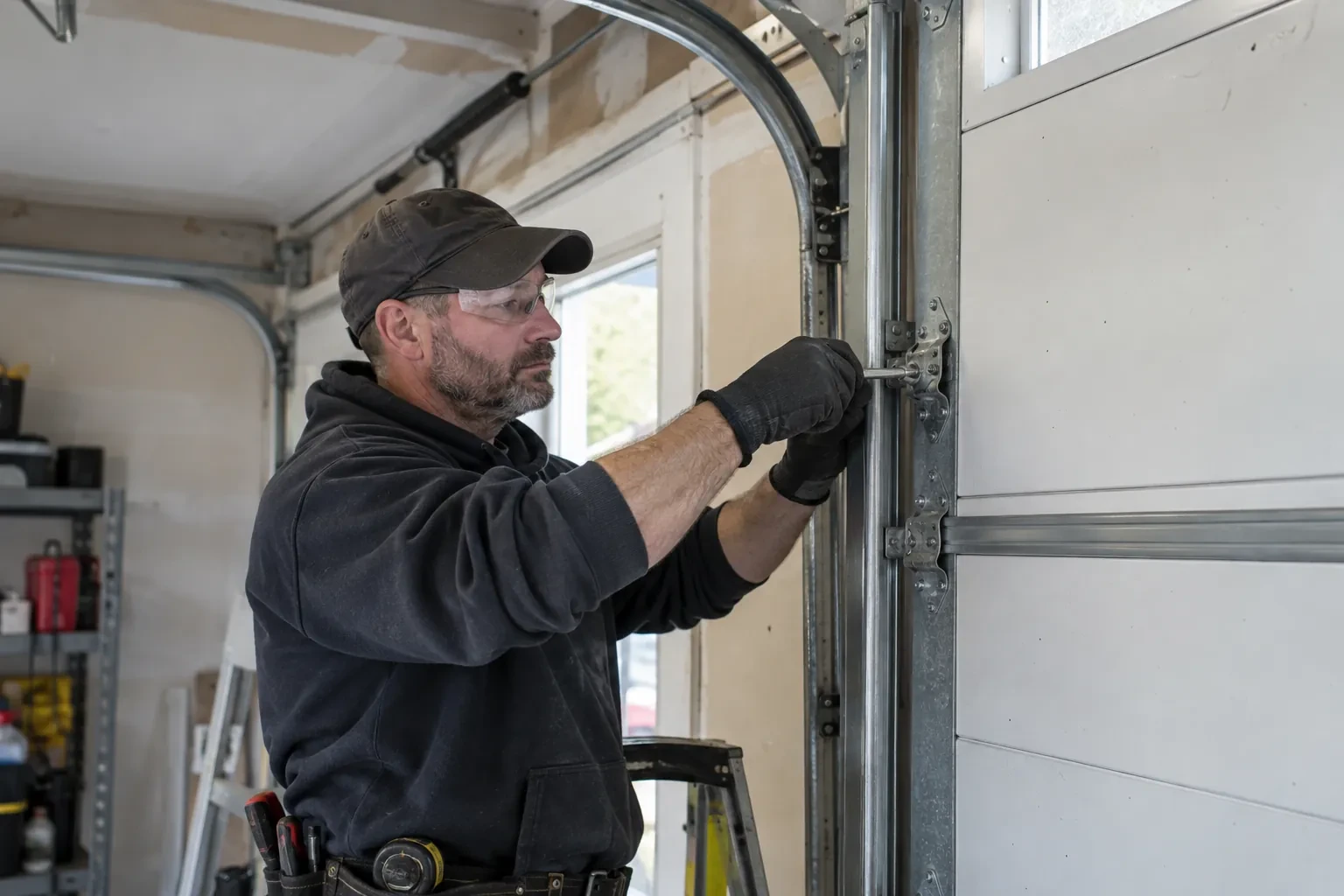
The spring is one part of a chain, so the check follows that chain from the shaft outward. The centre bearing and the end bearings are turned by hand to feel for roughness or wobble. Cable drums are inspected for cracked flanges and worn grooves, and lift cables are examined along their length and at the bottom brackets, where fraying and rust usually start. Bottom brackets and their fasteners are looked at for corrosion, and the shaft is checked for straightness. Findings here decide whether the visit is a spring swap alone or a spring plus a few tired companions.
Winding with control
Winding is where a spring takes on its working tension, and it is done with two solid steel bars sized to the holes in the winding cone. The technician stands to the side of the cone, inserts one bar, turns a quarter turn, inserts the second bar, and transfers the load from bar to bar so the spring is never held by less than a full bar. The number of quarter turns is counted against the door height and drum type. When the count is reached, the spring is stretched slightly toward the drum and the set screws are tightened to the shaft while the last bar still carries the load.
Your spring on record
The technician leaves you with the specification of what was installed: wire size, inside diameter, length, wind direction and the cycle rating chosen, along with notes on any bearings or cables replaced. Keep that record with the door's paperwork or photograph it. It means future service starts from known numbers rather than fresh measurement, and if a door section or opener is ever changed, the installer can confirm the springs still suit the door's weight. Many technicians also mark the installation date on the spring or centre bracket so the age of the system is easy to read later.
Torsion Spring Replacement
In the van
Stationary cone bolts and nuts
Garage-door spring lubricant
Centre bearing bracket and bearing
Torsion springs, oil-tempered or galvanized
Cable drums
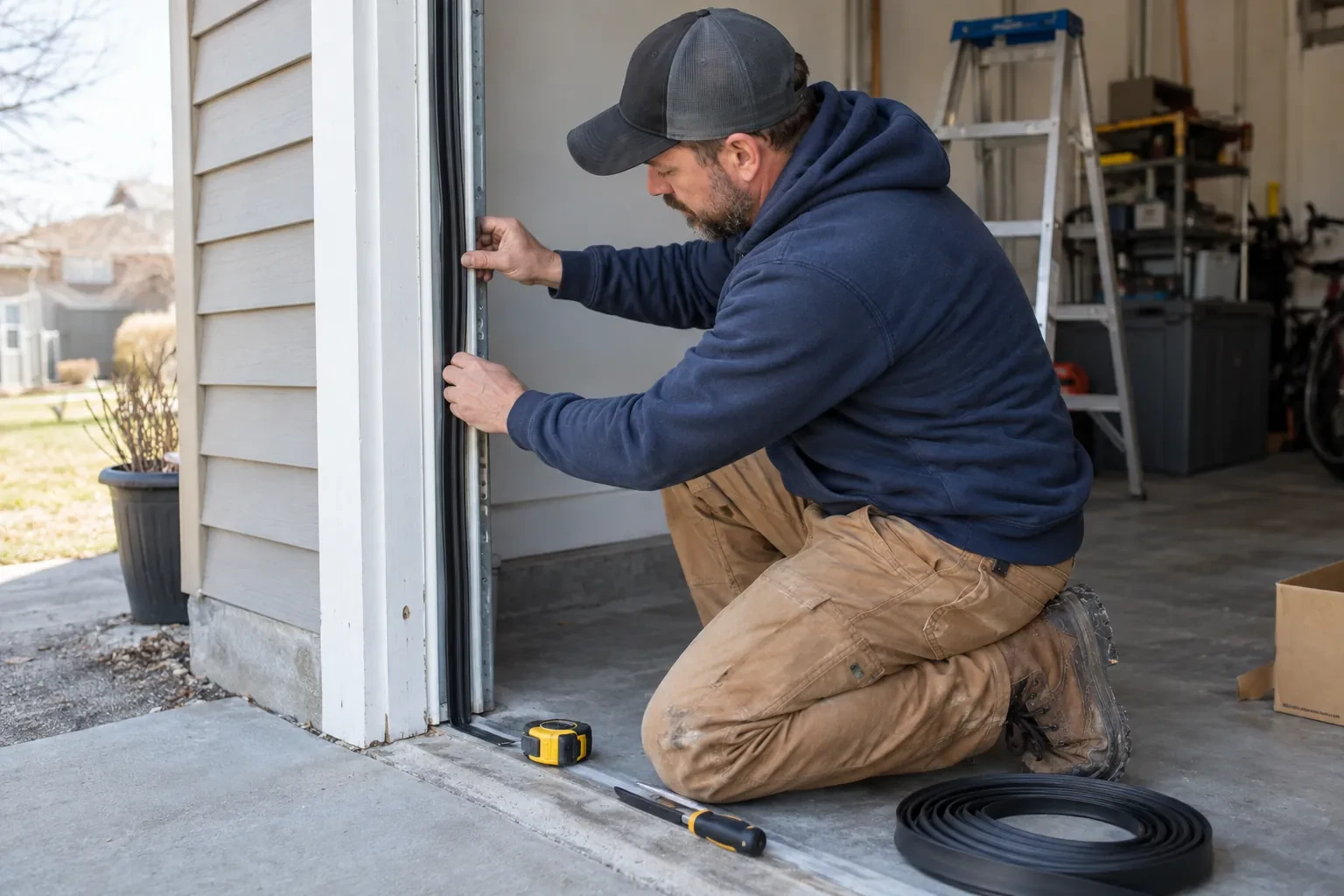
Torsion Spring Replacement
What affects the quote
Age of the door and matching hardware
Older doors sometimes carry shaft diameters, bearing plates or drum patterns that are no longer common. Sourcing compatible hardware or adapting the mounting adds to the scope for these doors.
Opener reconnection and testing
Resetting force and travel limits and running the reversal and photo-eye tests are part of the visit. An opener with worn gears or a slipping trolley uncovered during testing becomes a separate item.
Spring finish
Oil-tempered and galvanized springs suit different garages. A coated or galvanized spring for a damp or salt-exposed space is a choice the customer can make when the specification is discussed.
What to have ready
- Is the door a single or double width, and roughly how tall?
- Are the cables on either side still tight, or hanging loose?
- Is the door currently closed, open, or stuck partway?
Torsion Spring Replacement: questions
QuestionsHow long does a torsion spring replacement take?
Most residential replacements are completed in one visit. Securing the door, measuring, removing the old spring, fitting and winding the new one, balancing and testing the opener typically takes an hour or two, longer if bearings, cables or a bent top section are also being dealt with. The technician confirms the scope after the first checks, so you know what the visit involves before the work starts.
What is the difference between galvanized and oil-tempered springs?
Oil-tempered springs are the traditional dark grey or black coil; they hold their tension well over time and are widely used. Galvanized springs have a zinc coating that resists rust, which is useful in damp garages, though they tend to relax slightly and may need a small adjustment after settling in. Both are available in standard and high-cycle ratings, and the technician can explain which suits your garage.
Can I keep using the opener until the technician arrives?
The kindest thing for the door is to leave it where it is and use another entrance. An opener is designed to move a door the springs have already made light; asking it to lift a full-weight door strains the trolley and gear drive and can crease the top section. Keeping the door still and clear of people until the spring is replaced protects the rest of the system from extra repairs.
Related services
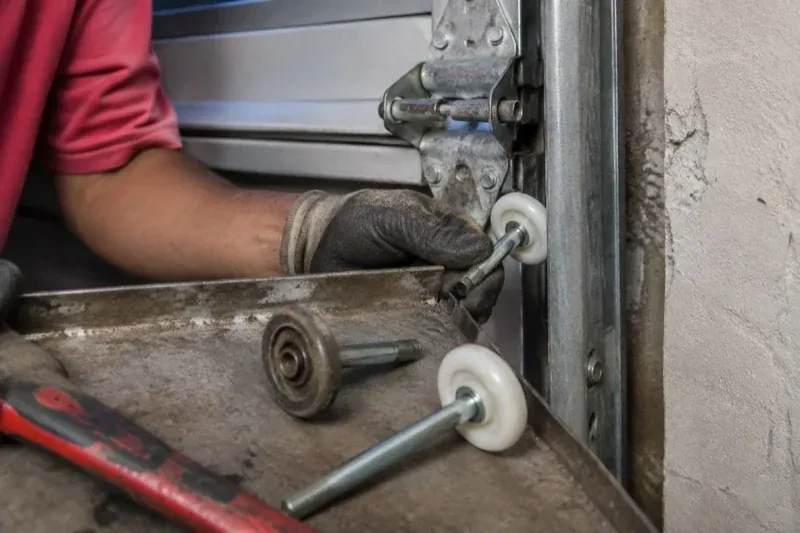
- Garage Door Hinge ReplacementThe roller at the top of the second panel is leaning outward and only half of the wheel is still in the track.
- Garage Door Track Repair or ReplacementYou bought the house with a door that sticks near the top of its travel.
- Garage Door Cable ReplacementThe car bumper kissed the door on the way in.