Springs · Vaughan
Garage Door Hinge Replacement
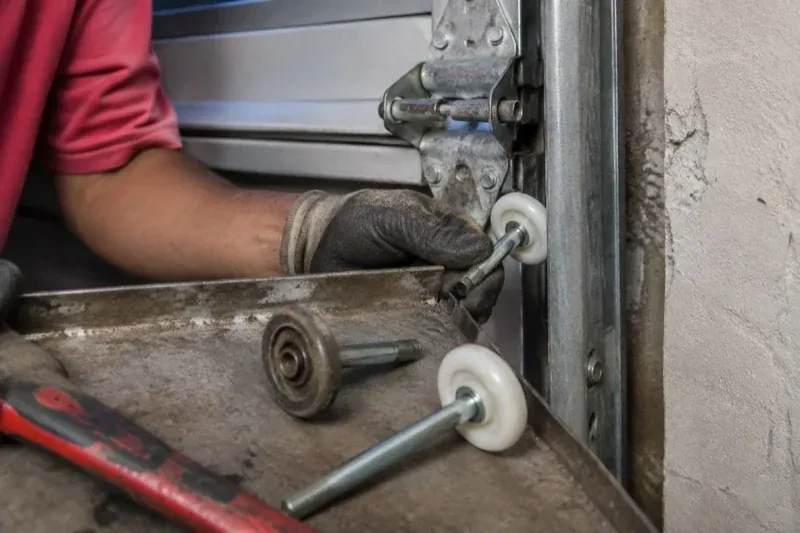
The roller at the top of the second panel is leaning outward and only half of the wheel is still in the track.
In plain words
What comes back is a door that moves as a single piece. The panels fold around the curve without a gap opening on one side, the rollers ride flat in the track instead of leaning, and the pop a metre off the floor is gone. With the opener released, the door lifts by hand with light effort and holds at waist height, which shows the hinge work has left the balance undisturbed. You also get a note of the hinge numbers, gauge and any backer plates fitted, plus a look at the small routine of tightening and lubricating that keeps hinges working for many years.
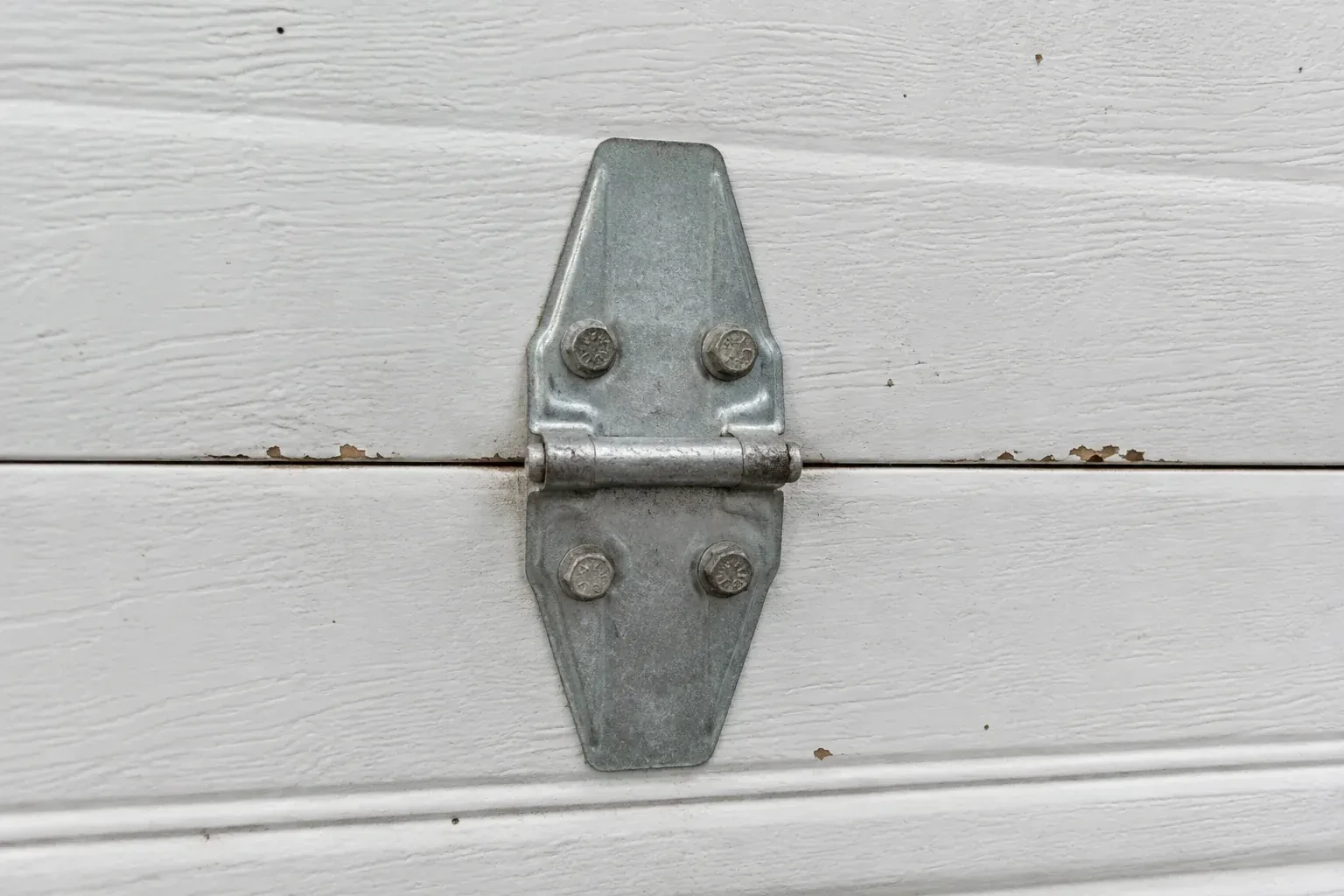
How the visit goesPressing a hand against one of the middle hinges makes it rock on the panel. The screws turn and turn without ever tightening, and there is a rattle from that spot every time the door settles onto the floor.
Garage Door Hinge Replacement
How the visit goes
Reading the number on each edge hinge
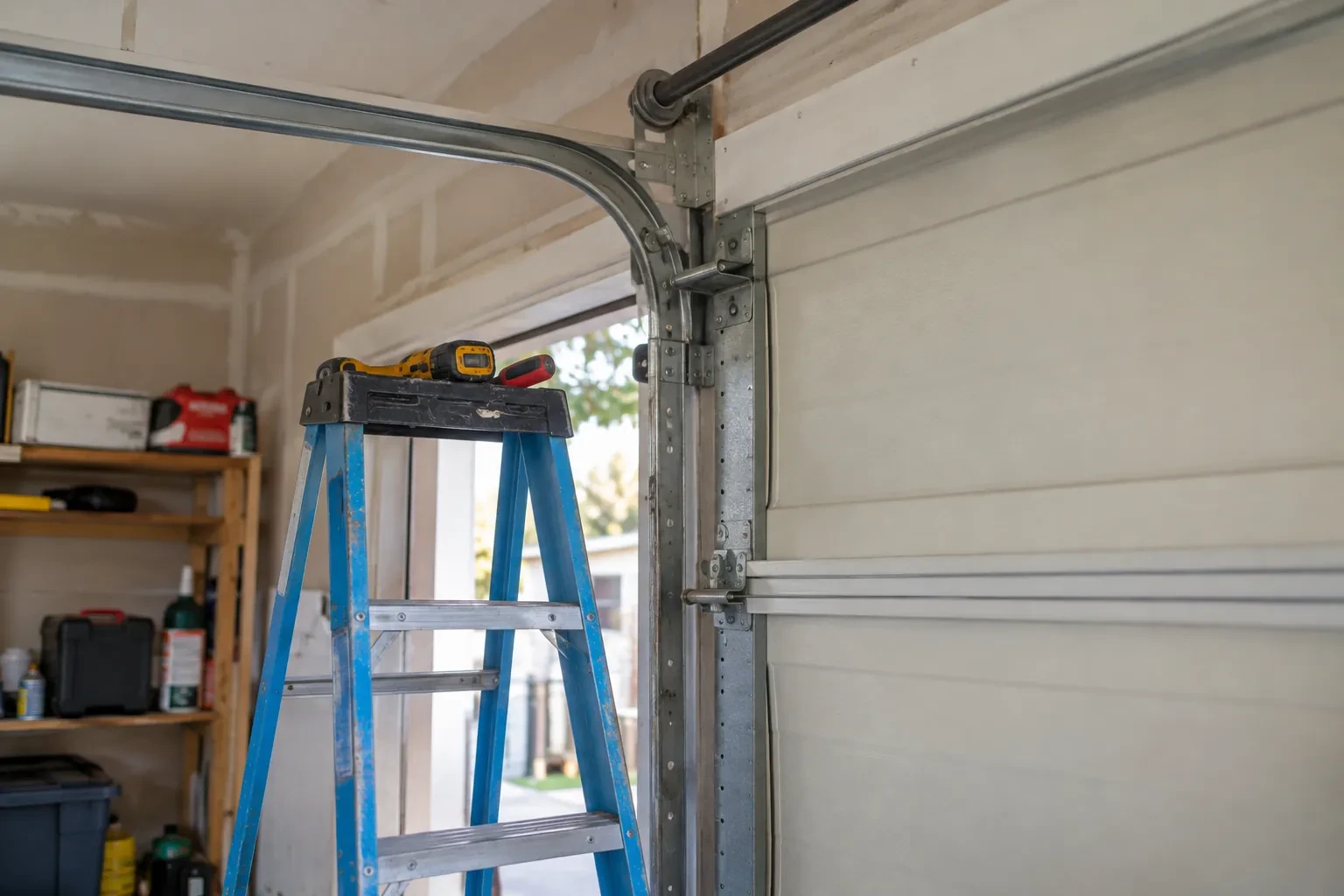
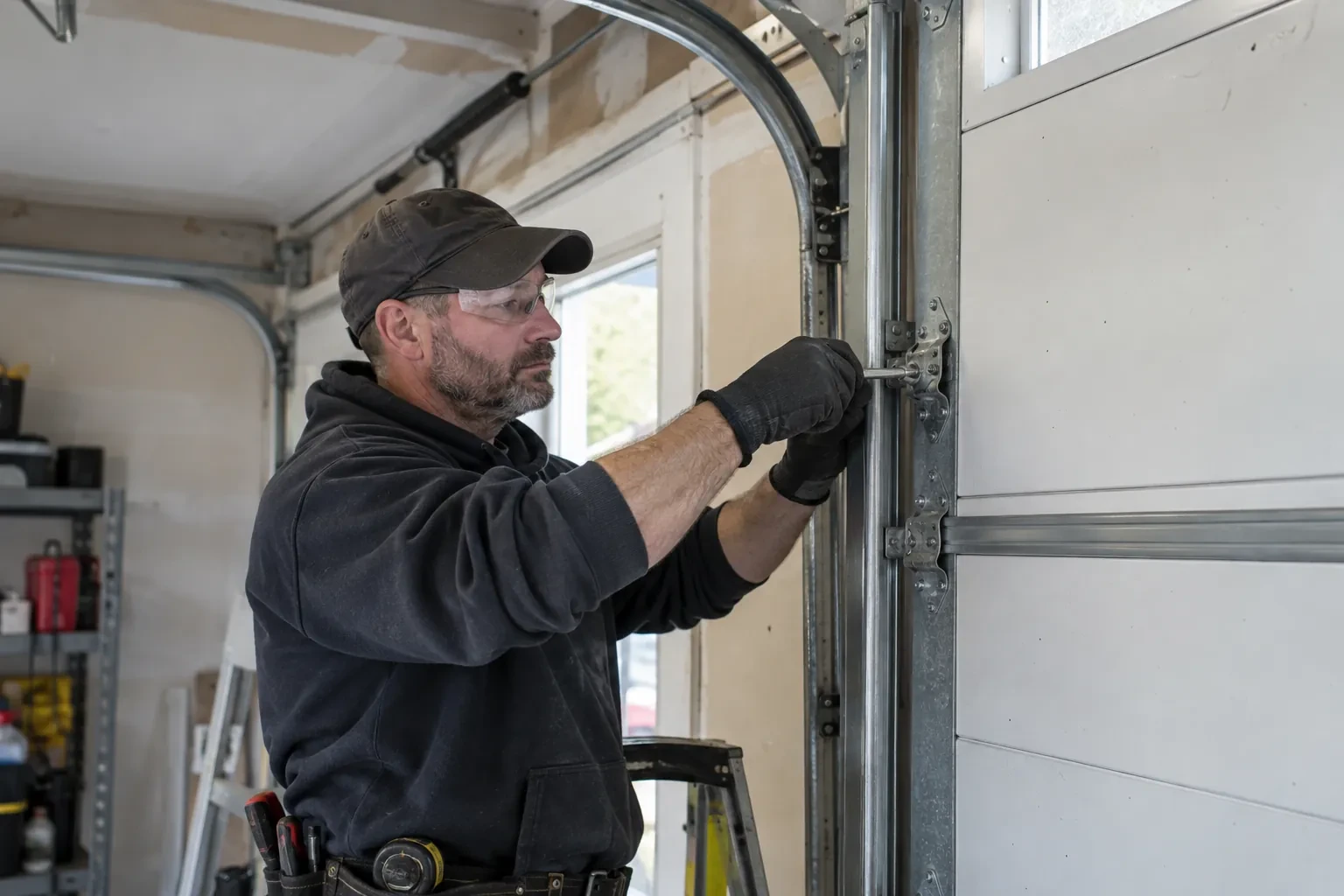
Every edge hinge carries a stamped number, and the technician reads it rather than assuming. A 1 sits at the joint above the bottom panel, a 2 at the next joint up, then 3, with 4 and 5 appearing on taller doors. The number sets how far the roller stands off the door, so the door leans into the jambs when closed and follows the track as it climbs. An earlier repair sometimes leaves a 2 where a 3 belongs, and that door binds or gaps at the curve for years without anyone knowing why. Confirming the number on each joint, and correcting any that are wrong, is part of the first look.
One hinge at a time, door closed
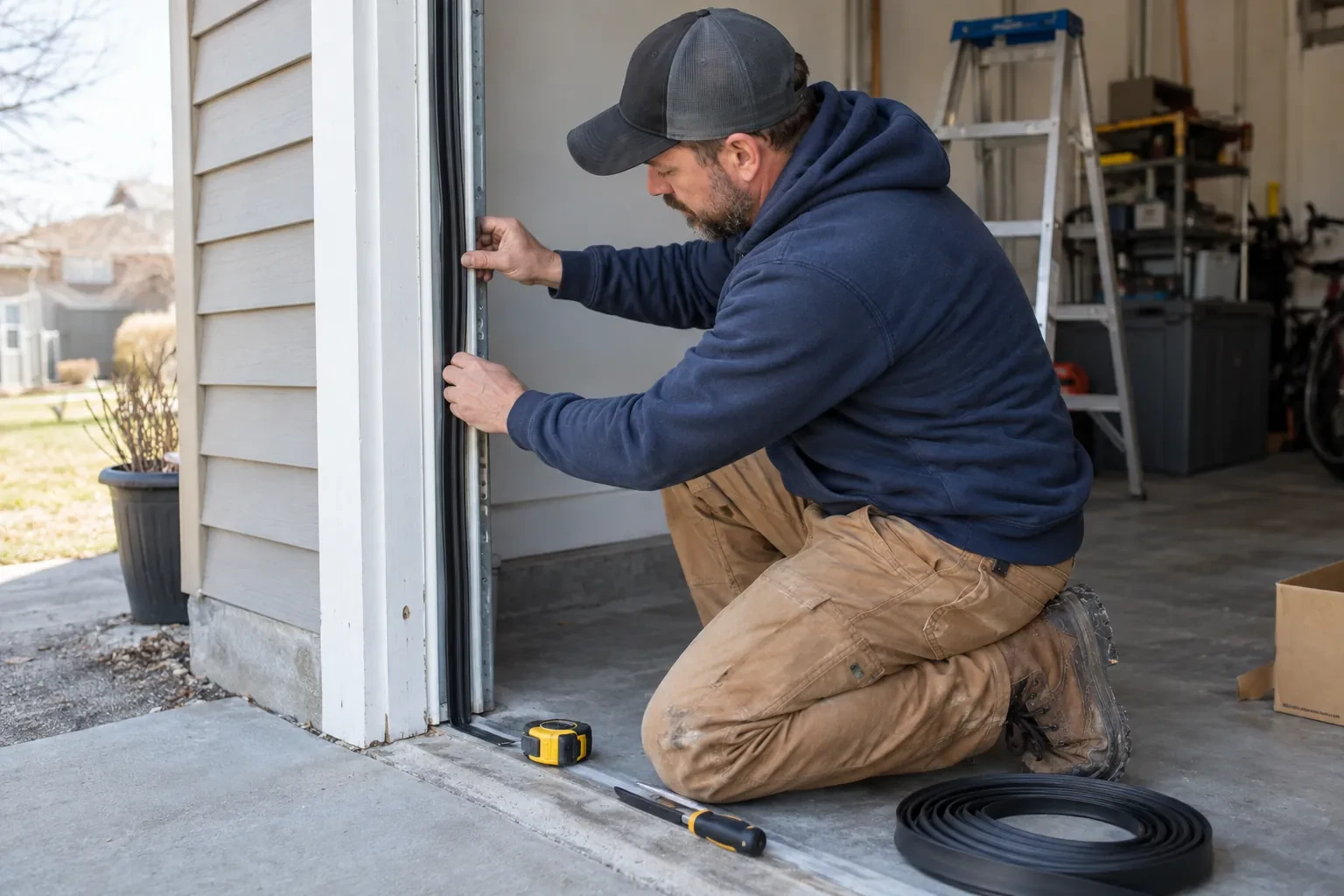
Hinges are changed singly, never a whole joint at once. With the door closed and the opener disconnected, the technician removes one worn hinge, fits its replacement and tightens it before moving to the next, so at every moment the joint is held by its other hinges and the panels stay aligned. Centre hinges go first when several are due, then the edge hinges. Each new hinge is set square to the joint line and snug to both panels before the screws are driven home, and the panels are checked for a flush face afterwards. This steady rhythm is what makes hinge work routine rather than eventful.
The balance test you can do yourself
You can confirm the door is balanced without touching a spring. With the door closed, pull the opener's release cord, lift the door by its handle to about waist height and let go gently. It should stay roughly where it is. A door that sinks or climbs on its own is telling you the springs are out of step with the door's weight, and a door dragged by the opener is what wears hinges early, so book an adjustment. Reconnect the opener the way its manual describes, usually by running it once. Doing this each season keeps both the hinges and the opener working lightly.
Garage Door Hinge Replacement
In the van
Replacement rollers
Track clamps or locking pliers
Hinge support plates
Centre hinges
Panel strut
Garage Door Hinge Replacement
What affects the quote
Damage to the stile or panel
After an impact, straightening a stile, fitting a support plate or adding a strut comes with the hinge work and is quoted as separate items so you can see each one.
Gauge and grade of the replacement
Standard 14-gauge hinges are priced differently from heavy 11-gauge parts, and moving a heavy insulated door up a gauge is an upgrade named as its own line in the quote.
Edge hinge or centre hinge
A centre hinge unscrews and refits in a few minutes. An edge hinge carries the roller and has to be worked out of the track, so it takes longer and is often paired with a roller.
What to have ready
- Is the door closed, open or stuck partway right now?
- Is anything stored against the door or under the track we should know about?
- Is the door a single or a double, and how many panels does it have?
Garage Door Hinge Replacement: questions
QuestionsCan I tighten loose hinge screws myself?
Yes, hinge screws are a homeowner task. Disconnect the opener, leave the door closed, and snug each hinge screw with a socket wrench without forcing it, since overtightening strips the hole. Leave the bottom brackets alone; they anchor the cables and are under spring tension. If a screw spins freely or a hinge is cracked, stop there and have it looked at, because a stripped hole needs a fresh anchor rather than more turns.
Should every hinge be replaced, or only the broken one?
It depends on what the inspection finds. Hinges age at similar rates, so a cracked one is often the first of several, especially on the lower joints where salt and moisture collect. The technician checks each hinge and tells you which are cracked, worn at the pin or bent, which are loose and only need tightening, and which are sound. Replacing the worn group in one visit saves the door a run of separate call-outs.
What gauge of hinge does my door need?
Gauge runs backwards: a larger number means thinner steel. Light single doors often come with 18-gauge hinges, 14-gauge is the heavier standard for most residential doors, and 11-gauge is commercial stock. A heavy insulated double door, a door used many times a day, or a door whose hinges keep cracking benefits from the thicker option. The technician matches or improves on what was fitted, provided the width and hole pattern suit the stiles.
Related services
- Garage Door Track Repair or ReplacementYou bought the house with a door that sticks near the top of its travel.
- Garage Door Cable ReplacementThe car bumper kissed the door on the way in.
- Torsion Spring ReplacementOn a cold morning the remote does nothing useful: the light comes on, the motor turns briefly, the door stays shut.