Springs · Vaughan
Garage Door Hinge Replacement in Vaughan
The roller at the top of the second panel is leaning outward and only half of the wheel is still in the track.
In plain words
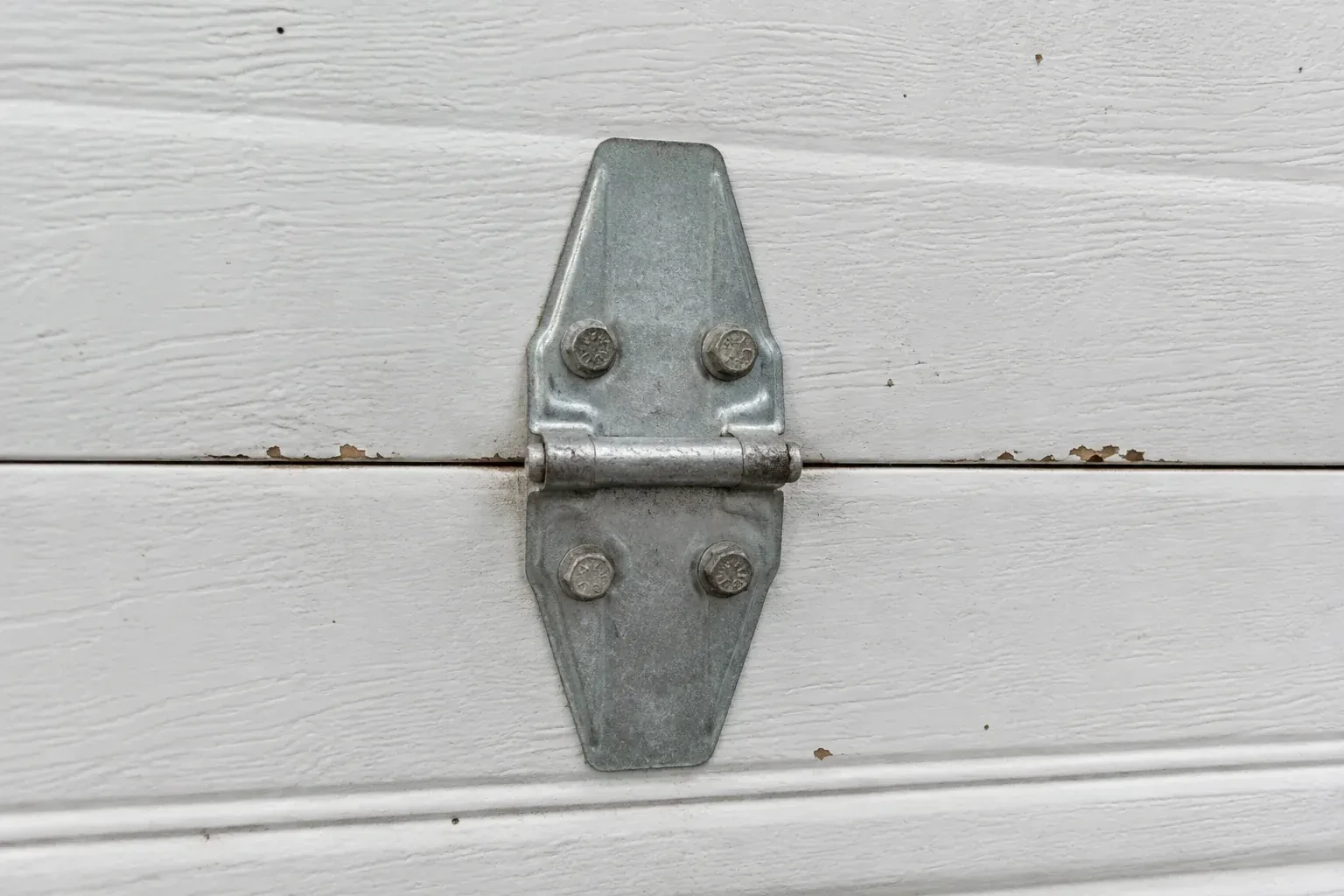
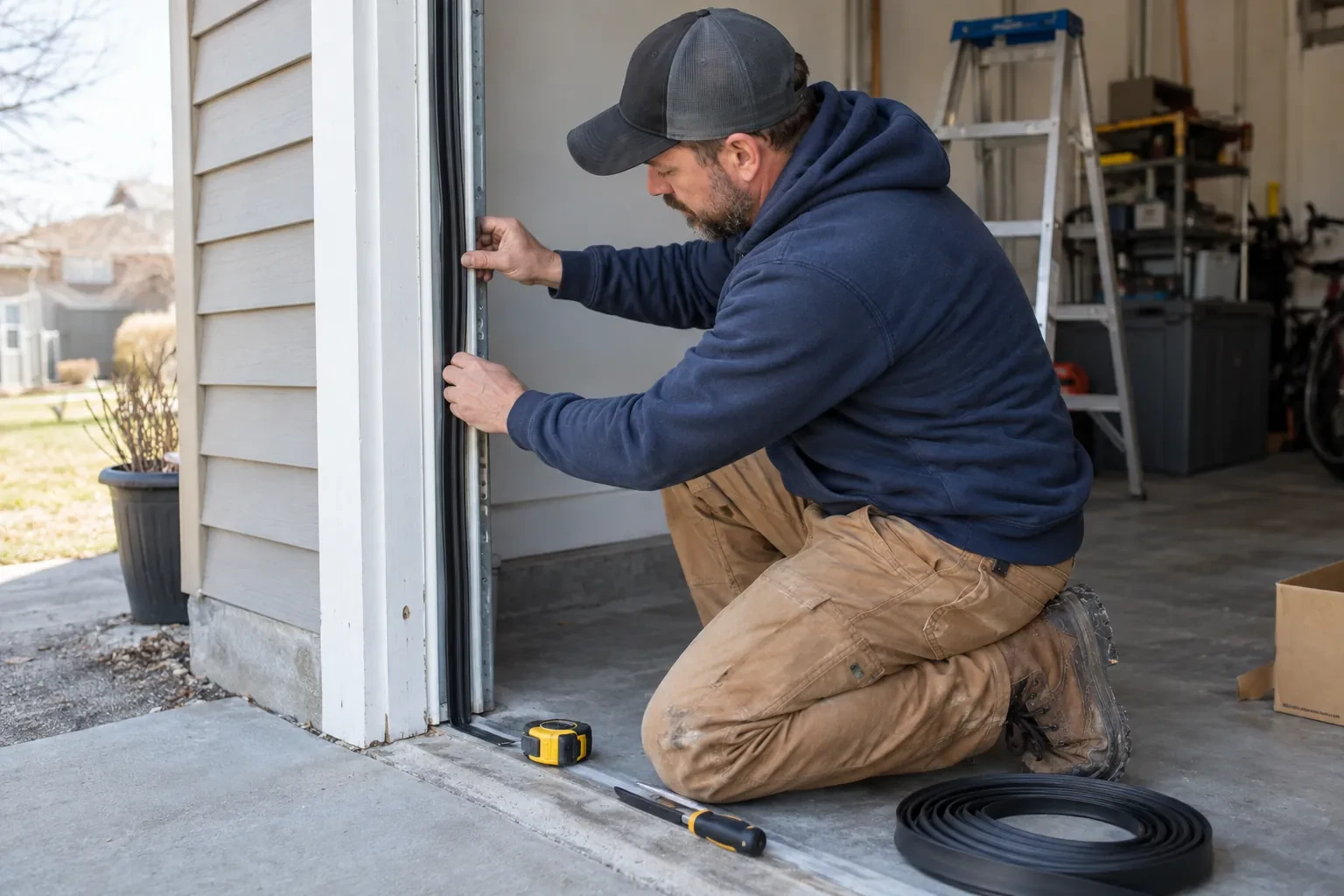
The hinge is only as good as what it is screwed to. On a steel door the screws bite into the stile, a folded steel channel at the panel edge, sometimes with a support plate behind it; on a wood door they thread into timber. Years of vibration back screws out, and once a hole is stripped the hinge rocks and the joint loosens. Hinge replacement includes fresh fasteners, and where holes have opened up the technician shifts to sound metal, steps up to a larger self-drilling screw, or bolts through the panel with a nut and washer or a backer plate. The new hinge then stays put.
How the visit goesPressing a hand against one of the middle hinges makes it rock on the panel. The screws turn and turn without ever tightening, and there is a rattle from that spot every time the door settles onto the floor.
Garage Door Hinge Replacement
How the visit goes
Stopping the door before anything else
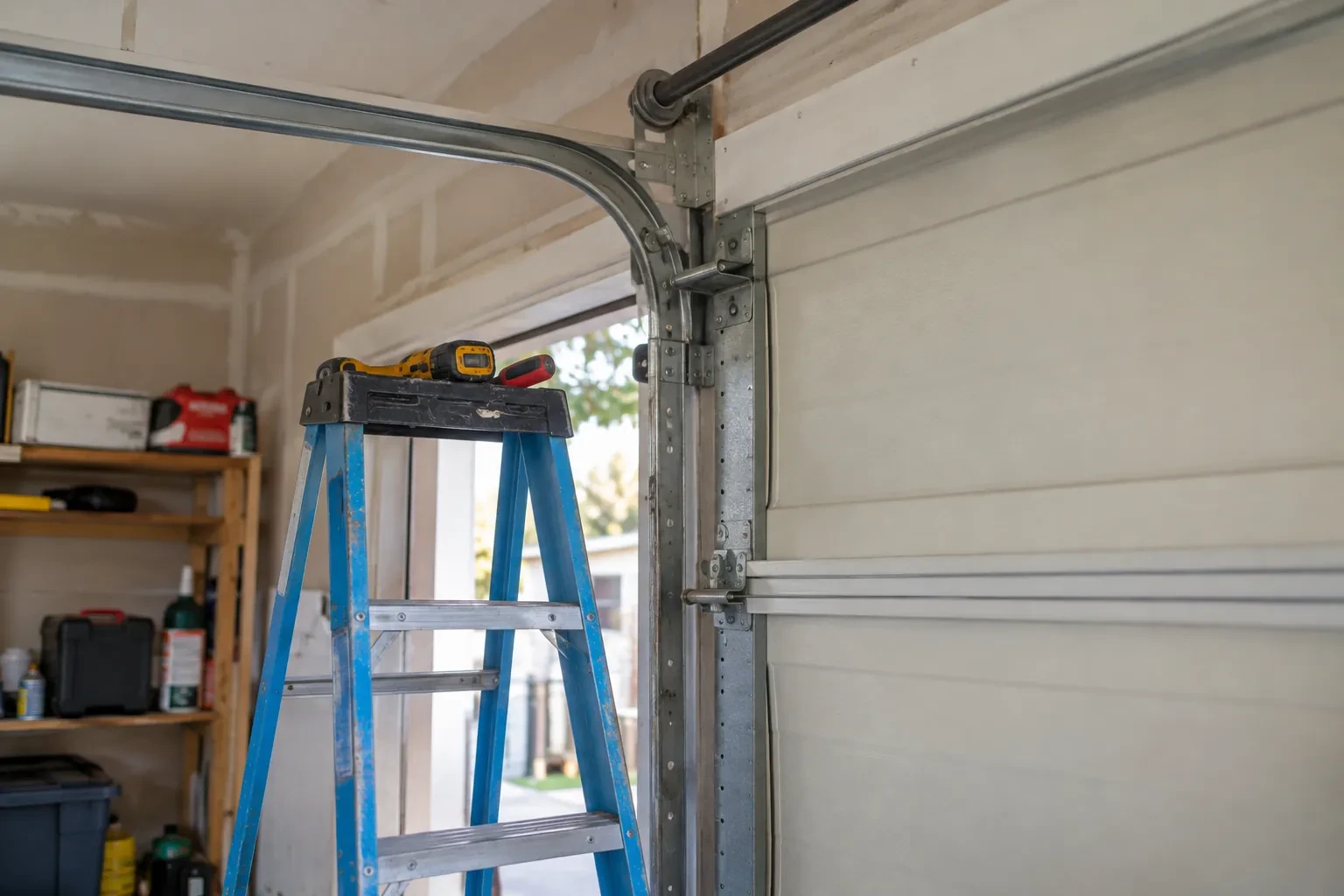
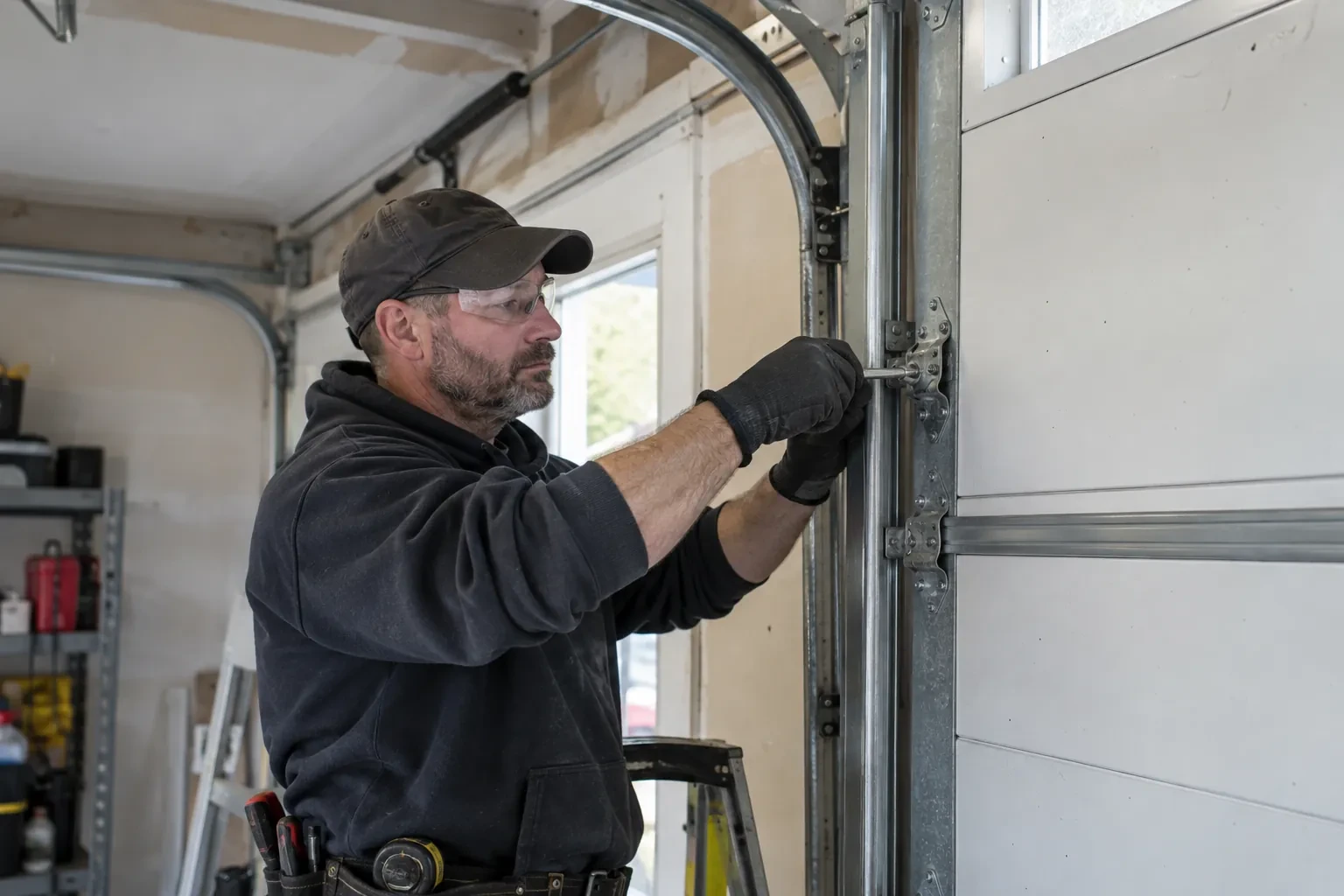
The first job is to take the door out of play. The technician pulls the opener's release cord so the motor is disconnected from the door, and leaves the door fully closed. Closed is the right position for hinge work, because each panel is resting on the one below and the bottom panel is sitting on the floor, so the hinges are holding the panels together rather than holding them up. If a hinge has already let go and a panel is hanging awkwardly, a clamp on the track or a prop under the section takes that weight before anyone touches it. Only then does the inspection begin.
Changing an edge hinge with its roller
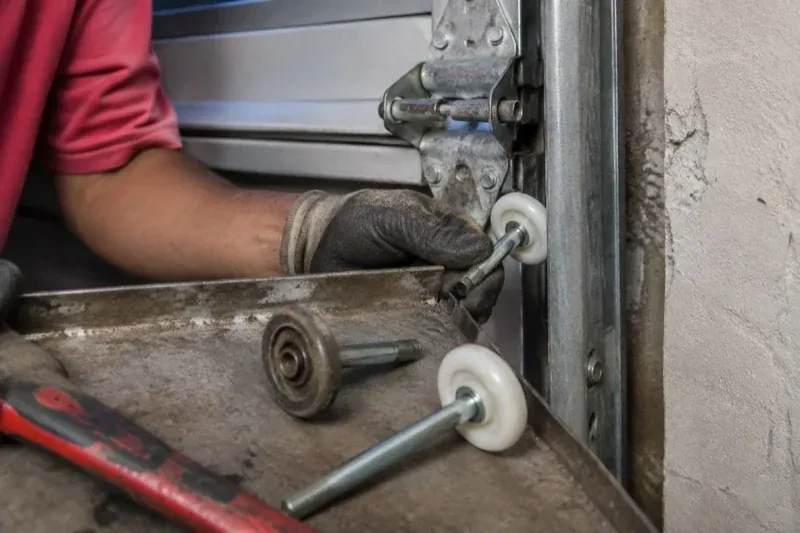
An edge hinge holds the roller in the track, so the roller comes with it. The technician steadies the panel with a clamp, backs out the hinge screws, then eases the roller stem out of the hinge tube while tilting the wheel clear of the track, or loosens a track bracket a fraction to make room. The old hinge comes off, the new one of the same number goes on with the roller stem seated in its tube, the wheel is guided back into the track, and the hinge is fastened. Both edge hinges on a joint are handled this way, one after the other, with the panel alignment rechecked between them.
The balance test you can do yourself
You can confirm the door is balanced without touching a spring. With the door closed, pull the opener's release cord, lift the door by its handle to about waist height and let go gently. It should stay roughly where it is. A door that sinks or climbs on its own is telling you the springs are out of step with the door's weight, and a door dragged by the opener is what wears hinges early, so book an adjustment. Reconnect the opener the way its manual describes, usually by running it once. Doing this each season keeps both the hinges and the opener working lightly.
Garage Door Hinge Replacement
In the van
Replacement rollers
Track clamps or locking pliers
Hinge support plates
Centre hinges
Panel strut
Garage Door Hinge Replacement
What affects the quote
Edge hinge or centre hinge
A centre hinge unscrews and refits in a few minutes. An edge hinge carries the roller and has to be worked out of the track, so it takes longer and is often paired with a roller.
Rollers renewed at the same time
Where a roller is cracked, seized or flat-spotted, replacing it while the hinge is off is efficient, and the roller set is listed as an optional item you can accept or decline.
Damage to the stile or panel
After an impact, straightening a stile, fitting a support plate or adding a strut comes with the hinge work and is quoted as separate items so you can see each one.
What to have ready
- Can you read a number stamped on the hinges near the edge?
- Is the door steel, wood or insulated steel?
- Is the door closed, open or stuck partway right now?
Garage Door Hinge Replacement: questions
QuestionsCan I tighten loose hinge screws myself?
Yes, hinge screws are a homeowner task. Disconnect the opener, leave the door closed, and snug each hinge screw with a socket wrench without forcing it, since overtightening strips the hole. Leave the bottom brackets alone; they anchor the cables and are under spring tension. If a screw spins freely or a hinge is cracked, stop there and have it looked at, because a stripped hole needs a fresh anchor rather than more turns.
Should every hinge be replaced, or only the broken one?
It depends on what the inspection finds. Hinges age at similar rates, so a cracked one is often the first of several, especially on the lower joints where salt and moisture collect. The technician checks each hinge and tells you which are cracked, worn at the pin or bent, which are loose and only need tightening, and which are sound. Replacing the worn group in one visit saves the door a run of separate call-outs.
What gauge of hinge does my door need?
Gauge runs backwards: a larger number means thinner steel. Light single doors often come with 18-gauge hinges, 14-gauge is the heavier standard for most residential doors, and 11-gauge is commercial stock. A heavy insulated double door, a door used many times a day, or a door whose hinges keep cracking benefits from the thicker option. The technician matches or improves on what was fitted, provided the width and hole pattern suit the stiles.
Related services
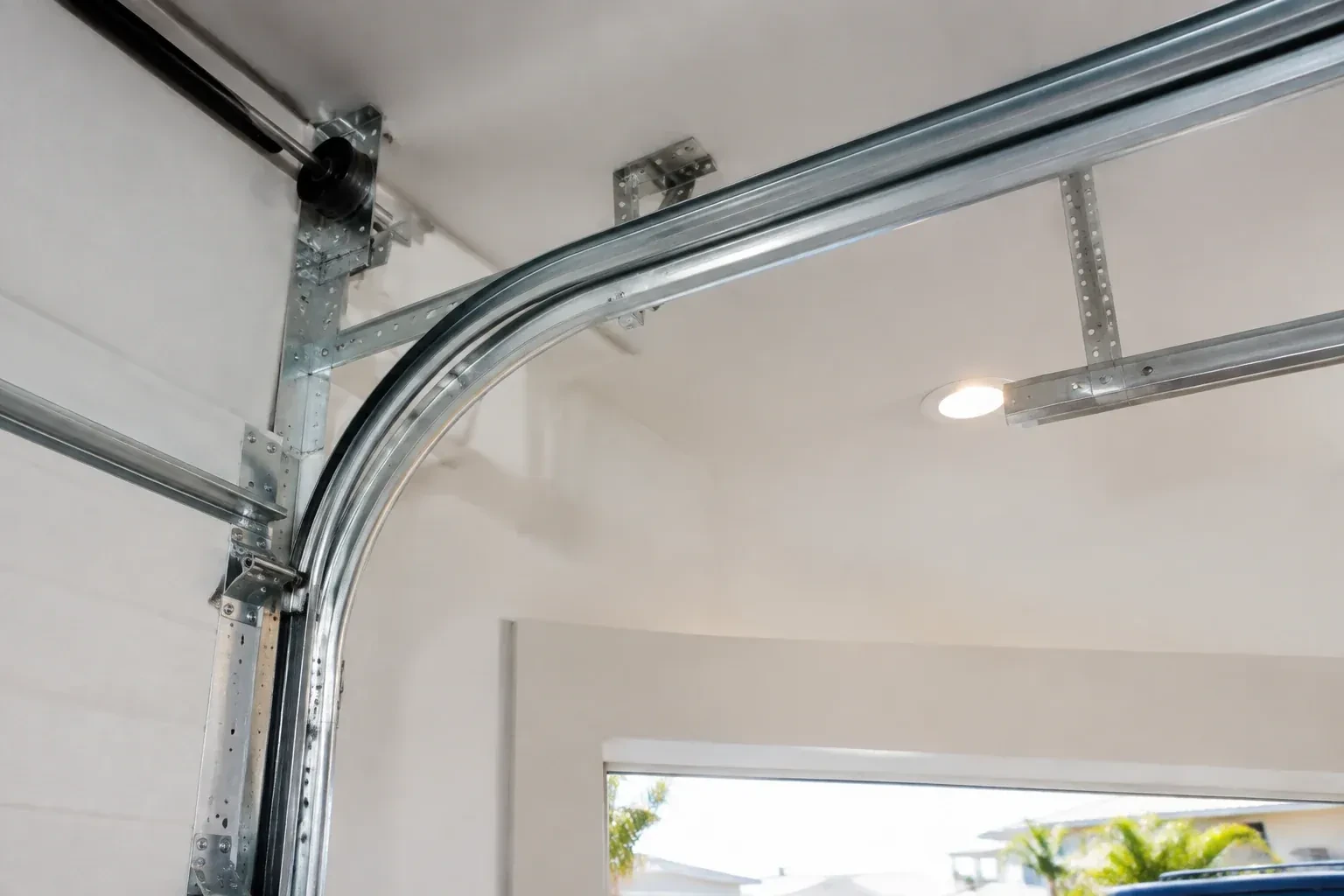
- Garage Door Track Repair or ReplacementYou bought the house with a door that sticks near the top of its travel.
- Garage Door Cable ReplacementThe car bumper kissed the door on the way in.
- Torsion Spring ReplacementOn a cold morning the remote does nothing useful: the light comes on, the motor turns briefly, the door stays shut.