Openers · Vaughan
Chain-Drive Opener Repair in Vaughan
The door opens about a third of the way and stops.
In plain words
Sometimes nothing is broken and the operator has simply forgotten where the door should stop. Travel limits tell it how far to run in each direction; force settings tell it how much effort is normal, so it can notice an obstruction. When limits drift, a door stops short of the floor, reverses at the bottom or opens partway. When force is set low, the door reverses for no reason; set high, it stops protecting anyone beneath it. A chain-drive repair resets both, by screw on older heads or learn buttons on newer ones, then proves the reversal with a block on the floor.
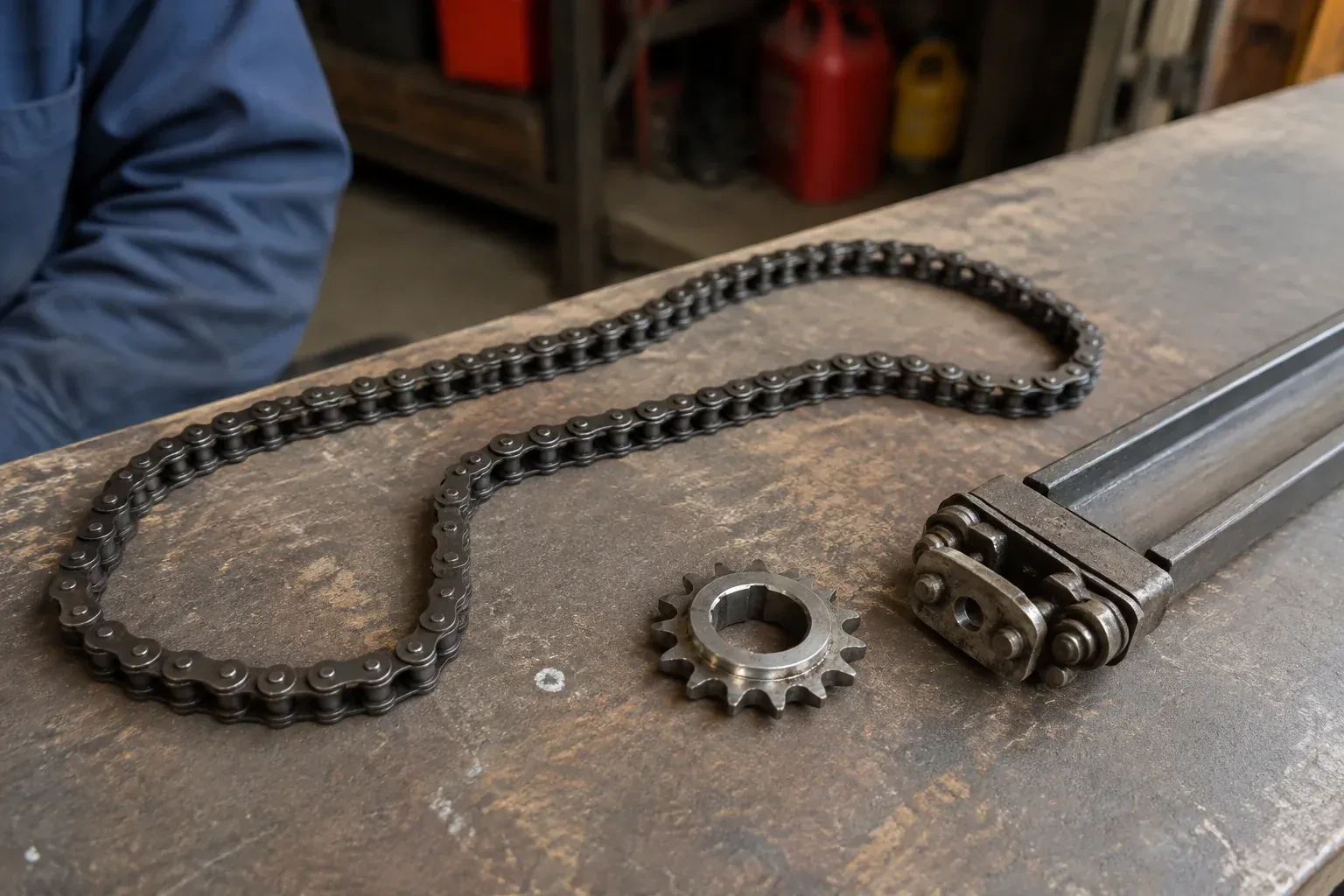
How the visit goesHalfway up, the door lurches. Something in the drive skips a beat, the chain jumps, and the door finishes its travel with a jolt. It happens more on cold mornings and always at the same point on the rail.
Chain-Drive Opener Repair
How the visit goes
Under the head cover
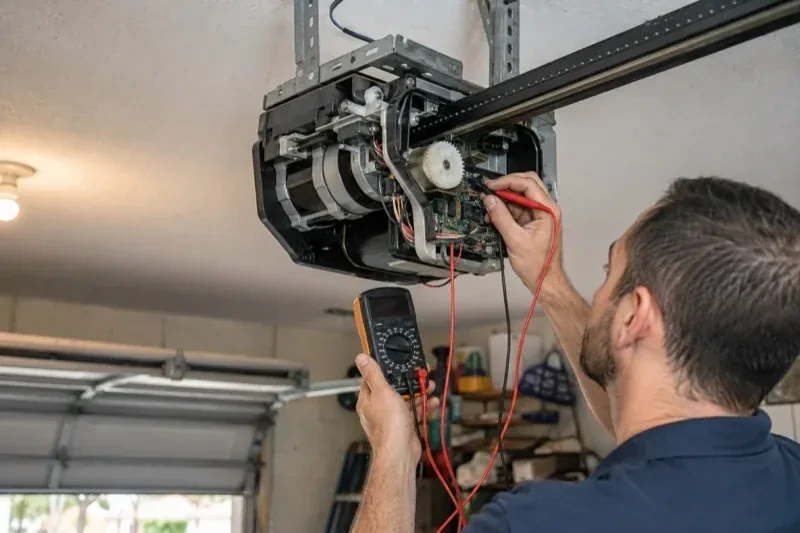
With the power off, the cover comes off the motor head so the drive can be seen. The technician looks for pale shavings around the drive gear, which mean the teeth are wearing away, and for a sprocket shaft that rocks when pushed, which points to worn bushings. The worm gear on the motor shaft is checked for scoring, the grease is judged for age and cold-thickening, and the capacitor is inspected for swelling. On newer heads the RPM sensor and its magnet are checked, since a faulty one makes the operator lose track of how far the door has moved. This look decides whether the job is a gear kit, a chain or an adjustment.
Proving the reversal before the job is finished
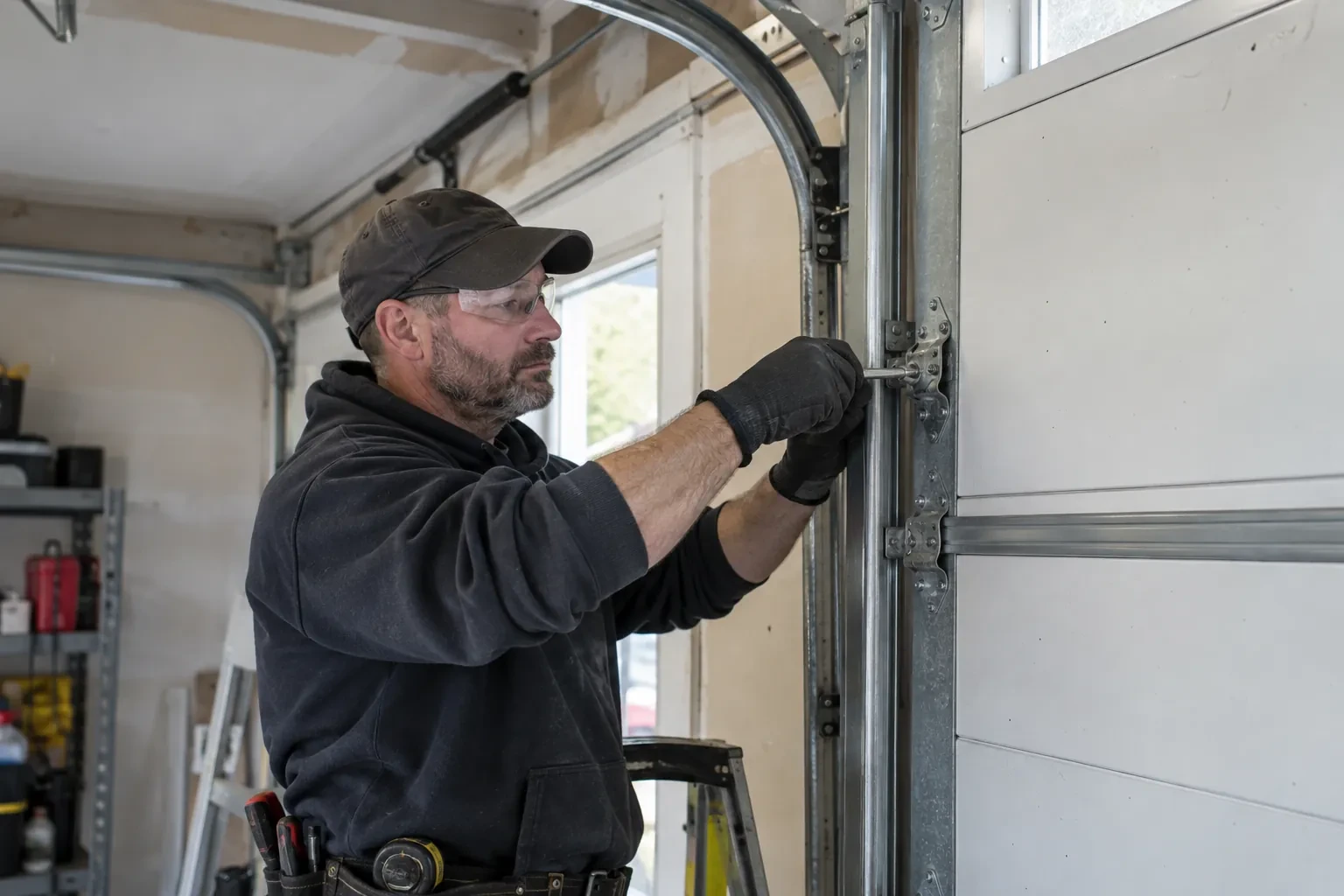
No chain-drive repair ends without the reversal tests, because every adjustment to tension, limits or force can change how the operator senses an obstruction. A 38 mm block, or a 2x4 laid flat, is placed on the floor under the centre of the door and the door is closed from the wall control; on touching it the door must stop and return to fully open. The door is closed again while an object is passed through the photo-eye beam, and it must reverse the same way. Any hesitation sends the technician back to the force setting or the sensors, and the tests are repeated until both pass in front of you.
Balance is what protects the new gear
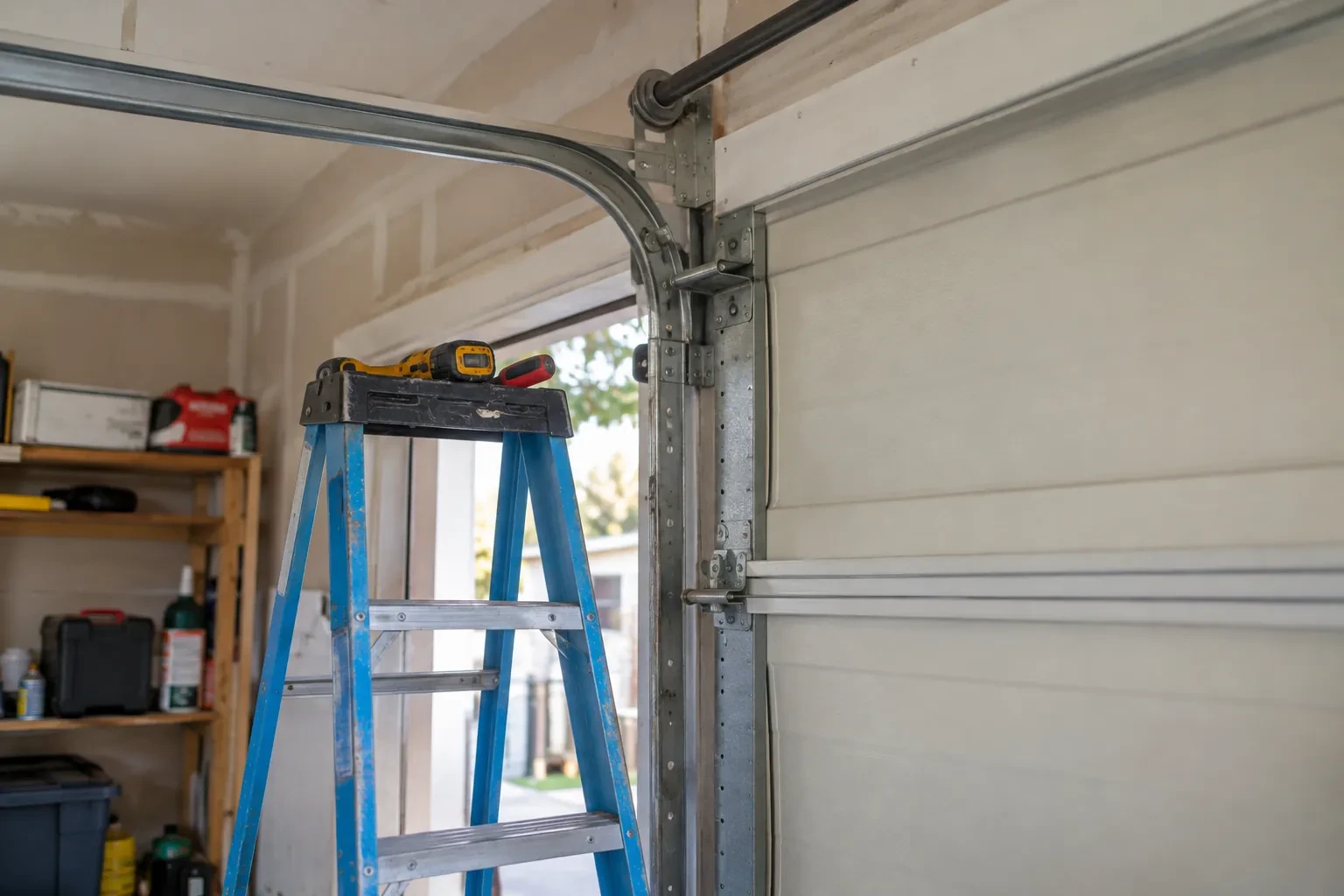
The drive gear that was replaced can wear out when it is asked to lift more than the chain should carry, though binding or wear elsewhere in the drive can share the blame. Keeping the load honest starts with the door's balance. Each season, with the door closed, pull the red release, lift the door by hand to about a metre and let go; it should stay put. If it sinks or creeps upward, the springs have drifted and a spring adjustment is due before the operator starts working harder to compensate. Reconnect by running the operator until the trolley picks up the arm. This one check does more for the gearbox than anything else you can do.
Chain-Drive Opener Repair
In the van
Trolley release lever
Roller chain with master link
Cold-rated garage door lubricant
Rail hangers and header bracket
Drive gear and worm gear kit
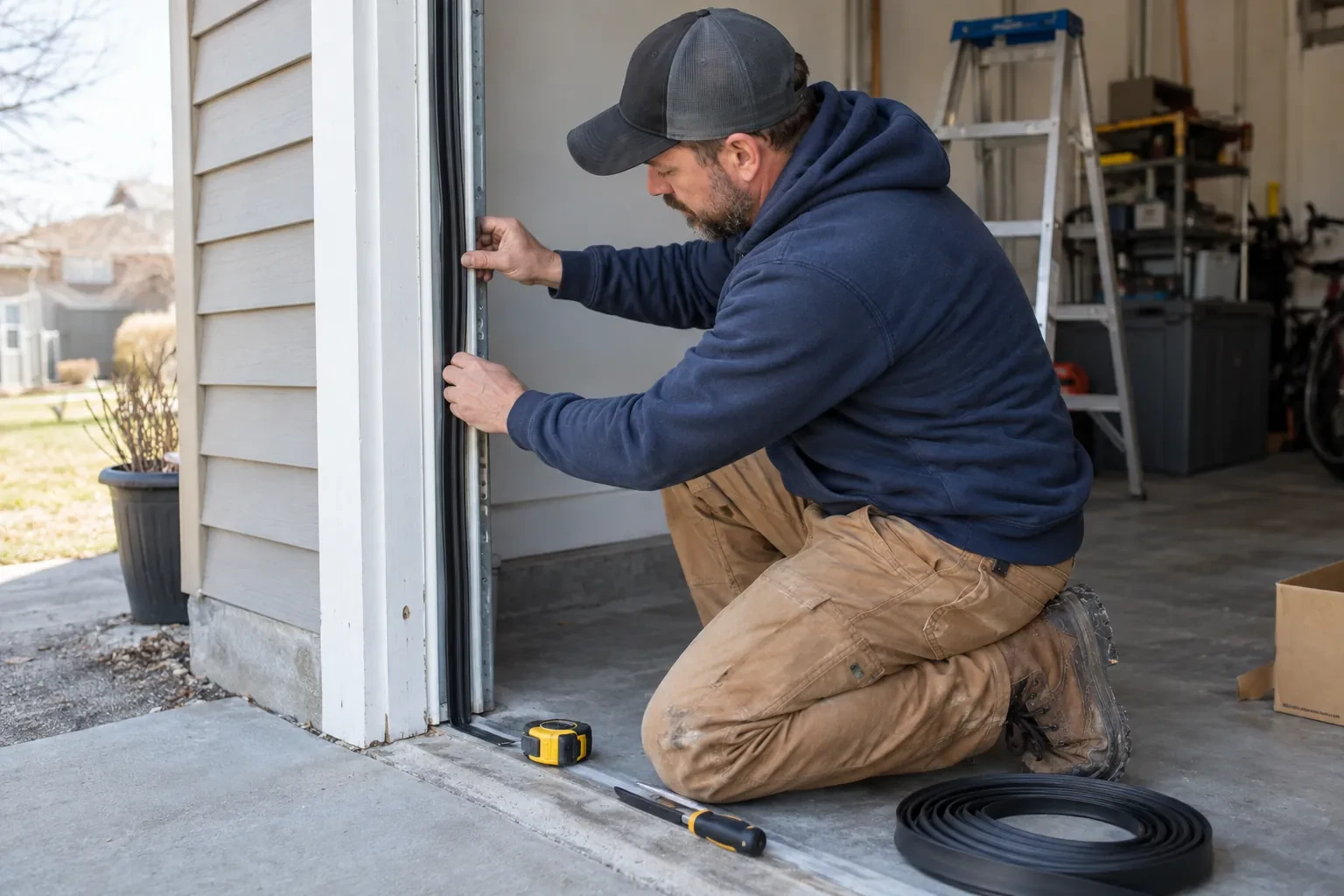
Chain-Drive Opener Repair
What affects the quote
Adjustment only, or parts as well
A visit that ends with tension, phase, limits and force set and the reversal tested is the simplest case. Each part fitted on top of that appears as its own line.
Which parts of the drive have worn
A chain that only needs tensioning, a chain that must be replaced, and a stripped gear and sprocket assembly are three different jobs, and the inspection under the head cover decides which one the quote describes.
Sensors and controls that fail the check
Photo eyes that are misaligned, mounted too high or dead, or a wall control that has stopped responding, are put right before the reversal can be proven and are itemised where parts are involved.
What to have ready
- With the red cord pulled, does the door lift by hand and stay about a metre up?
- Is the garage attached and heated, or detached and unheated?
- Is the noise a rattle along the rail, a clack at one spot, or a grinding from the head?
Chain-Drive Opener Repair: questions
QuestionsCan you turn the force up so the door closes on cold mornings?
Force is set to the lightest level that moves the door reliably, and it is raised only a little for a cold garage. Turning it up further to overcome a heavy door or a seal frozen to the slab is not done, because too much force interferes with the safety reversal and can bend the top section. If the door is hard to move in the cold, the springs, rollers or the frozen seal are dealt with instead.
What does the sprocket do, and how does it wear?
The sprocket is the toothed wheel on top of the motor head that pulls the chain. Every cycle drags the chain over its teeth, and over years the teeth wear thin and hooked, letting the chain ride up and skip under load, often at the same point on the rail each time. A sprocket that has loosened on its shaft lags behind the motor. Worn sprockets are replaced as part of the gear and sprocket assembly.
My garage is detached and unheated. Does that change the repair?
It shapes it. Cold thickens grease and stiffens a chain with any rust on it, so the technician cleans and regreases the rail and gears, replaces a rust-bound chain rather than tensioning it, and sets force so the door moves at low temperature without the operator being oversensitive. Salt corrosion on the chain and bottom hardware from vehicles is checked. The advice afterwards leans on keeping the threshold clear so the seal does not freeze to the slab.
Related services
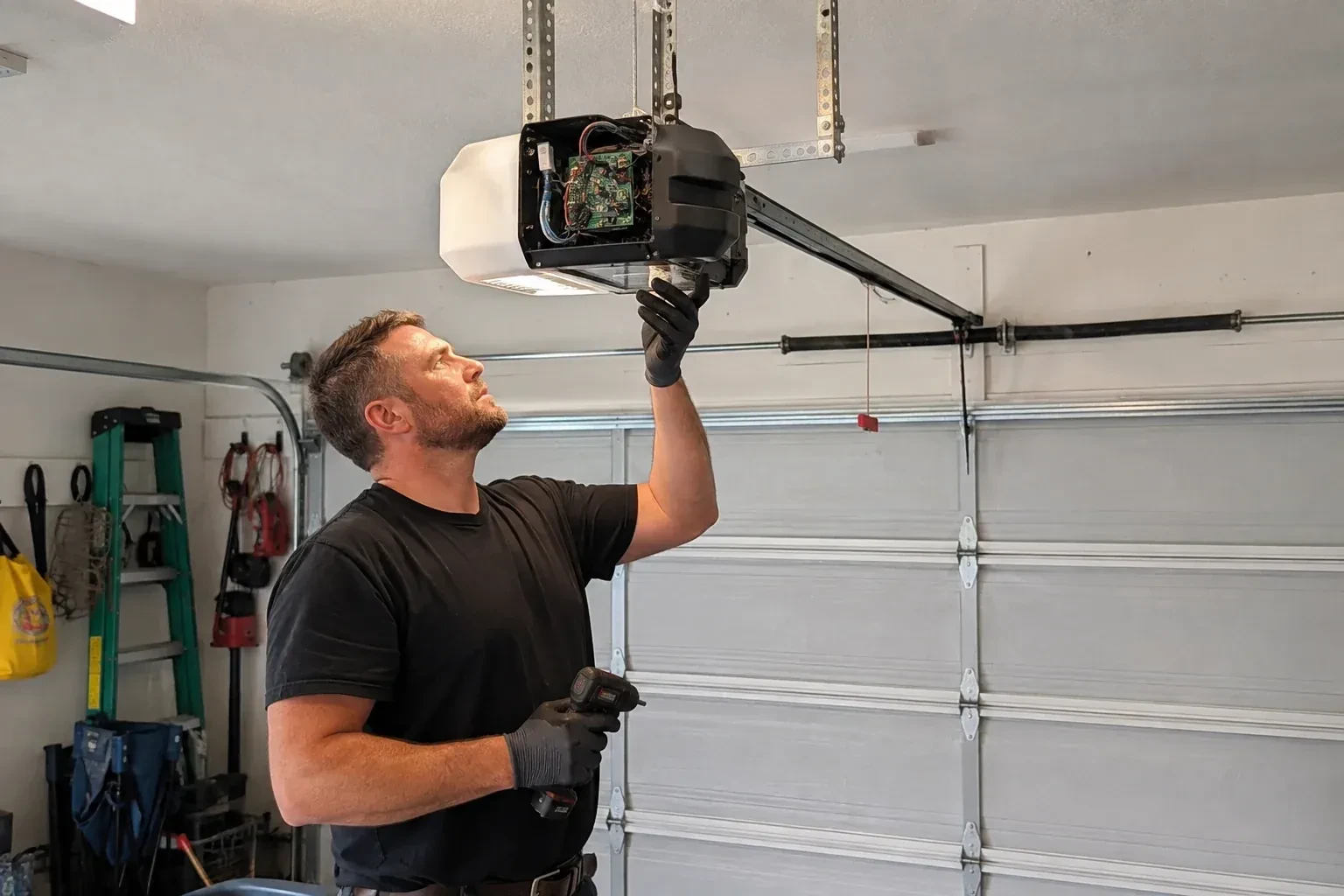
- Belt-Drive Opener RepairThe belt looks fine from a distance, but up close the rubber has cracked across the back in dozens of places and, in one spot, you can see the steel cords showing through.
- Garage Door Opener ReplacementDuring the ice storm the power was off for two days.
- Photo-Eye Sensor Alignment or ReplacementSince shelving went up along the garage wall, the door will not close and both sensor lights are dead.