Openers · Sherwood
Chain-Drive Opener Repair in Sherwood
The door opens about a third of the way and stops.
In plain words
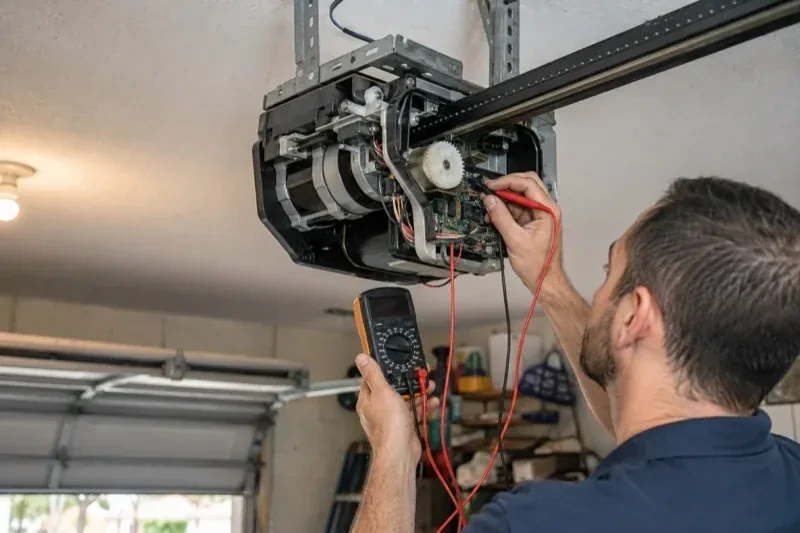
Sometimes nothing is broken and the operator has simply forgotten where the door should stop. Travel limits tell it how far to run in each direction; force settings tell it how much effort is normal, so it can notice an obstruction. When limits drift, a door stops short of the floor, reverses at the bottom or opens partway. When force is set low, the door reverses for no reason; set high, it stops protecting anyone beneath it. A chain-drive repair resets both, by screw on older heads or learn buttons on newer ones, then proves the reversal with a block on the floor.
How the visit goesThe chain hangs in a loop under the rail and slaps against it on every cycle. It used to sit snug. Now the whole house hears the door leave, and the sound has a metallic clatter it never had before.
Chain-Drive Opener Repair
How the visit goes
Reading the chain itself
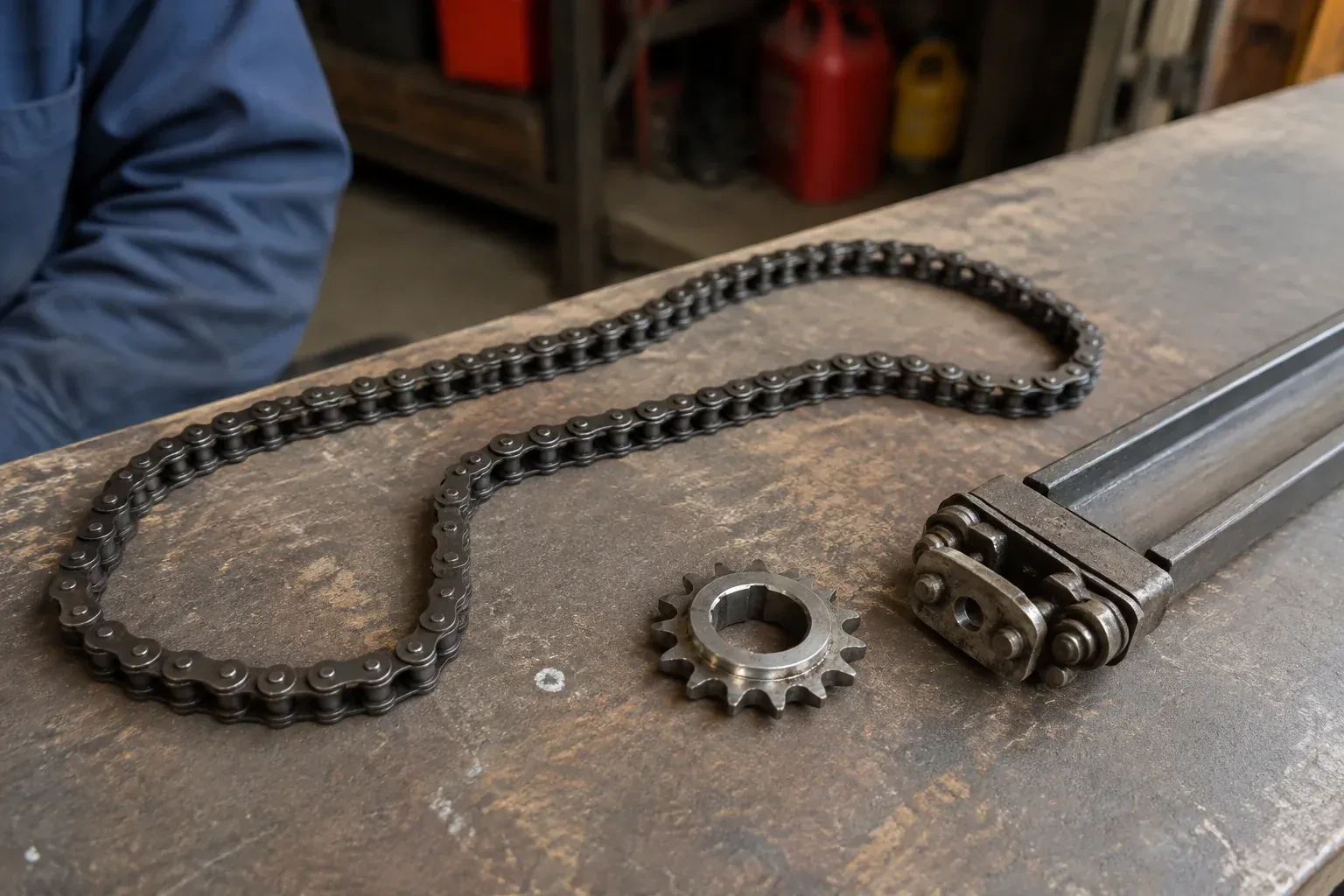
A chain tells its age. The technician runs it through their fingers with the door disconnected, feeling for stiff or seized links, surface rust that has crept into the rollers, and a master link that has spread. Stretch shows as sag: with the door closed, the chain is measured at the middle of the rail against the maker's figure for that make and rail shape, since the correct height is not the same across models. A chain that sits well below that figure after years of use has lengthened and may need replacing rather than tensioning, because taking up too much slack at the trolley leaves the run over the sprocket uneven.
Setting the tension by the numbers
With the door closed and disconnected, the two nuts on the tensioner shaft at the trolley are used in order. The outer nut, nearest the door, is loosened until the chain droops below the rail, the inner nut is backed off to make room, and then the outer nut is turned to raise the chain until it sits at the height the opener's own manual calls for on that rail shape, measured at the rail's midpoint. The inner nut is tightened against it to lock the setting. Once the door is reconnected and closed some droop appears in the chain; that is normal provided the measurement returns with the door open.
Grease where it belongs, and nowhere else
The rail was cleaned and given a thin coat of white lithium grease where the trolley runs, on the schedule that opener's own manual calls for, often every two or three years, with the old grease wiped away first. The gears inside the head were packed with the same grease and need nothing between services. The chain itself is treated only as the maker's manual directs, often not at all, since heavy oil collects grit and drips on the car. Rollers, hinges and bearings on the door take a garage door lubricant once a year. The tracks the rollers run in take none, and penetrating sprays stay away from the whole system because they strip grease from gears.
Chain-Drive Opener Repair
In the van
Trolley release lever
Roller chain with master link
Cold-rated garage door lubricant
Rail hangers and header bracket
Drive gear and worm gear kit
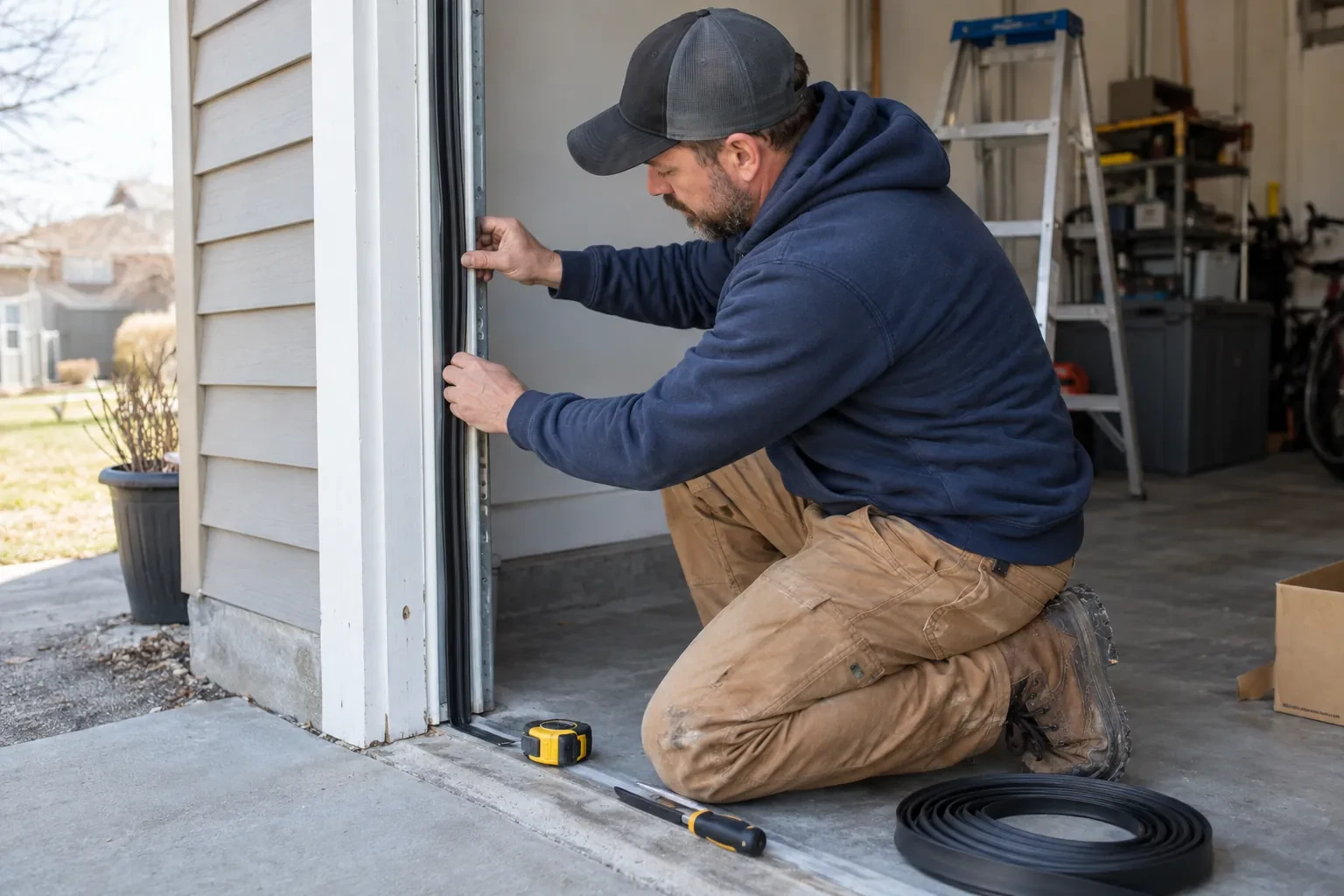
Chain-Drive Opener Repair
What affects the quote
Trolley and release parts
A worn inner or outer trolley, a cracked latch or a bent release lever are replaced as separate pieces, and whether any of them is needed shows only once the trolley has been run along the rail by hand.
Door work found at the balance check
If the door is heavy or drops when lifted by hand, spring adjustment or replacement is quoted as door work in its own right, ahead of the drive repair that depends on it.
Adjustment only, or parts as well
A visit that ends with tension, phase, limits and force set and the reversal tested is the simplest case. Each part fitted on top of that appears as its own line.
What to have ready
- Does the motor run when you press the button, and does the door move at all?
- Is the trolley stuck at the very end of the rail, near the motor or near the door?
- Has anyone adjusted the limit or force screws, or run the opener with the chain off?
Chain-Drive Opener Repair: questions
QuestionsCan you turn the force up so the door closes on cold mornings?
Force is set to the lightest level that moves the door reliably, and it is raised only a little for a cold garage. Turning it up further to overcome a heavy door or a seal frozen to the slab is not done, because too much force interferes with the safety reversal and can bend the top section. If the door is hard to move in the cold, the springs, rollers or the frozen seal are dealt with instead.
What does the sprocket do, and how does it wear?
The sprocket is the toothed wheel on top of the motor head that pulls the chain. Every cycle drags the chain over its teeth, and over years the teeth wear thin and hooked, letting the chain ride up and skip under load, often at the same point on the rail each time. A sprocket that has loosened on its shaft lags behind the motor. Worn sprockets are replaced as part of the gear and sprocket assembly.
My garage is detached and unheated. Does that change the repair?
It shapes it. Cold thickens grease and stiffens a chain with any rust on it, so the technician cleans and regreases the rail and gears, replaces a rust-bound chain rather than tensioning it, and sets force so the door moves at low temperature without the operator being oversensitive. Salt corrosion on the chain and bottom hardware from vehicles is checked. The advice afterwards leans on keeping the threshold clear so the seal does not freeze to the slab.
Related services
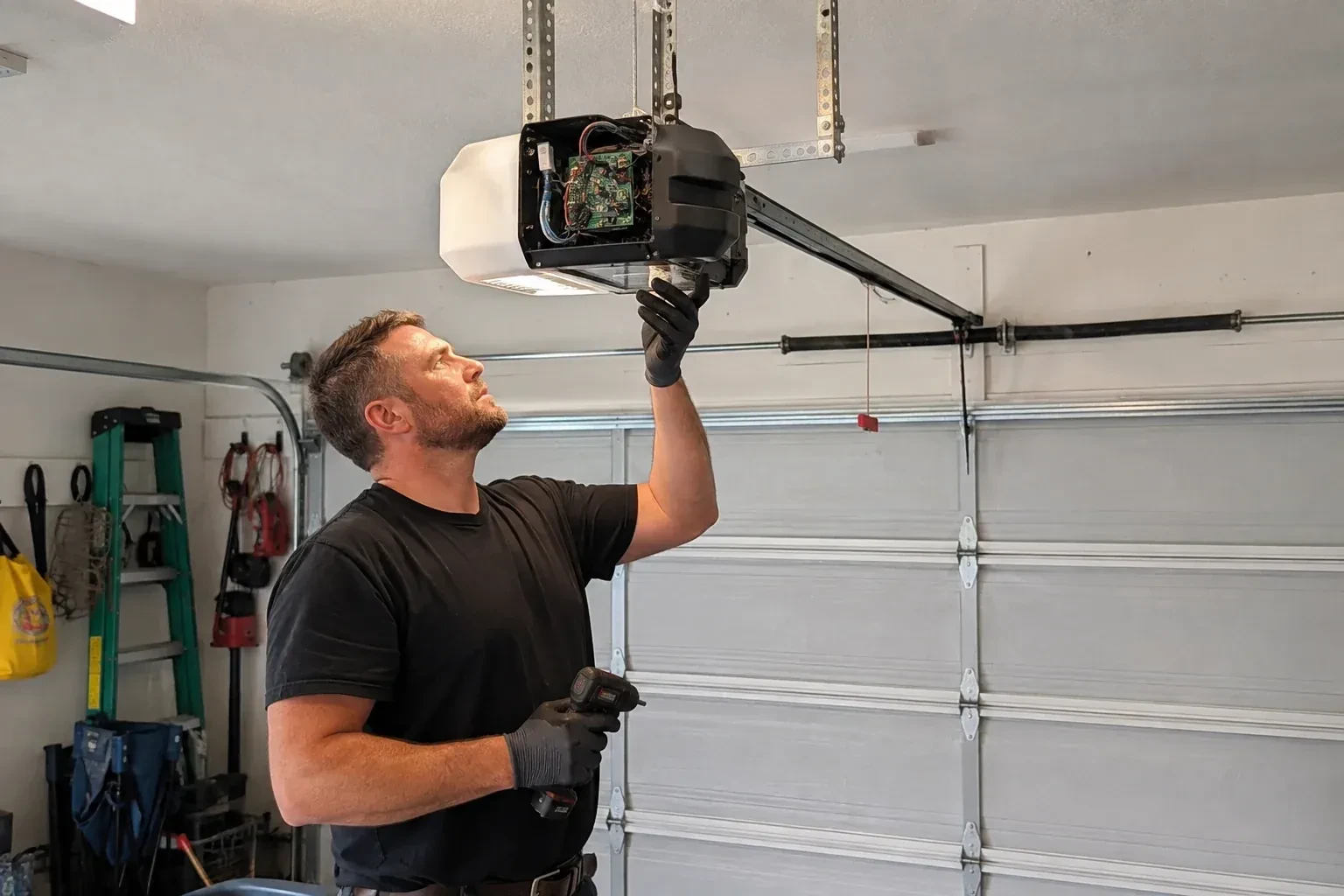
- Belt-Drive Opener RepairThe belt looks fine from a distance, but up close the rubber has cracked across the back in dozens of places and, in one spot, you can see the steel cords showing through.
- Garage Door Opener ReplacementDuring the ice storm the power was off for two days.
- Photo-Eye Sensor Alignment or ReplacementSince shelving went up along the garage wall, the door will not close and both sensor lights are dead.