Repairs · Vaughan
Off-Track Garage Door Reset
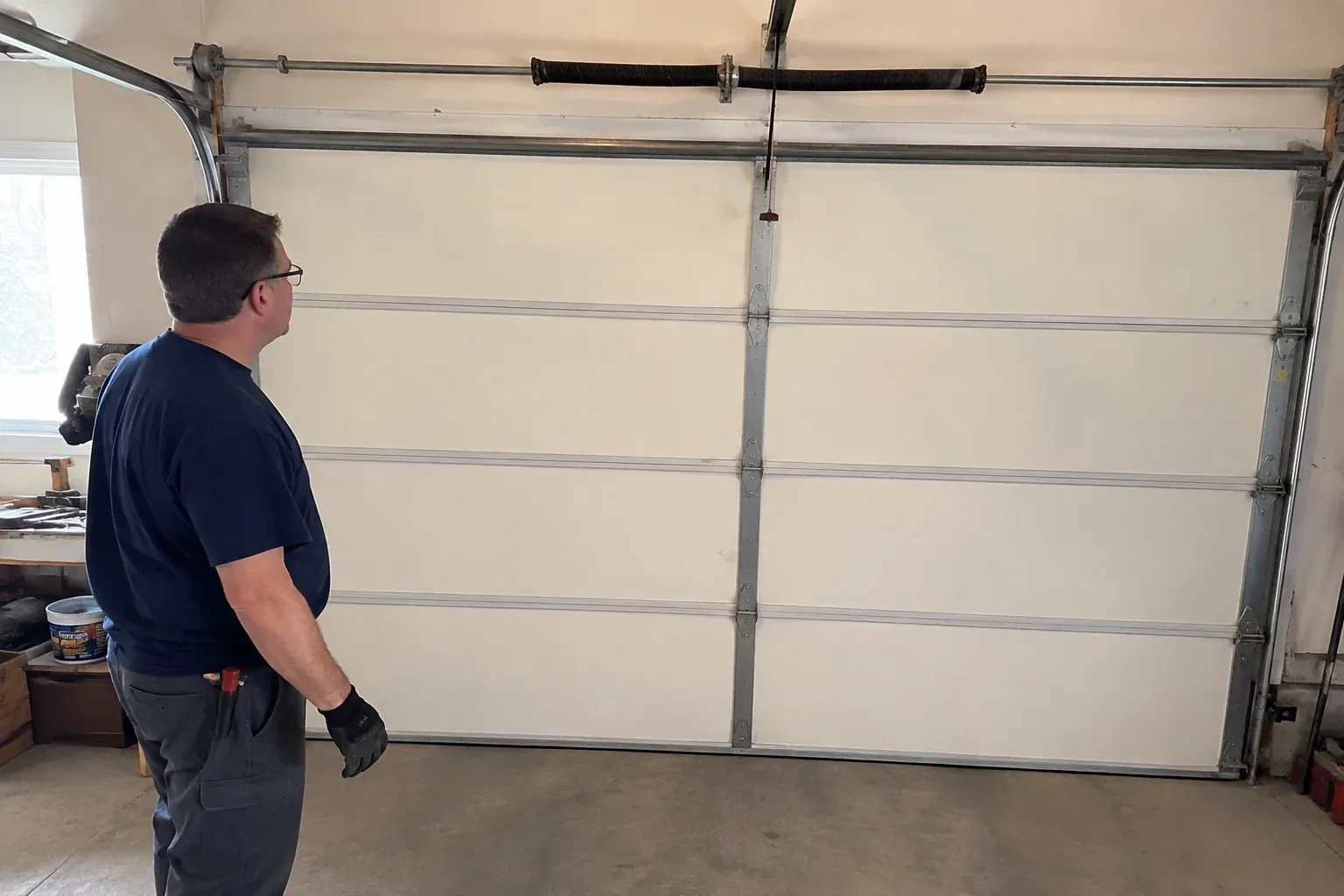
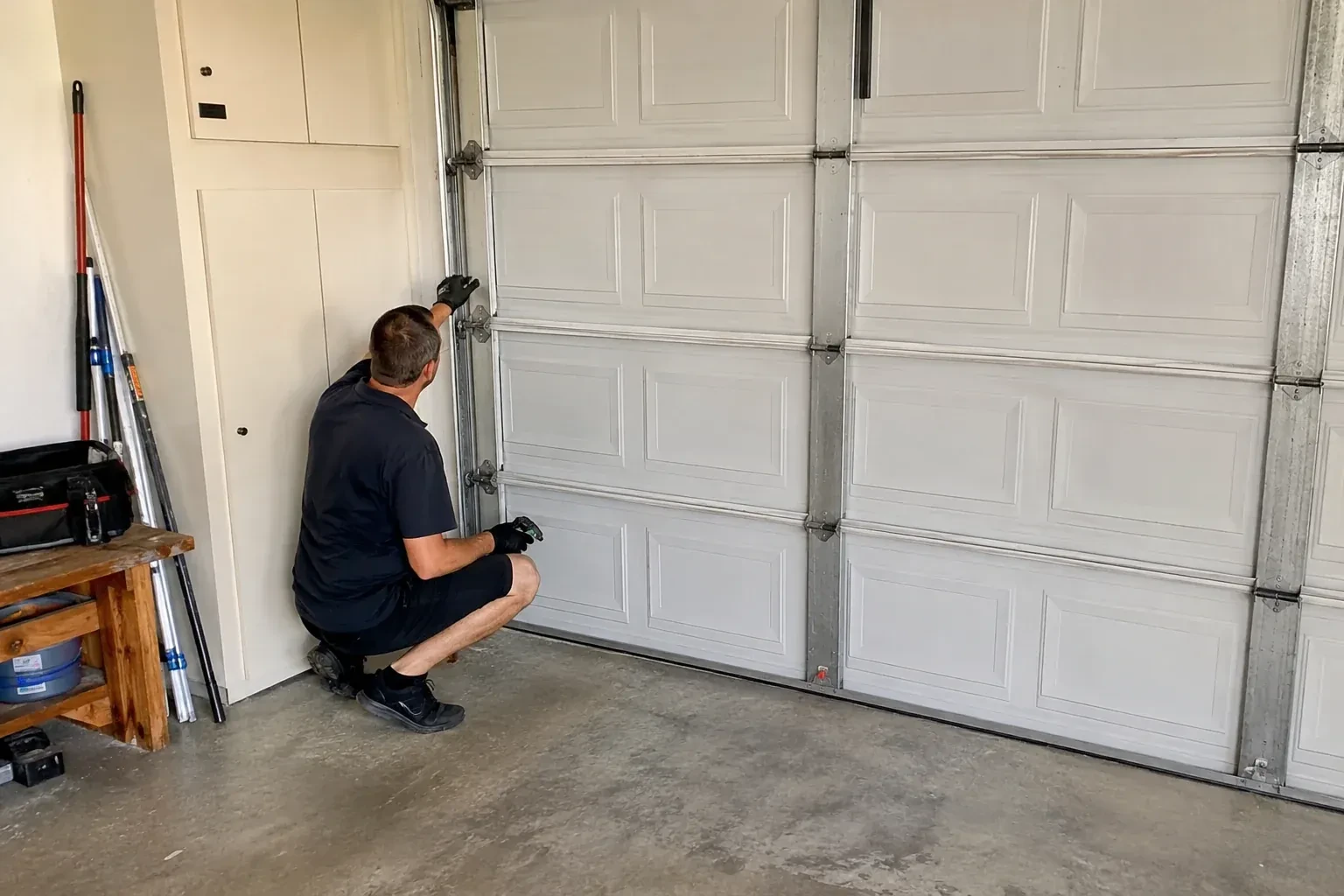
The door came down fine but with a scraping noise, and now the vertical track on one side is bowed away from the wall.
In plain words
Off-track doors are really two problems in one, and the reset addresses both. The first is the visible one: a roller outside its rail and a door out of square. The second is the cause, which is often a slack or broken lifting cable, a worn roller, a bent hinge or a track bracket that has let go of the wall. Putting the roller back without fixing the cause invites a repeat within weeks. So the visit pairs the re-seating work with a whole-system check of cables, drums, springs, hinges, brackets and track geometry, and replaces the piece that started the trouble.
How the visit goesYou tapped the door with the bumper while backing in, barely a nudge, and now the bottom corner has swung inward. One roller is dangling outside the rail, the section is twisted, and the door will neither rise nor settle flat.
Off-Track Garage Door Reset
How the visit goes
Which rollers left, and at what point in the travel
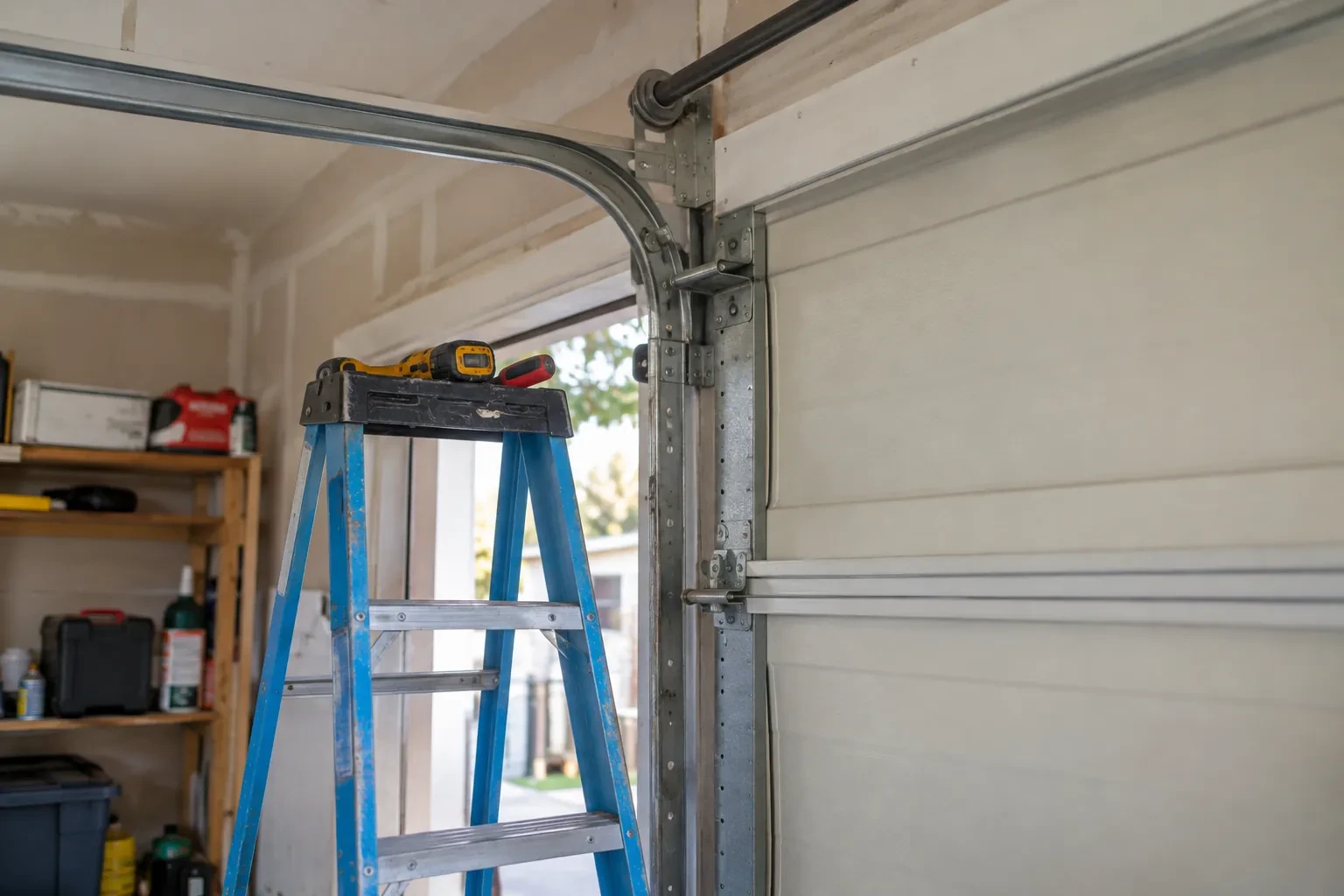
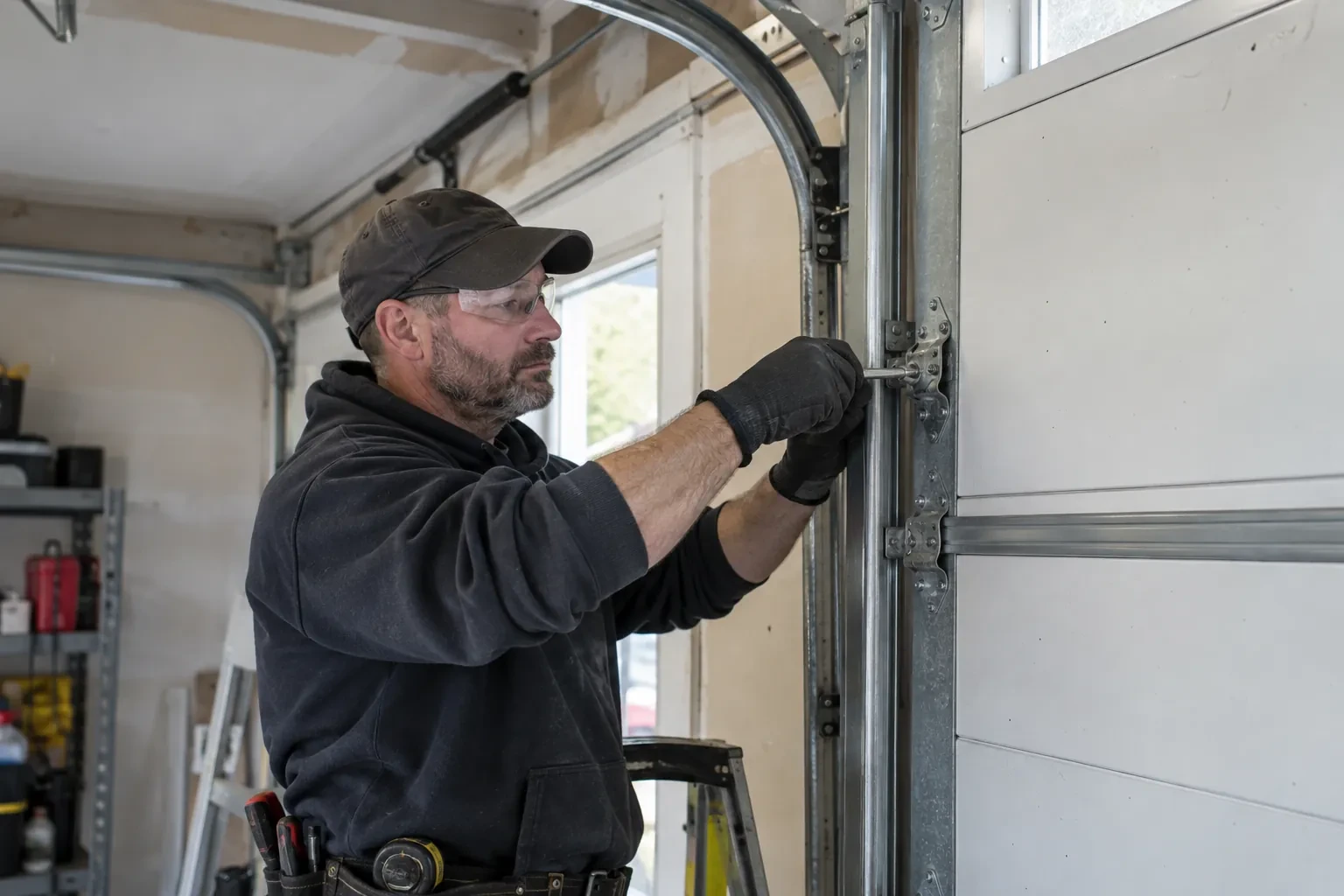
Where a roller escaped tells a story. A bottom roller pushed out of the vertical track usually means an impact or a jamb bracket that let go. A roller that left at the curve points to worn wheels, a splayed radius or a horizontal track hanging out of line. A top roller out of the horizontal rail often follows a door that racked because one cable dropped. The technician counts the rollers outside their rails, notes which side and which section, and checks whether the sections themselves are still square to each other. That map decides the order in which things are put back.
Taking the weight off before moving anything
Nothing is pulled or lifted while the door is loaded. On a torsion door the technician may wind the spring tension down with winding bars fitted to the cones, working one quarter turn at a time with the set screws controlled, so the sections can be moved without the springs snatching them. On an extension-spring door the load comes off by raising the door fully and securing it, which relaxes the springs. Clamps and props hold every section in place throughout. With the load off, a section that seemed immovable can be shifted a few centimetres by hand, which is all that is needed to bring a roller back.
Getting through winter without a repeat
Freezing weather is the season for crooked doors, and a few habits keep yours straight. Before using the opener on a cold morning, check that the bottom seal has not frozen to the slab; if it has, free it by hand with a gentle push from inside rather than letting the motor pull. Keep the threshold clear of slush and salt, and sweep melted snow away from the door before it refreezes overnight. A silicone wipe on the bottom seal in late autumn stops it bonding to ice. If the door ever lifts and one side looks slack, stop and call rather than cycling it again.
Off-Track Garage Door Reset
In the van
Lifting cables, matched pair
Replacement rollers, steel or nylon
Torsion spring winding bars
Graduated edge hinges
Jamb and flag brackets
Off-Track Garage Door Reset
What affects the quote
Travel to the property
Every visit includes the drive. A door across town and one at the end of a rural road involve different travel time, and the quote states the call-out portion separately from the work.
Older or unusual hardware
Low-headroom track, high-lift track, an old wood door with obsolete hinges or a commercial door with heavy-gauge rail may need parts that are ordered or adapted, which is explained in the estimate.
Whether the cables are involved
A cable that simply jumped its drum is rewound; one that is frayed or broken is replaced along with its partner, and the springs are unwound and rewound to do it. Each step is listed separately.
What to have ready
- Roughly how old is the door, and when was it last serviced?
- Is the door a single or a double, and is it steel, wood or insulated?
- Is one side of the door hanging lower than the other?
Off-Track Garage Door Reset: questions
QuestionsHow is a reset different from a track repair?
In a reset the rail is sound and the work is putting rollers, cables and sections back where that rail expects them, with minor alignment corrections. In a track repair the rail itself is the problem and must be straightened, re-hung or partly replaced first. One visit can include both, and the technician tells you which you need after looking at the door rather than guessing from the description.
Can I keep using the opener until someone comes?
It is better to leave the opener alone. A racked door does not become straighter with another cycle; every press of the button forces the crooked sections deeper into the rails and strains the hinges and wall brackets. Unplug the opener or pull the red release cord if the door is fully closed, keep people and vehicles clear, and let the technician move it in a controlled way.
Should I lubricate the track to help the rollers?
No. The track is meant to be clean and dry; grease on the rail gathers dirt and makes the wheels slide rather than roll, which wears them faster and can contribute to a roller leaving the rail. Put a silicone spray made for garage doors, or a lithium grease, on the hinge pins, roller bearings and spring coils, wipe off the excess, and give the tracks nothing more than a damp cloth.
Related services
- Garage Door Tune-UpThe door lands with a thud you can feel through the kitchen floor, and sometimes it bounces back up a few centimetres before settling.
- Garage Door Panel ReplacementThe inside face of one section has started to bow outward and the outer skin has a soft, wavy look.
- Garage Door Bottom Seal ReplacementOne end of the bottom seal has slipped out of its channel and hangs down like a loose shoelace.