Repairs · Vellore
Garage Door Bottom Seal Replacement in Vellore
One end of the bottom seal has slipped out of its channel and hangs down like a loose shoelace.
In plain words
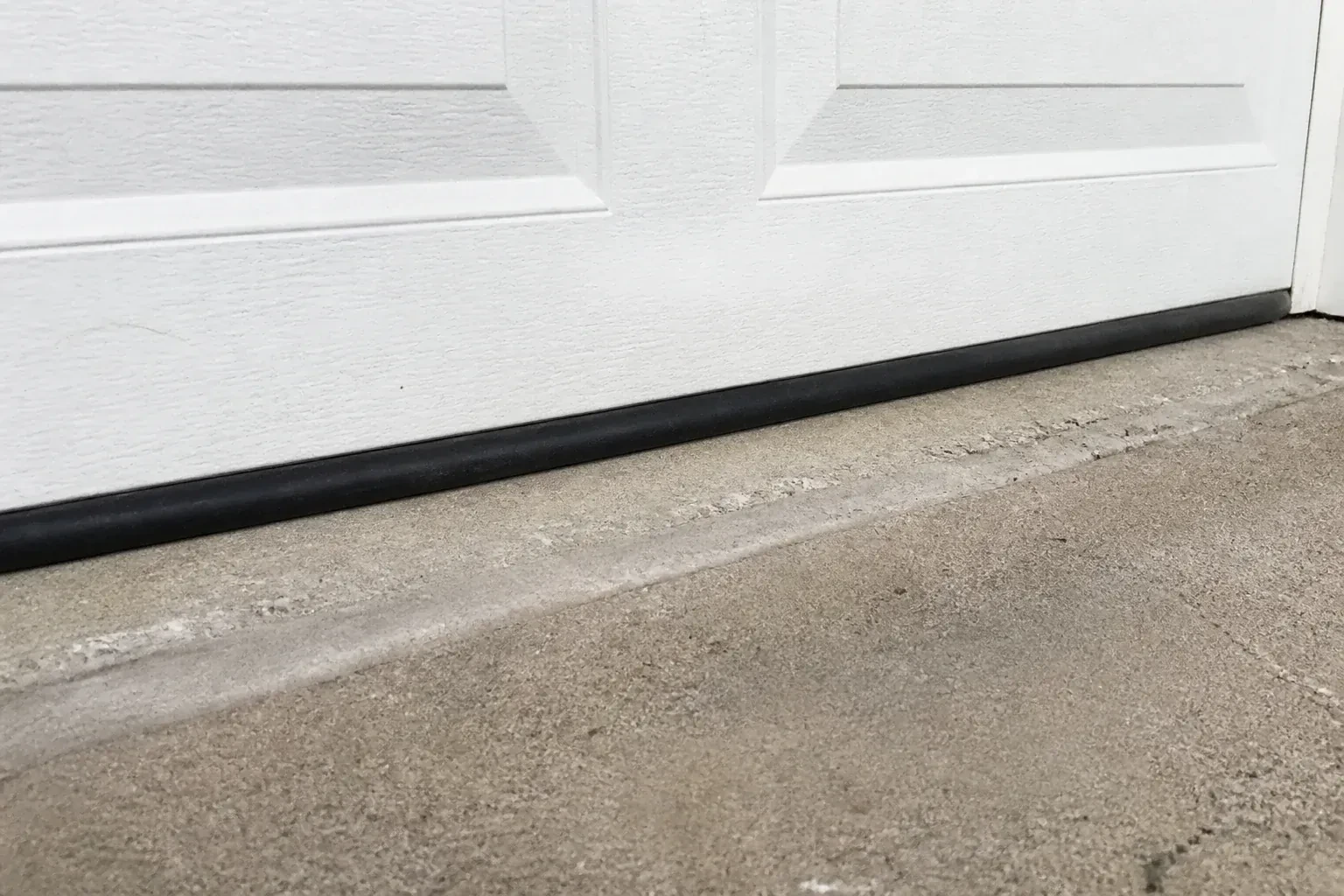
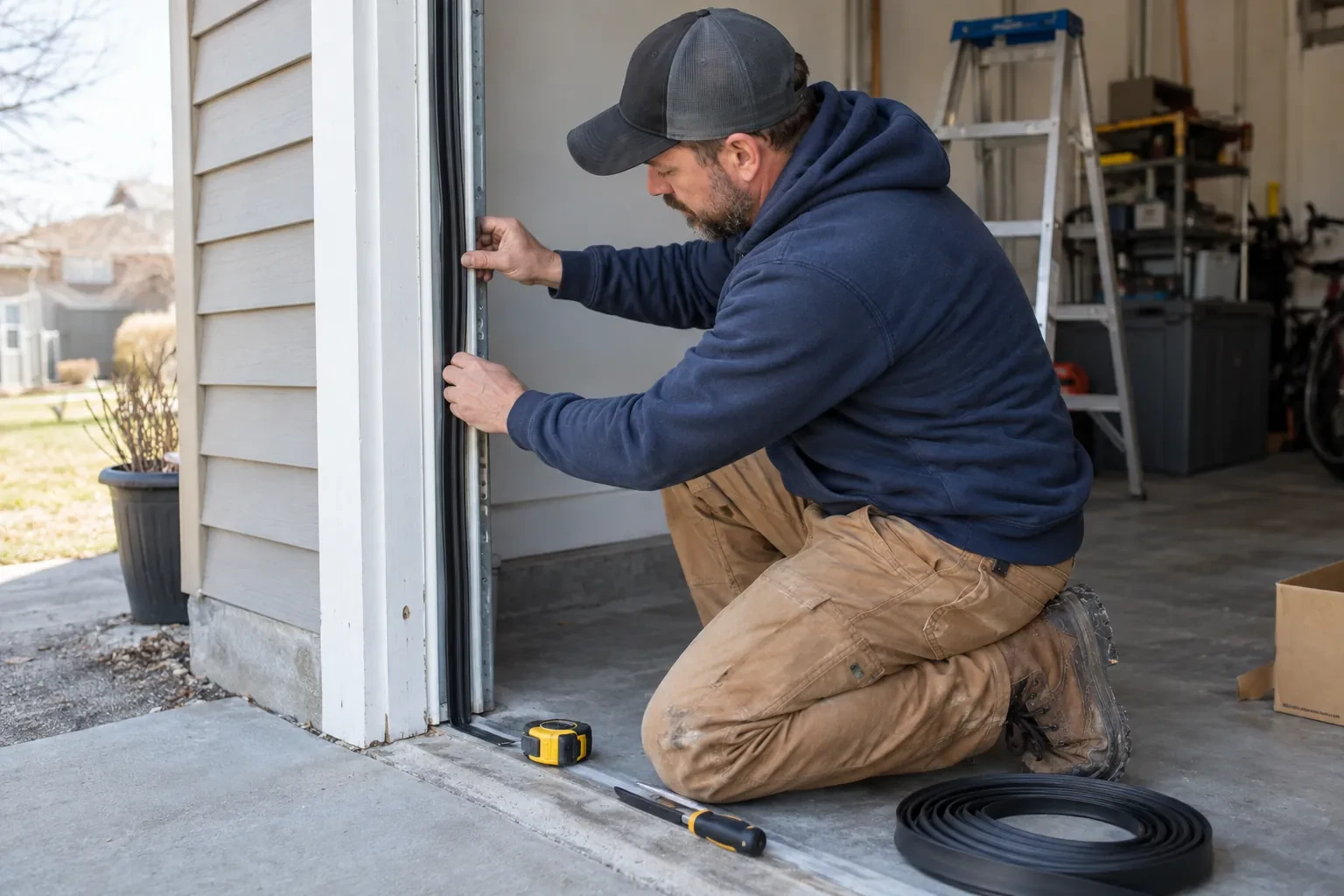
The bottom seal, called an astragal in the trade, is the flexible strip along the underside of the lowest door section that squashes against the floor when the door closes. On most steel doors it is a U-shaped vinyl or rubber profile whose two edges slide into the channels of a retainer fixed to the bottom rail; on wood doors it is often a flat angled strip nailed in place. Replacing it means matching that retainer and profile, fitting a fresh seal the full width of the door, and confirming it meets the floor in one continuous line so light, drafts, water and pests lose their route in.
How the visit goesThe strip under the door has gone as hard as a hose left out for ten summers. Press it and it does not give; bend it and it cracks. Where the door meets the floor it sits on the concrete without squashing at all.
Garage Door Bottom Seal Replacement
How the visit goes
Is the door hanging level?
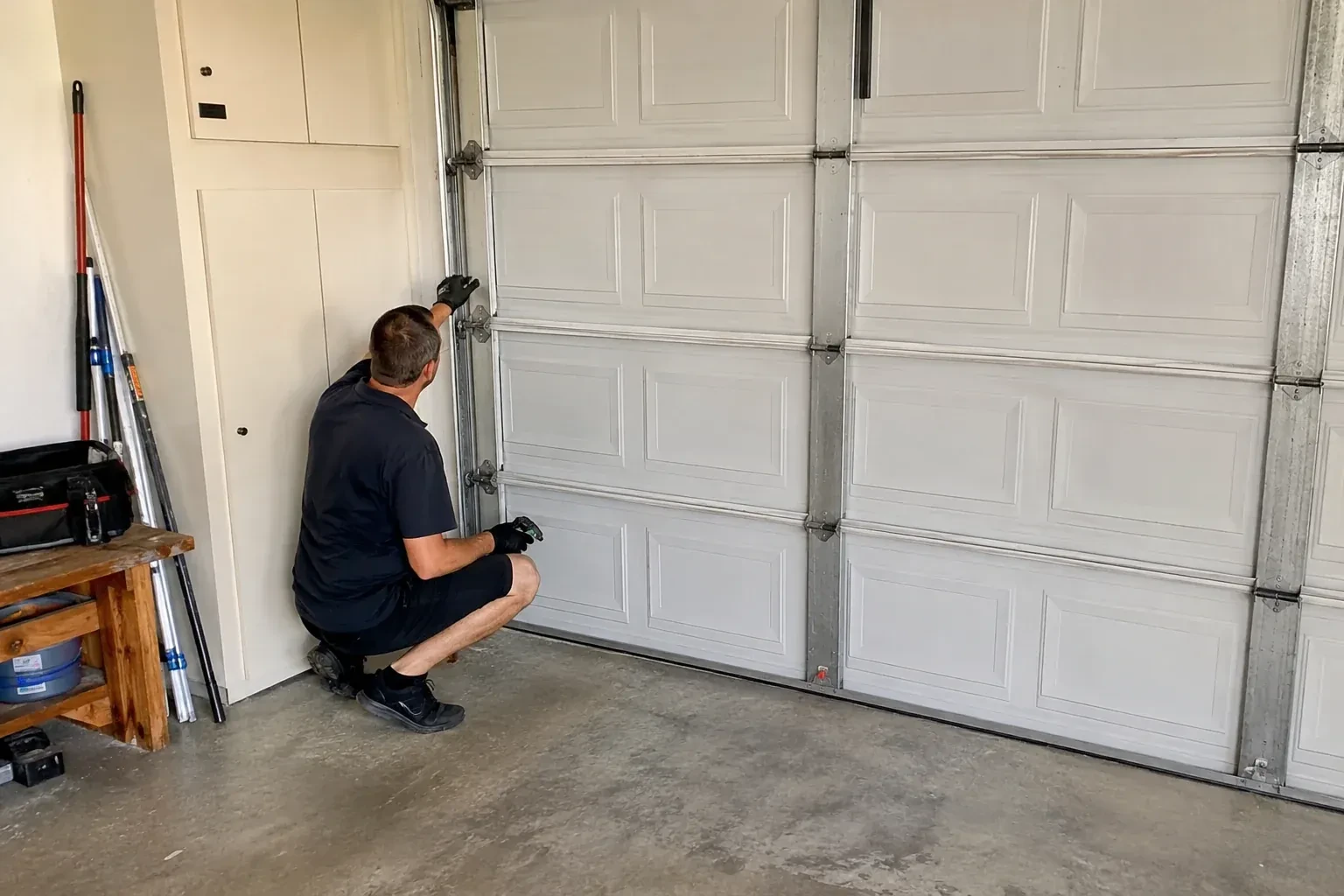
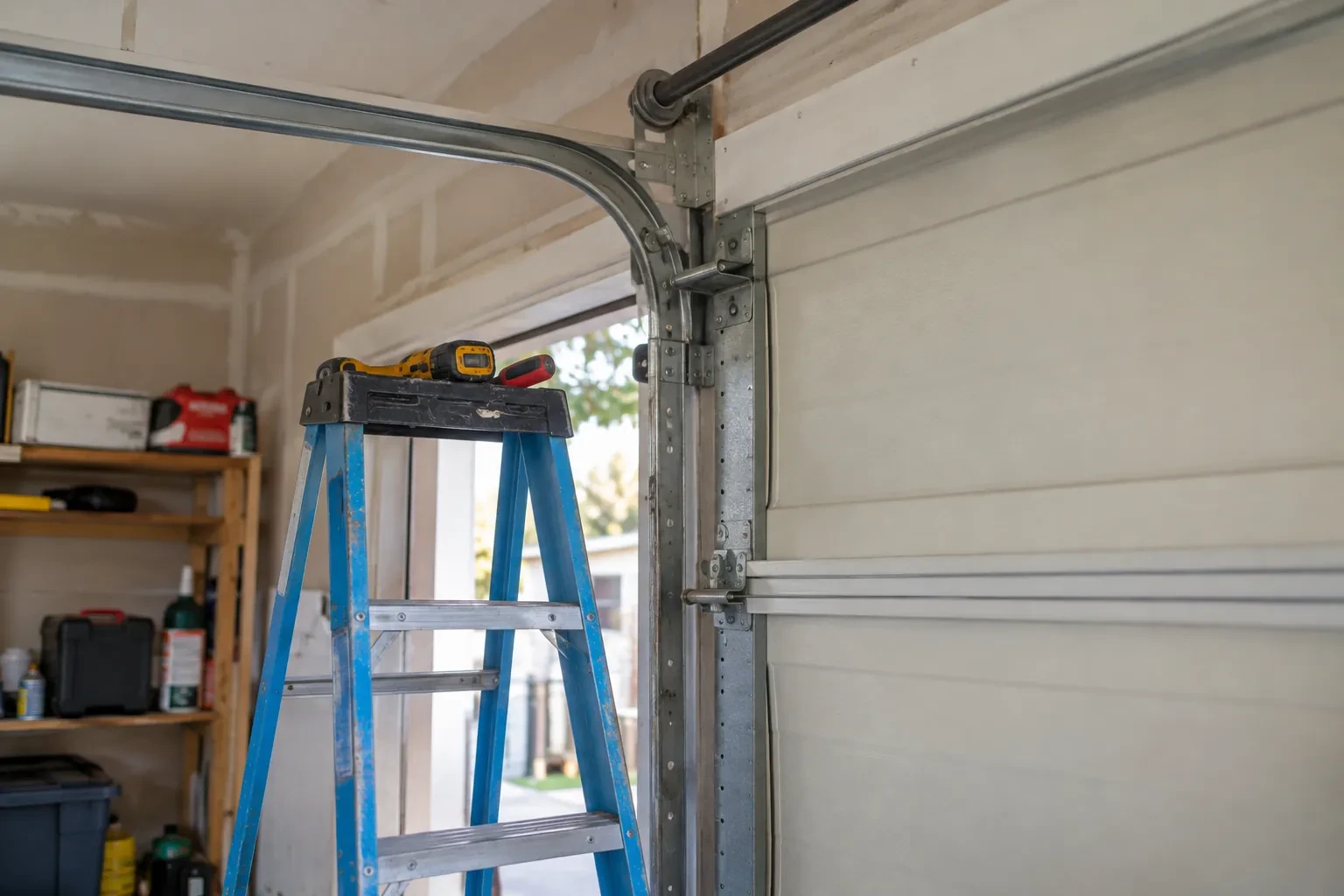
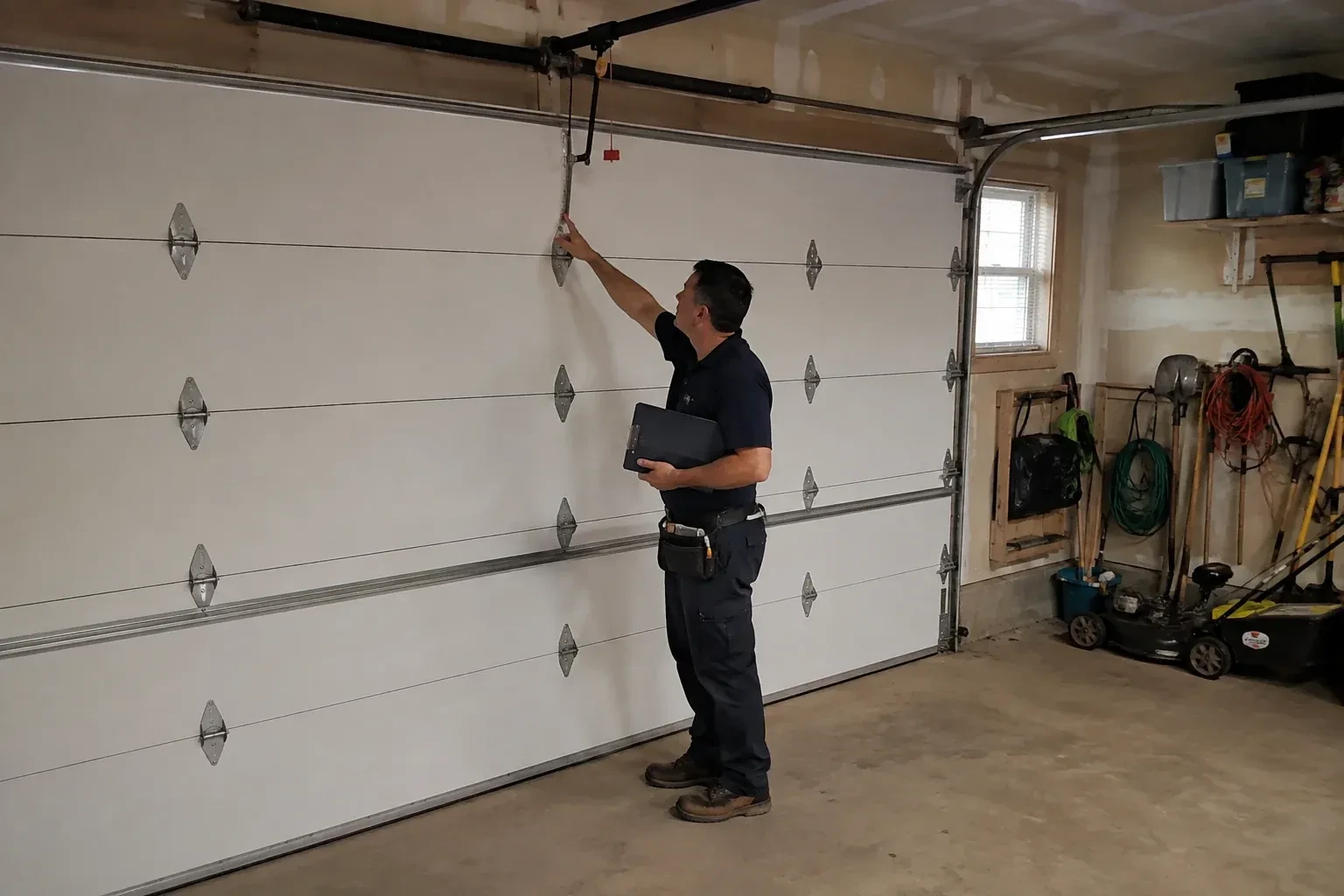
A gap that is wider at one corner is often the door rather than the seal. The technician checks that the door sits square in the opening by comparing the bottom edge to the floor at both ends and looking at how each lift cable wraps its drum. A stretched cable, a drum that has crept on its shaft or uneven spring tension drops one corner a centimetre or two, and setting the door level is what closes that wedge. If the door is out of level, the adjustment is explained as its own item and done first, and the seal is then sized to the gap that remains. Getting the order right saves fitting a seal twice.
Taking the old seal out
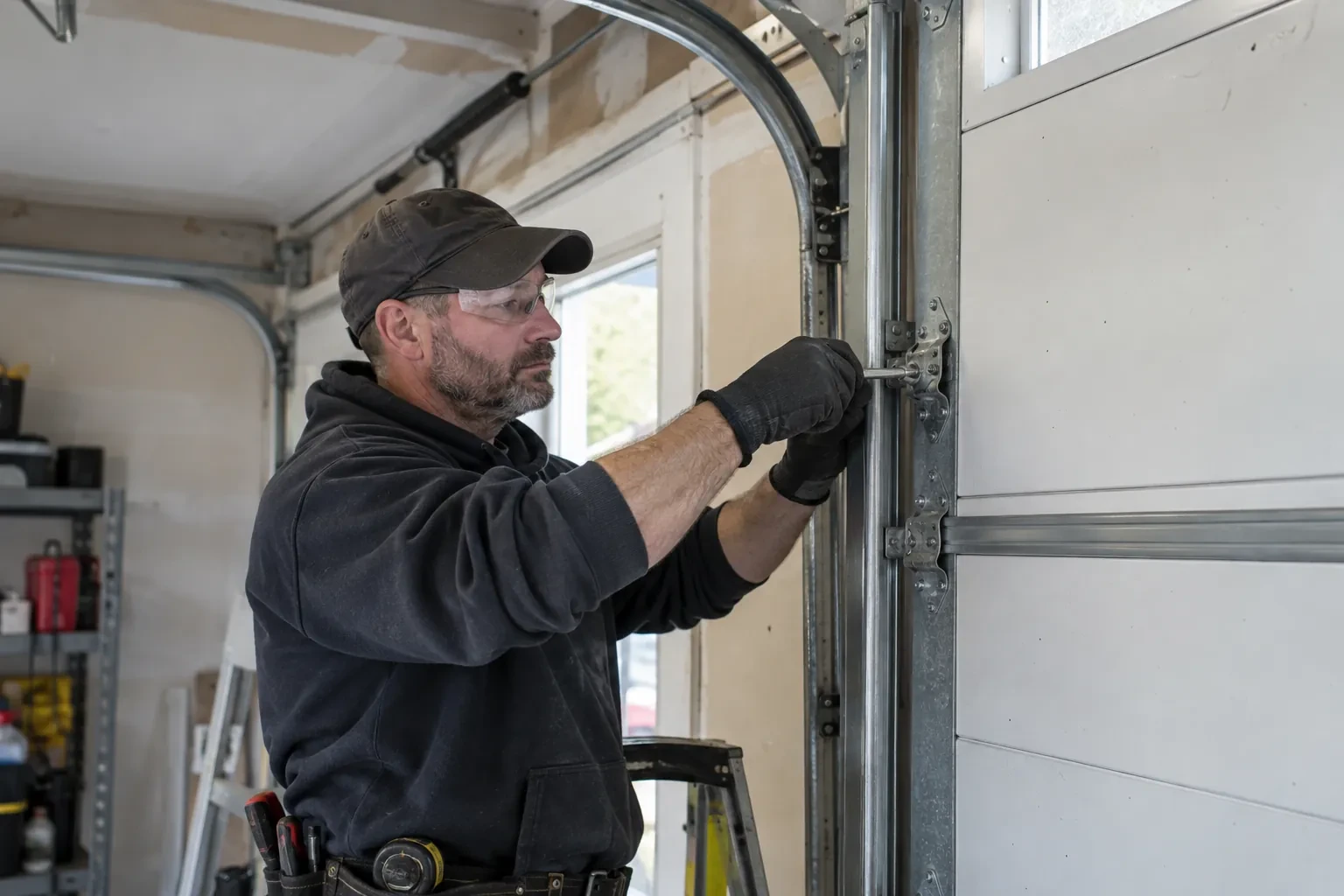
With the door secured, the ends of the old strip are freed from any caps or folds and the seal is drawn out of its channels from one end. A supple seal slides; a hardened one is coaxed with a flat blade and a little silicone, or cut into short lengths and removed a piece at a time. Old nails come out of a wood rail with a claw. The channels are then cleaned of grit, rust flakes, salt crust and any remnants of the previous strip with a wire brush and a scraper, because a clean channel is what lets the new seal feed through without tearing.
What to look for each season
Once a season, close the door, turn off the lights and look along the floor. You are checking for a line of daylight, a corner where the seal hovers, an end that has slipped from its channel, and cracks along the fold of the bulb. Run a hand along the strip for stiff or brittle patches. Then watch the door close under power once and notice how it lands. A change in any of these is worth a call while the fix is a seal or an adjustment rather than a torn strip dragged through a winter. The check takes less time than reading this paragraph.
Garage Door Bottom Seal Replacement
In the van
Bulb or U-style bottom seal
Self-drilling retainer screws
Bead-style bottom seal
Aluminum bottom seal retainer
Nail-on vinyl strip for wood doors
Garage Door Bottom Seal Replacement
What affects the quote
Bottom section repairs
A rusted, dented or bowed steel bottom rail, or a rotted wood rail, is pointed out and any repair or reinforcement offered as an option beside the seal work.
Material chosen
Standard vinyl, cold-flexible rubber and silicone are priced differently. Where the door faces the weather, the technician explains what the step up buys in flexibility and working life.
Condition of the old seal
A supple strip slides out in a minute. One that has hardened and seized in its channel, or been torn and frozen into the corners, has to come out in pieces, which takes longer.
What to have ready
- What is getting in: light, drafts, water, snow, leaves or pests?
- Does the door stop short of the floor or reverse before it closes?
- Are the side and top weather strips also worn or torn?
Garage Door Bottom Seal Replacement: questions
QuestionsWhat is a threshold seal, and when is it worth adding?
A threshold seal is a rubber or aluminum-backed strip glued to the garage floor along the line where the door closes. The door's bottom seal lands on it, and its raised outer edge turns water, wind-blown debris and small visitors back toward the driveway. It earns its place where the drive slopes toward the garage, the slab sits below the apron, or the floor edge is too uneven for the bottom seal alone to meet cleanly.
How do I look after the new seal?
Wipe it clean of salt and grit a few times a year, and give it a light coat of silicone spray each autumn so meltwater has nothing to bond to. Keep petroleum products and solvents away from it, since they soften vinyl. Clear ice and packed snow from the threshold before running the door in winter. Once a season, look under the closed door for daylight. That is the whole routine.
Should I choose the tallest seal available?
Not as a rule. The seal should fill the measured gap with a little compression to spare. A profile far taller than the gap gets squashed flat, wears at the fold, bows the bottom section and can make the opener reverse. Where the floor dips at one end, a taller bulb is the right call for that door; where the floor is flat, a standard height lasts longer. Measuring first is what settles it.
Related services
- Garage Door Tune-UpThe door lands with a thud you can feel through the kitchen floor, and sometimes it bounces back up a few centimetres before settling.
- Off-Track Garage Door ResetThe door came down fine but with a scraping noise, and now the vertical track on one side is bowed away from the wall.
- Garage Door Panel ReplacementThe inside face of one section has started to bow outward and the outer skin has a soft, wavy look.